





Hello Heart Hero. A cardiomyopathy diagnosis can feel like somebody has just handed you a worst-case script, but that script is often wrong. Cardiomyopathy life expectancy is not one fixed number, because the outlook depends on the subtype, how early it's found, and whether rhythm problems are caught before they turn dangerous. For some people, especially in modern hypertrophic cardiomyopathy care, survival can be near normal, while for others with dilated cardiomyopathy the outlook is more variable and can be shortened without timely treatment.
That's why the most popular advice, the one-size-fits-all kind, falls apart fast. A person with a thickened heart muscle does not face the same future as someone with a stretched, weakened ventricle, and someone in a vulnerable arrhythmia window needs a different plan again. If you've felt skeptical about old “average survival” talk, that skepticism is healthy. The better question is not, “How long do people with cardiomyopathy live?” It's, “Which cardiomyopathy, at what stage, and what can be changed now?”
Why Cardiomyopathy Does Not Always Mean a Shorter Life
A diagnosis of heart muscle disease can sound like a sentence, but it isn't automatically one. The reason is simple, the heart can fail in different ways, and each pattern behaves differently over time. Some forms mainly affect how strongly the heart pumps, others mainly affect how well it fills, and some are dominated by rhythm trouble rather than pump failure.
The diagnosis is not the whole story
The word cardiomyopathy describes a problem with the heart muscle, not a single disease with a single outlook. That matters because the evidence shows prognosis can range from near-normal to seriously shortened, depending on the subtype and how much damage has already happened. In modern hypertrophic cardiomyopathy care, mortality can be low enough that many patients live close to a normal lifespan, while dilated cardiomyopathy still carries a much wider spread of outcomes, especially over longer follow-up see the discussion of preserved pump function.
People often hear one scary survival number and assume it applies to everyone. It usually doesn't. A person diagnosed during routine screening, before fainting spells or heart-failure admissions, starts from a very different place than someone first seen after a hospitalization.
Practical rule: ask which subtype you have, whether the heart is mainly weak, thick, stiff, or electrically unstable, and whether your current treatment has already been optimized.
Why modern care changes the outlook
Cardiology has not stood still. For several cardiomyopathies, medication, devices, earlier diagnosis, and closer rhythm monitoring have changed survival in ways that older statistics can't capture well. That's especially true in hypertrophic cardiomyopathy, where newer cohorts look much better than older ones, and in arrhythmia-prone patients, where catching a dangerous rhythm early can change the whole trajectory.
A lot of online content stops at the fear. That's not useful. A more honest answer is that cardiomyopathy life expectancy depends on the part of the disease that's driving risk right now, and that part can change over time. In some people, the main challenge is pump weakness. In others, it's sudden rhythm instability. In many, it's both, which is why one clean number is a poor way to think about the future.
The Four Main Types of Cardiomyopathy Explained
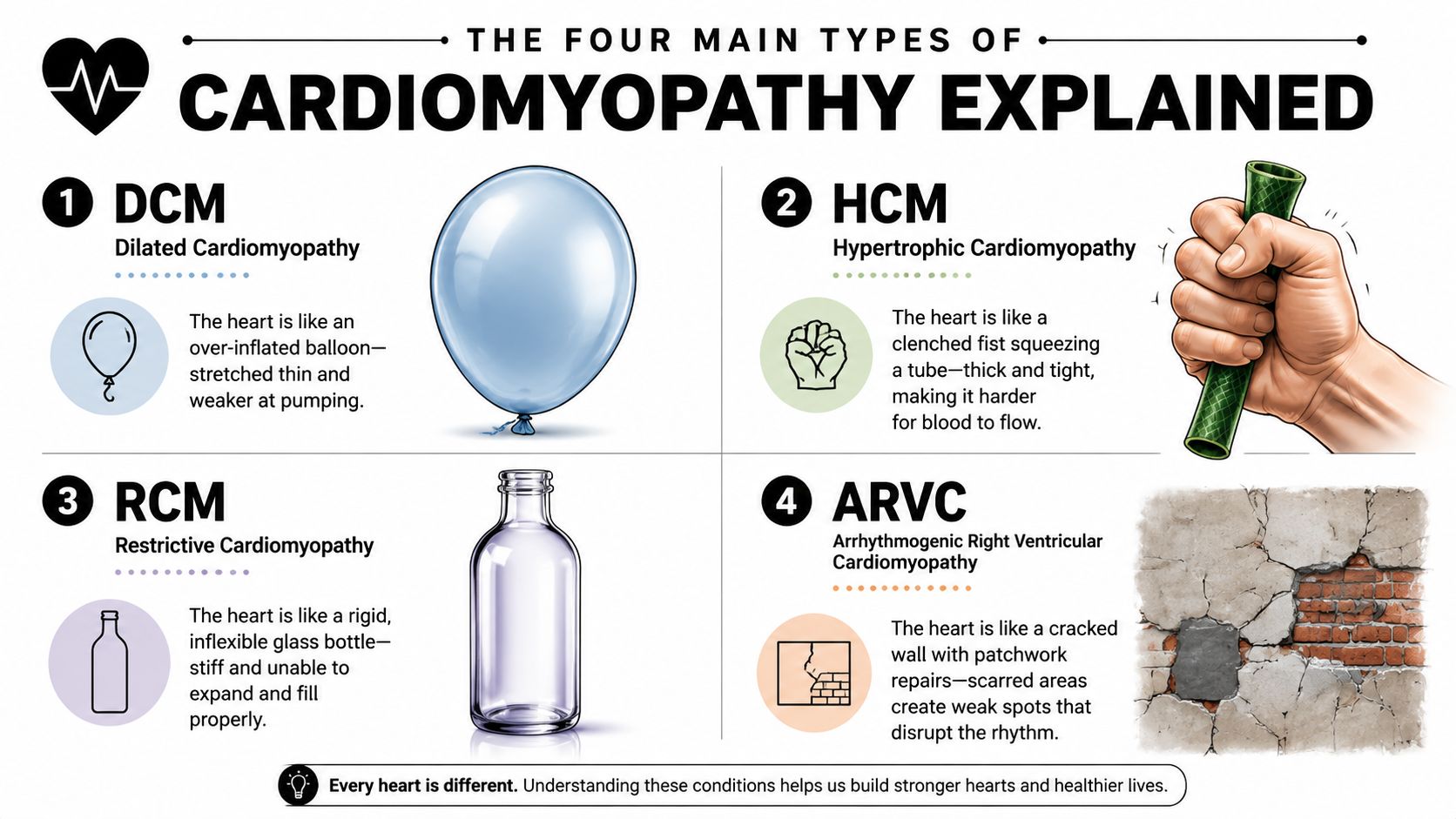
Cardiomyopathy splits into four distinct mechanical patterns, each with its own causes, risk profile, and survival data. Cardiomyopathy is an umbrella term for several distinct heart muscle conditions, and prognosis depends on which pattern is present. Once the pattern is clear, the numbers make more sense.
Dilated cardiomyopathy
Dilated cardiomyopathy, or DCM, is the stretched-chamber pattern. The ventricle enlarges, the wall weakens, and the pump works less efficiently. People can develop DCM after a viral illness, from inherited causes, from alcohol or other toxins, or without a clear cause.
The outlook varies a lot. Some people improve once treatment begins, while others keep getting sicker if pump weakness persists or rhythm problems build up. That range is one reason DCM often feels frightening, even though it is also a subtype where active treatment can change the course.
Some forms of DCM follow viral myocarditis, which is discussed in more detail here.
Hypertrophic cardiomyopathy
Hypertrophic cardiomyopathy, or HCM, is the thickened-muscle pattern. The heart wall becomes bulky, which can crowd the chamber and interfere with filling or outflow. HCM is often genetic, so it may appear in younger adults, but it is also found later during family screening or after a murmur, palpitations, or exercise symptoms.
This is the subtype many people misunderstand. Older teaching made HCM sound uniformly dangerous, yet modern care has changed that picture. Many patients live long lives with careful follow-up, and some never develop major limitations.
Restrictive cardiomyopathy
Restrictive cardiomyopathy, or RCM, is the stiff-heart pattern. The muscle does not relax well, so the ventricle fills poorly even when the squeeze seems less dramatic at first. Causes can include infiltrative disease, scarring, or other conditions that make the heart rigid.
RCM often carries a more guarded outlook because the filling problem can be hard to reverse. That does not mean there is no path forward. It means early recognition matters, since someone evaluated before repeated fluid overload or organ strain has more options than someone seen later in the course.
Arrhythmogenic right ventricular cardiomyopathy
Arrhythmogenic right ventricular cardiomyopathy, or ARVC, is the rhythm-instability pattern. Scarred or replaced tissue disrupts electrical signaling and can trigger dangerous arrhythmias. It is often inherited, and symptoms may include palpitations, fainting, or exercise-related rhythm problems.
For ARVC, prognosis depends heavily on rhythm management. Some people do well for years once triggers are controlled and device therapy is considered when needed. Others face more risk from sudden arrhythmias than from pump failure itself.
Knowing the subtype is not a technical detail. It separates guessing from planning. A label on paper can hide very different futures, which is why subtype comes before prognosis, and why near-term rhythm monitoring matters so much.
Bottom line: do not accept a survival estimate until the exact cardiomyopathy type has been named and the main driver of risk has been explained.
Survival Estimates by Type and Stage
Survival data gets confusing because it mixes old studies, newer treatments, and very different disease stages. The clearest way to read it is by comparing subtype and timing, not by hunting for a single “average” that fits everyone. Stage at diagnosis matters just as much as the label itself.
Modern hypertrophic cardiomyopathy often looks far better than people expect
HCM is the subtype where modern outcomes have improved the most in many cohorts. A major review found that older series often reported annual all-cause mortality of 3% to 6%, while more recent studies from Europe and the United States reported overall mortality of 1% or less. The same review reported 5-year survival of 91.2% and 10-year survival of 80.3%, with sudden cardiac death or cardiac arrest survival of 95.6% at 5 years and 91.8% at 10 years HCM review.
Another long-term HCM follow-up study found that 23% of patients achieved a normal life expectancy of at least 75 years, which is a reminder that many people with HCM do live into old age. A pooled analysis also found survival of 98.0% at 1 year, 94.3% at 3 years, 82.2% at 5 years, and 75.0% at 10 years meta-analysis. In a contemporary adult cohort, disease-related mortality was reported at 0.5% per year, and 92% of 1,000 patients survived to 53 ± 9.2 years of age JACC study.
Dilated cardiomyopathy is more variable and often less forgiving
DCM carries a much broader survival range. One 15-year cohort reported a 34% survival rate at 15 years, and another 622-patient cohort found 22.3% 5-year mortality and 46.9% 9-year mortality, with 24.9% dying during follow-up DCM cohort data. A separate summary described about 80% one-year survival and roughly 50% five-year survival DCM summary. An idiopathic DCM study found 77% five-year survival overall, but only 53% in the highest-risk subgroup idiopathic DCM study.
That gap tells you something important. Early-stage DCM with better pump function can look very different from advanced DCM discovered after symptoms have already become severe. The stage at diagnosis matters as much as the diagnosis itself.
Read the numbers this way: better outcomes usually come from earlier diagnosis, stronger pump function, fewer arrhythmias, and faster treatment optimization.
Why stage changes the story
A person found during screening, before major symptoms, may keep a very different trajectory than someone diagnosed after a heart-failure hospitalization. That's true across subtypes, but it's especially visible in DCM and advanced disease states. In HCM, many modern patients can approach a near-normal outlook when risk is managed well. In DCM, survival is more tightly tied to how much the ventricle has already weakened and how much irreversible injury has accumulated.
For readers searching cardiomyopathy life expectancy, that means one number is almost always misleading. The more useful question is, “What stage am I in, and what can still be changed?”
Get your ECG checked by certified experts within minutes on the Qaly app.


Key Factors That Shape Your Individual Prognosis
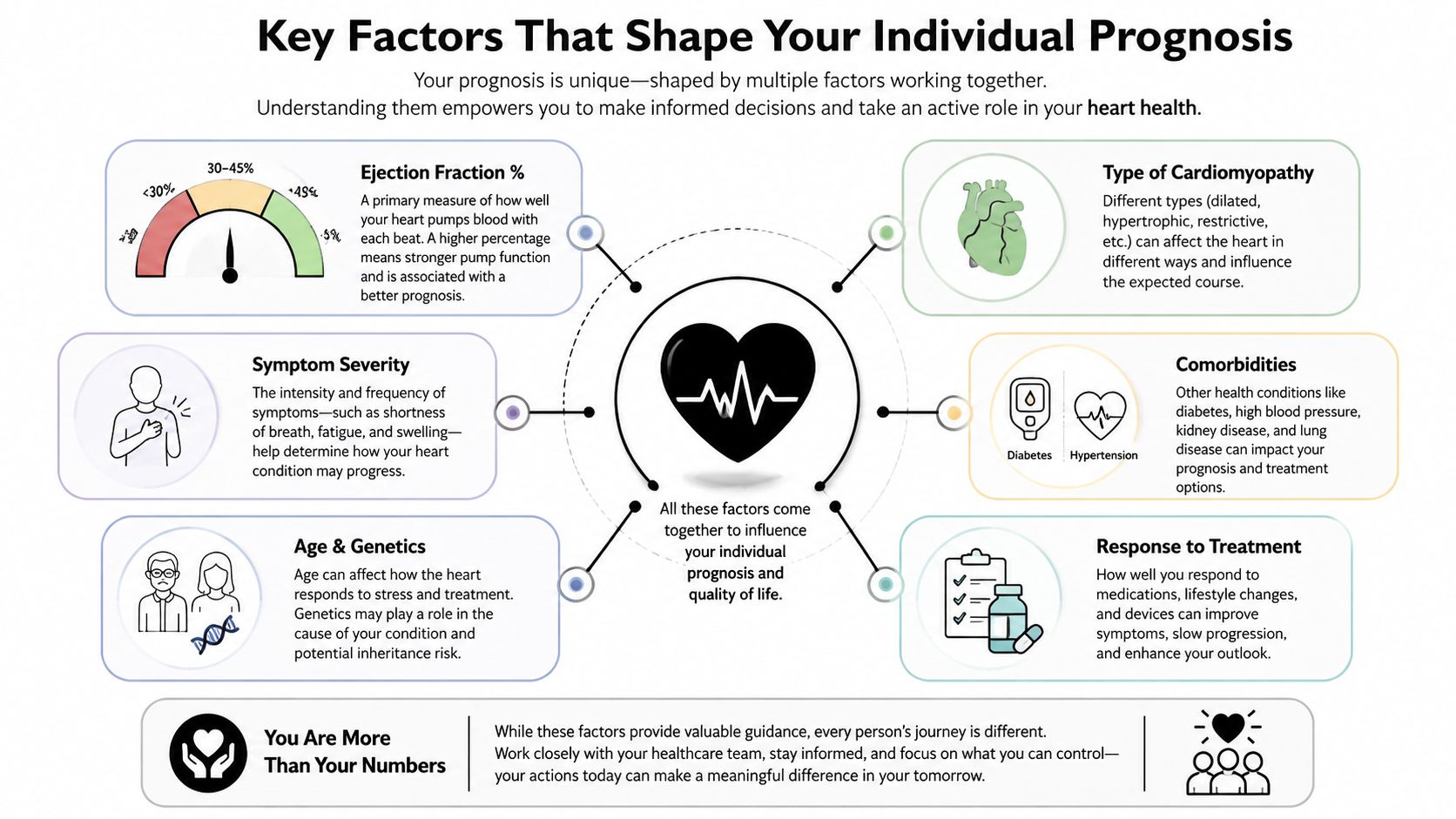
Two people can have the same diagnosis and very different futures because prognosis is built from several pieces at once. Cardiologists don't rely on one measurement. They assemble a risk picture, like putting together a puzzle where each piece changes the shape of the final image.
Ejection fraction is important, but it's not the whole answer
Ejection fraction, the amount of blood the heart pumps out with each beat, is often one of the first numbers people hear about. Lower values usually point to higher risk because the heart is struggling to move blood efficiently. But EF is only one piece of the picture, because some patients with preserved EF still have major rhythm risk or severe stiffness, while others with lower EF respond well to therapy.
That's why one lab or echo result can't stand alone. It helps define the problem, but it doesn't define the person.
Age, symptoms, arrhythmias, and comorbidities all matter
Age at diagnosis changes the odds because the heart has different reserves at different life stages. Symptom severity matters too. A person who gets short of breath with minimal activity is in a different category from someone whose symptoms are mild and stable. Dangerous rhythms, especially ventricular tachycardia, can alter prognosis quickly because they raise sudden-death risk rather than just long-term pump risk.
Other illnesses stack the deck. Diabetes, kidney disease, and hypertension all make the heart work harder and can reduce the margin for recovery. That's one reason a careful cardiology visit usually includes more than a quick listen to the chest. It includes a full look at the body as a system, not just the heart as an isolated organ.
Genetics can push risk up or down
Genetics matter most in conditions like HCM and ARVC, where specific mutations can point toward different risk profiles. Some genetic patterns are linked to more severe disease, while others may show a milder course. Family history also matters because it can reveal risk before symptoms ever appear.
For patients, the takeaway is simple. Prognosis isn't a single label, it's a combined score made from heart function, rhythm stability, age, symptoms, other conditions, and genes. That's why two people with the same diagnosis can hear very different things from their cardiologists.
If you're trying to understand your own outlook, the useful question isn't “What is the average?” It's “Which parts of my case raise risk, and which parts are already controlled?”
Treatments and Monitoring Strategies That Improve Outcomes
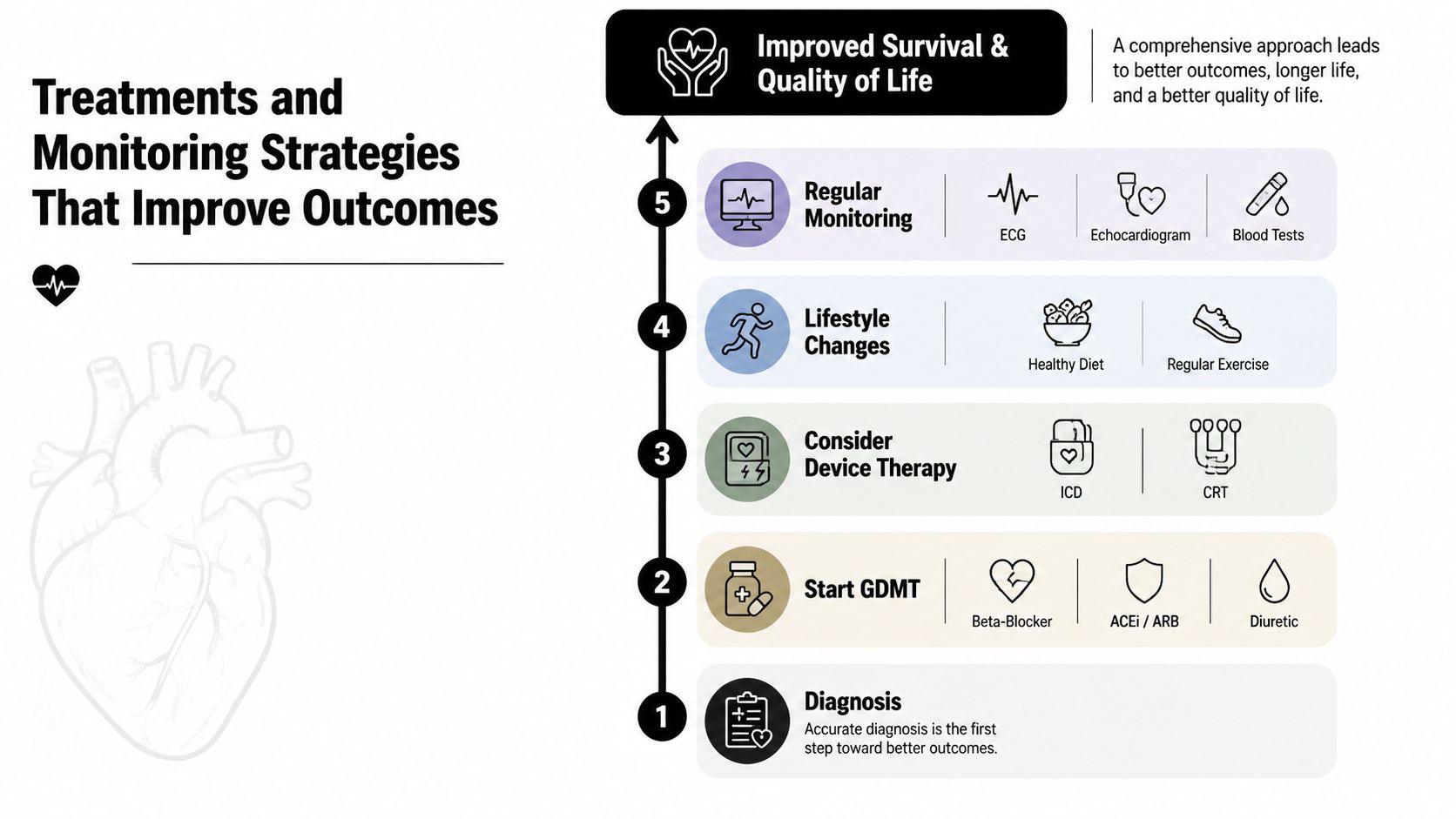
Survival has improved because treatment has become more specific. The heart doesn't respond well to guesswork, but it often responds better when clinicians match therapy to the mechanism driving disease. That's where medication, devices, advanced therapies, and monitoring all come together.
Medication is the foundation
Guideline-directed medical therapy usually starts with classes that reduce strain on the heart and help it remodel more safely over time. Beta-blockers slow the heart and reduce oxygen demand. ACE inhibitors and ARNI therapy help the heart pump against less resistance. SGLT2 inhibitors and mineralocorticoid receptor antagonists add another layer of protection by improving heart-failure outcomes and helping control fluid-related stress.
No pill fixes everything, but together these medicines can stabilize the terrain the heart is working on. That matters for both DCM and advanced heart failure patterns, where the margin for error can be small.
Devices and advanced support can change the risk curve
Some patients benefit from an implantable cardioverter-defibrillator, or ICD, which can stop life-threatening rhythms. Others need cardiac resynchronization therapy, which helps the heart chambers beat more in sync. In advanced cases, transplant evaluation or mechanical circulatory support becomes part of the discussion.
The right device depends on the kind of risk a patient has. A person whose main problem is sudden arrhythmia needs a different intervention than someone whose main problem is persistent pump failure.
Monitoring is not a side issue
Recent evidence on wearable cardioverter-defibrillators in non-ischaemic cardiomyopathy shows that patients can remain vulnerable in the transient window before ICD decisions are finalized, and that short-term rhythm protection can matter wearable-defibrillator literature. That's especially relevant when symptoms are still being sorted out, medications are being adjusted, or recovery might still happen.
Wearable ECG tools add another layer. They can help patients catch atrial fibrillation, ventricular ectopy, or other unstable rhythms between visits, which is useful when a clinician is trying to see whether the rhythm problem is settling down or worsening. One practical option is find AI cardiac assessment, which can be part of a broader review of wearable ECG recordings when someone wants a closer look at rhythm trends.
Practical use: monitoring works best when the readings get shared with a care team quickly, especially during the early phase after diagnosis or medication changes.
In short, treatment improves survival because it doesn't just react to damage. It tries to prevent the next hit, whether that next hit is fluid overload, a dangerous rhythm, or a slow slide into advanced failure.
Your Action Plan and When to Seek Care
A cardiomyopathy diagnosis can leave you staring at paperwork and wondering what to do first. Start with the basics, then build a routine you can keep. One patient who feels overwhelmed today can be the same patient who later becomes very good at noticing small changes before they become emergencies.
What to do right away
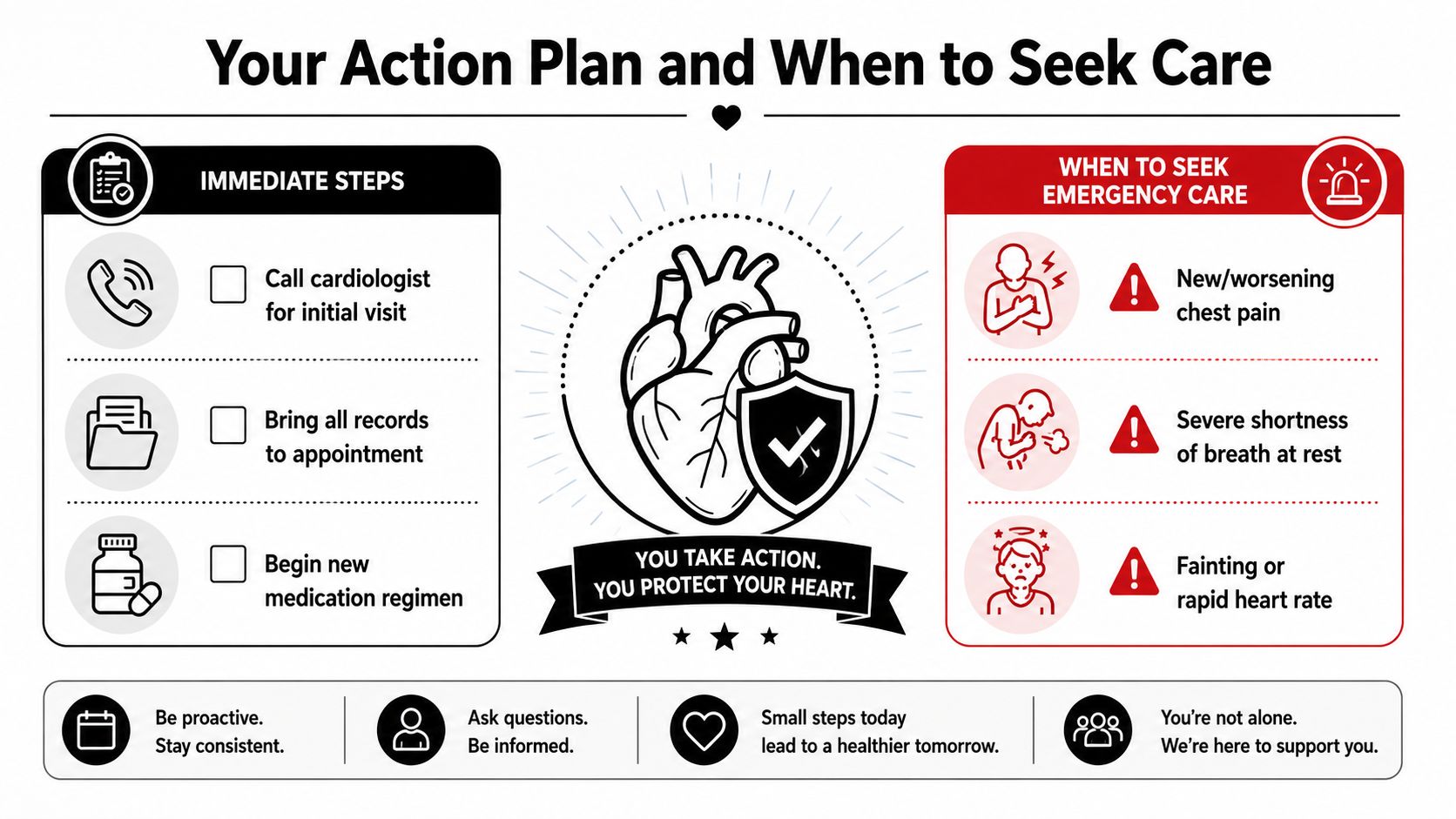
Book a cardiology visit and bring every test result you have, including prior echoes, medication lists, and any rhythm recordings from your wearable device. Ask whether genetic testing makes sense for your subtype, especially if HCM or ARVC is being considered. Then get a clear medication plan, because vague instructions and “we'll see” follow-up rarely help someone who needs structure.
Lifestyle changes should be concrete, not abstract. Many patients need to pay attention to sodium, fluid balance, and exercise boundaries that fit their exact condition. Safe movement is usually better than avoidance, but it should be individualized, not improvised.
Warning signs that need prompt attention
Seek urgent care if you notice sudden weight gain, worsening shortness of breath, fainting, chest pain, or palpitations that keep going for more than a few minutes. Those symptoms can mean fluid overload, unstable rhythm, or both. Don't wait to “see if it passes” when the pattern is clearly different from your usual baseline.
A simple home routine helps too. Write down your symptoms, keep track of when palpitations happen, and use wearable ECG monitoring when your clinician says it's appropriate. That kind of record can make the next appointment much more useful than memory alone.
How to advocate for yourself
Bring questions to every visit. Ask what subtype you have, what your current rhythm risk looks like, and what would change the plan. If something still doesn't make sense, get a second opinion. Skepticism is reasonable, especially if you feel like your concerns are being rushed past.
The most powerful thing in your control is not pretending the diagnosis is small. It's showing up early, asking direct questions, and using monitoring and treatment consistently enough to stay ahead of the next problem.
If you're trying to make sense of your own diagnosis, don't settle for a generic prognosis. Ask your cardiologist which subtype you have, what's driving your risk, and whether wearable ECG monitoring could help you catch rhythm changes earlier. If you're still unsure, schedule a second opinion and bring your records, because the right plan starts with the right label and the right data.
Tracking rhythm changes? Certified experts review your ECG within minutes.


