


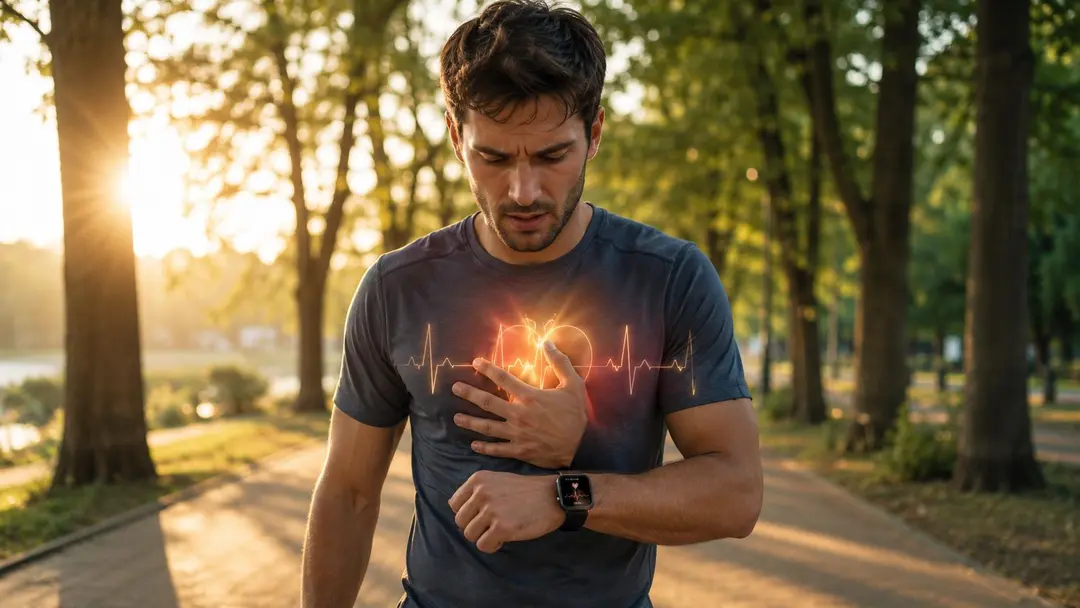


Hello Heart Hero. If your heart suddenly fluttered, skipped, or raced during a run, ride, lift, or even a hard walk, you're not alone, and you're not imagining it. A lot of people feel that jolt, then get home, check a resting ECG, and see nothing unusual. That mismatch can be frustrating, especially when you've already had a quick clinic visit that didn't catch the moment.
Exercise induced palpitations can be real, brief, and hard to document at rest. In athletes and tested populations, reported palpitations vary widely, and some rhythm changes only show up during exertion or recovery, not when you're sitting still (exercise-testing review and cohort data). That's why wearable ECGs can be useful, not because they replace a clinician, but because they can catch the rhythm at the exact moment your body feels off.
Welcome to Your Heart Health Journey
A runner feels a sudden thump near the end of a tempo session. A cyclist notices a flip-flop feeling during the cooldown. A gym-goer pauses mid-set because the heartbeat seems to jump out of rhythm for a few seconds, then settle again. Those moments can feel alarming, especially when the symptom disappears before anyone can record it.
The most useful first step is to treat the episode like a clue, not a verdict. Your body may be telling you something about effort, timing, recovery, or rhythm, and the details matter more than a vague label like “palpitations.” A resting ECG can look fine after the fact, while the event happened only under load.
Practical rule: if the symptom appears during exercise, note the exact activity, the intensity, and whether it started at peak effort or during cooldown.
That kind of detail helps when you're trying to make sense of a watch alert, a handheld ECG strip, or a clinician's questions later. If you already track effort with a workout log, it can help to pair symptoms with perceived exertion data, much like how some athletes optimize recovery using RPE data in structured training plans.
Wearables won't answer everything, but they do give you something most office visits can't, a snapshot during the event itself. That's often the difference between “I felt weird” and “I felt a sudden racing rhythm at the end of a sprint, then it eased off in recovery.”
What Happens in Your Heart During Exercise
Why a normal heart can act differently under stress
Your heart isn't just moving faster during exercise, it's responding to a shift in control. Exertion pushes the body toward sympathetic dominance, which means more catecholamines, a faster sinus rate, shorter recovery time between beats, and faster conduction through the heart's electrical pathways (mechanism review). In plain language, the engine revs up, and the wiring becomes more excitable.
That helps explain why exercise induced palpitations can appear even when resting rhythm is normal. A beat that would never stand out at rest can become noticeable when the heart is already working hard. The same electrical setup can also make fast rhythms easier to trigger, especially when intensity rises quickly or the body is shifting out of effort and into cooldown.
That's why two people can describe the same “flutter,” but one is feeling a normal acceleration and the other is sensing an extra beat or short burst of arrhythmia. A symptom that starts at a reproducible heart-rate threshold can be especially revealing, because it suggests a pattern instead of random noise.
Why timing matters so much
The body doesn't respond the same way at the start of a workout, at peak effort, and during recovery. A heart that feels steady mid-run might become irritable as adrenaline stays high while autonomic tone shifts on the way back down. That timing shift is one reason exercise rhythm symptoms can be so confusing in real life.
If you want to compare this with training load and perceived effort, a structured recovery tool like optimize recovery using RPE data can help you notice whether symptoms cluster around hard sessions, rushed cooldowns, or poorly recovered days. The heart often gives better clues when you look at the workout around it, not just the symptom itself.
Common Rhythm Causes Behind Exercise Palpitations
The most common patterns people actually feel
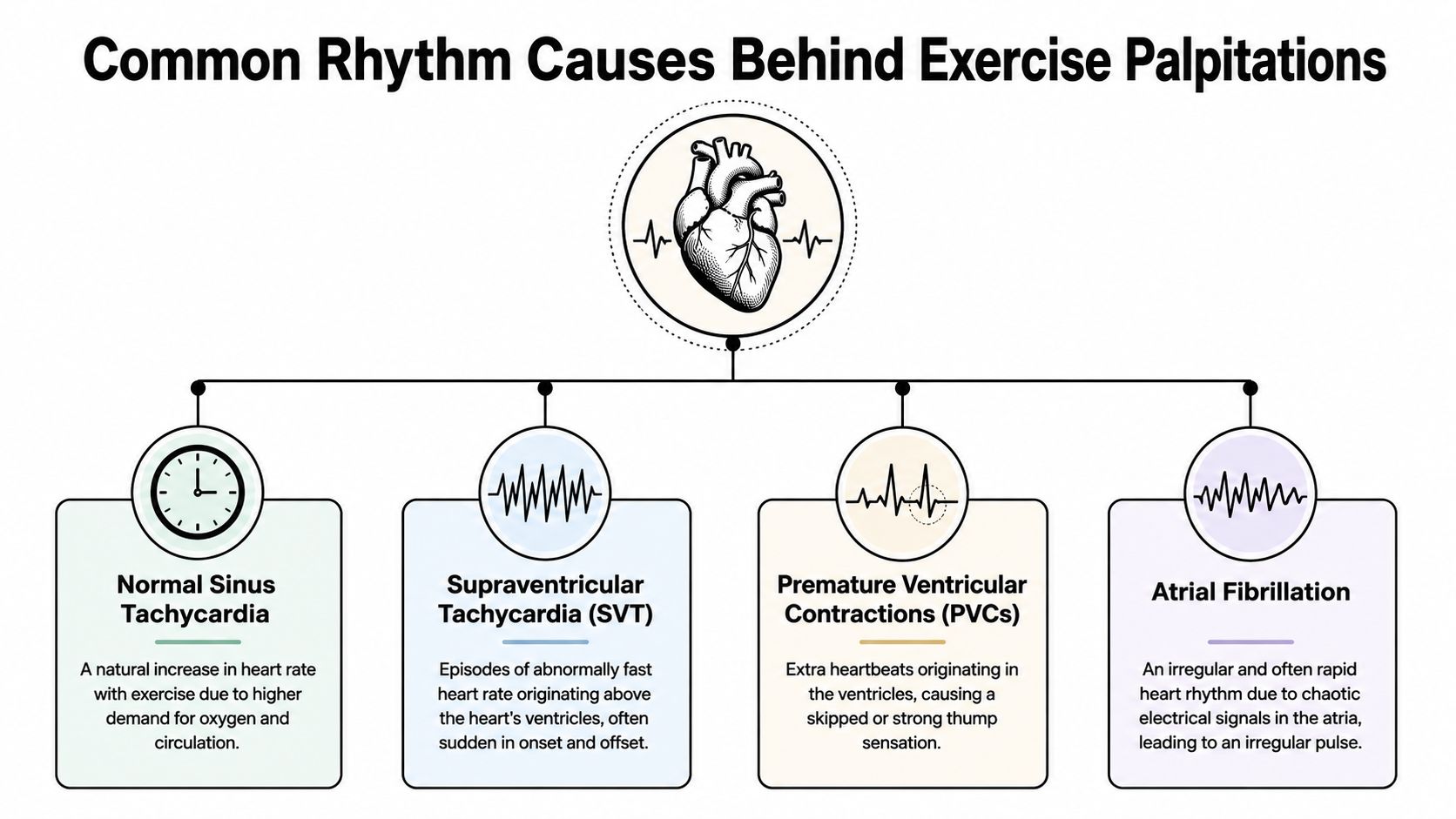
Not every palpitation means danger. Some are faster normal rhythms, while others are electrical patterns that deserve closer attention. Sinus tachycardia is the normal, expected rise in heart rate during exercise, so it usually feels like fast but coordinated beating rather than a sudden flip or thud. On a wearable ECG, it looks regular, just quicker.
Supraventricular tachycardia, or SVT, often feels different. People commonly describe a sudden switch, almost like the heart clicked into another gear. In a large cohort, exercise-induced SVT was reported in 6.0% of men and 6.3% of women, and 98% of the 141 episodes were paroxysmal SVT with rates from 105 to 290 beats per minute (cohort study). Only 4% of subjects were symptomatic, which is a reminder that fast rhythms can be brief and easy to miss without recording them during the episode.
Extra beats and irregular rhythm patterns
Premature ventricular contractions, or PVCs, often feel like a skipped beat followed by a stronger thud. In a treadmill study of 1,160 apparently healthy volunteers, 6.9% developed frequent or repetitive exercise-induced ventricular ectopic beats at least once, with “frequent” defined as 10% or more of beats in 1 minute and “repetitive” as 3 or more beats in a row (classic treadmill study). Those definitions help translate a vague symptom into a concrete rhythm pattern.
Atrial fibrillation, or AF, usually feels more irregular than fast. In endurance-trained adults, repeated long-term exposure to high-volume exercise is associated with atrial remodeling, including dilatation, fibrosis, and enhanced parasympathetic tone, which can create a substrate for AF (review). Among endurance athletes, AF has been reported at 2 to 10 times the rate seen in controls, and one clinical summary noted that every 10 years of regular endurance exercise was associated with about a 16% higher risk of atrial fibrillation and a 42% higher risk of atrial flutter (AFP review).
For a practical breakdown of what PVCs can feel like in daily life, this PVC guide gives useful context for wearable users.
During Workout Versus Recovery Phase Palpitations
Peak effort and cooldown are not the same thing
A palpitation that shows up while you're sprinting doesn't mean the same thing as one that appears when you stop and breathe hard in the cooldown. Some extra beats vanish during exertion, then come back when the body is shifting out of high adrenaline and into recovery. That timing pattern matters because the heart's electrical environment is changing quickly at that point.
Long-term data make that distinction even sharper. In a cohort of 5,488 asymptomatic adults followed for about 20 years, high-grade PVCs appeared in 1.8% during exercise, 2.4% during recovery, and 0.8% during both. PVCs in the recovery phase were linked to higher cardiovascular mortality, while PVCs only during exercise were not (cohort analysis). That doesn't mean every recovery palpitation is dangerous, but it does mean timing changes the meaning.
Recovery-phase symptoms deserve a careful look, especially if they repeat in the same cooldown window.
That nuance is often missed in casual advice. A lot of consumer content treats every palpitation the same, but recovery is its own physiologic moment, and your wearable ECG can help separate a true exertion-triggered rhythm from something that appears once the intensity drops. The useful question isn't only “Did my heart race?”, it's “Did it race during the hardest part, or after I stopped?”
If you want a plain-language walk-through of how ECG changes can look across exercise and cooldown, the article on decoding ECG changes during exercise and recovery is a practical companion.
Get your ECG checked by certified experts within minutes on the Qaly app.


Red Flags and When to Seek Emergency Care
Symptoms that should stop the workout immediately
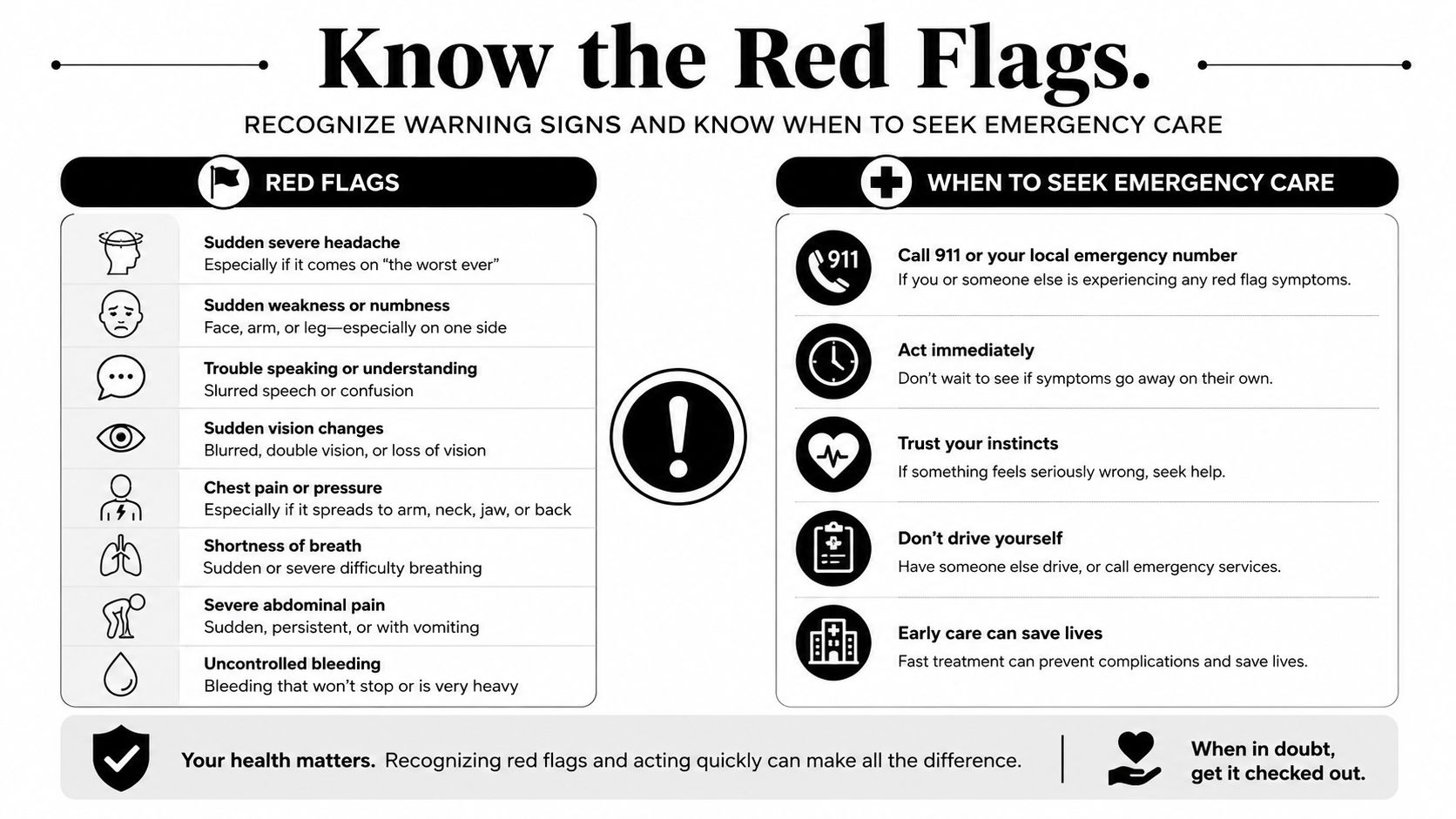
Some palpitations are worth logging. Others are not. If the rhythm change comes with fainting, severe dizziness, chest pain or pressure, or significant shortness of breath, stop exercising and get urgent medical help right away (hospital FAQ). Those symptoms suggest the heart rhythm may be affecting circulation, or another serious problem may be happening alongside it.
A benign-feeling skipped beat is very different from a symptom pattern that makes you feel like you might pass out. Trust that distinction. You don't need to prove anything by pushing through a workout when your body is giving you a warning.
What can wait for review
If the rhythm feels brief, settles quickly, and doesn't come with red-flag symptoms, it's often reasonable to record it on a wearable ECG and review it later. That's especially true when the pattern is familiar, repeatable, and not worsening. The goal is not to normalize everything, but to avoid panic over every isolated thump.
A simple rule helps here.
If you feel unsafe, stop first. If you feel stable, capture the ECG second.
That approach respects both sides of the problem. It keeps urgent symptoms from being minimized, and it keeps harmless-looking episodes from being overcalled as emergencies. If you ever feel torn, the safer choice is to stop and get checked.
Capturing and Sharing Your ECG Data with Clinicians
Record the episode while it's happening
The best wearable ECG strip is the one taken during symptoms, not after you've calmed down and forgotten the details. Start the recording as soon as it's safe, then note whether you were running, lifting, cycling, or cooling down. That context matters because exertion and recovery can point to different rhythm patterns.
A useful note is simple: what you were doing, when the symptom started, and whether it felt regular, irregular, fast, or like a skipped beat. That short description gives a clinician much more to work with than “I had palpitations.” It also helps explain why a resting office ECG may have looked normal.
Make the tracing clinically useful
Wearable ECGs can capture rhythm strips, and some services add human review so the data are easier to use. Qaly, for example, connects at-home and wearable ECG recordings to certified cardiographic technicians and provides interval readings such as PR, QRS, and QTc, along with narrative reports and rhythm interpretation for common arrhythmias. That kind of review can be especially helpful when symptoms are intermittent and the recording needs a second set of eyes.
If your device allows it, save more than one episode. A single strip can be useful, but a pattern across workouts is more convincing. That includes the same symptom showing up during hard intervals, during cooldown, or at the same perceived effort level. For a deeper look at why continuous tracking helps with intermittent symptoms, the guide on continuous rhythm monitoring is worth reading.
Bring the ECG strip, the workout context, and the symptom notes. That combination is often more useful than the rhythm label alone.
What to share at the appointment
A clinician can work with a lot more than a screenshot. Bring the rhythm strip, the exact time of day if you have it, what type of exercise you were doing, and whether the episode felt different from your usual exertion. If your wearable provides trend reports, those can help show whether the same pattern keeps returning.
Wearable ECGs earn their keep. They don't replace evaluation, but they can turn a frustrating, hard-to-catch symptom into a record that's worth discussing.
Lifestyle Strategies to Reduce Palpitations
Lower the triggers you can control
The most practical first moves are usually boring, and that's a good thing. Hydrate well, pay attention to caffeine and other stimulants, and avoid jumping straight into maximal effort when your body hasn't warmed up yet. A calmer ramp into exercise gives the electrical system less reason to misfire.
Cooldown matters too, especially if your symptoms tend to show up after the hardest part of the workout. Some people do better when they slow down gradually instead of stopping abruptly. Others notice fewer episodes when they avoid stacking intense sessions on days when stress, poor sleep, or heavy fatigue already made them feel off.
Use symptoms as feedback, not as a reason to quit
The point isn't to become afraid of exercise. It's to learn which patterns your heart tolerates well. If certain workouts repeatedly trigger palpitations, scale back intensity for a while, then use your wearable ECG and symptom notes to see whether the change helps.
Stress also plays a role, and anxiety can make every sensation feel louder. If overthinking gets stuck in a loop after a workout, the article on overthinking symptoms and solutions can help separate body signals from spiraling thoughts.
A steady routine often looks like this:
- Warm up longer than you think you need to, especially before intervals or hill work.
- Cool down on purpose, because recovery is when some palpitations reveal themselves.
- Track caffeine, supplements, and pre-workout drinks, since stimulants can make symptoms harder to ignore.
- Notice stress and sleep changes, because they often shape how intense the workout feels.
- Keep your wearable ready, so you can record the next episode instead of just remembering it later.
If you want a simple stress reset that fits into real life, this natural stress reduction guide is a practical place to start.
The bigger win is confidence. When you can see the pattern, you can train with more calm, ask better questions, and stop treating every heartbeat as a mystery.
If your exercise induced palpitations keep repeating, capture the next episode on your wearable ECG, write down exactly when it happened, and bring both the strip and your workout notes to a cardiology or primary care visit. If the rhythm comes with fainting, chest pressure, severe dizziness, or significant shortness of breath, stop exercising and seek emergency care right away.
Palpitations during exercise? Certified experts review your ECG within minutes.


