


Key Takeaways

User Profile
Hello Heart Hero.
When your doctor recommends a Holter monitor, one of the first questions that pops into your head is probably, "How much is this going to cost me?" It's a fair question, and the answer can feel a bit all over the place.
Without insurance, you could be looking at a bill anywhere from $300 to over $1,000. If you have good insurance, your out-of-pocket cost will likely be much lower, often landing somewhere between $50 and $250 after your copay or deductible. But why such a big range? Let's break it down so you know what to expect.
Your Guide to Understanding Holter Monitor Costs
If you’re reading this, you’re probably trying to get a straight answer on what a Holter monitor test will set you back. You are definitely not alone. Navigating healthcare costs can feel overwhelming, especially when prices seem like a mystery.
We get it. It’s easy to feel skeptical about the whole system when you’re just looking for simple, clear information. Think of this guide as your financial roadmap for the Holter monitor journey. We'll demystify the costs so you can feel prepared and in control.
Breaking Down the Bill
Ever tried to price out a home renovation? You don't get a single price for "the kitchen"; you get separate costs for the cabinets, the countertops, the labor, and the appliances. A bill for a Holter monitor test works in a surprisingly similar way. It's usually split into two main parts:
- The Technical Component: This covers the hardware. It's the cost of the device itself, the technician's time to get you all set up, and the service of actually recording your heart's activity for 24 or 48 hours.
- The Professional Component: This is the expert analysis. This fee pays for a cardiologist's time and skill to meticulously review all the data your monitor collected, interpret the findings, and write up a detailed report for your doctor.
Knowing about this split is helpful because it shows you exactly where the money is going. It also arms you with the right language for conversations with your provider or insurance company, since these two parts are often billed separately.
The cost of a Holter monitor test isn't just one number. It’s a combination of the technology used and the expert analysis required to turn raw data into a meaningful diagnosis for your heart health.
Why Is This Market Growing So Fast?
You might be curious about the reasons behind the high cost of these devices and services. A significant factor is the basic principle of supply and demand. The global market for Holter monitors was sizable in 2022 and is expected to more than double by 2030.
This boom is largely fueled by the rising number of people with heart conditions like atrial fibrillation (AFib). For patients, these huge market numbers help explain why you might still get a bill for a few hundred dollars even after insurance. It's a big business, and that trickles down to individual costs.
This guide will give you the knowledge to confidently ask the right questions and make decisions that are right for your health and your wallet. If you want to learn more about the different types of heart monitoring out there, you might find our guide on what is cardiac monitoring helpful.
Why Holter Monitor Prices Vary So Much
Ever get a medical bill and wonder if they just picked a number out of a hat? It’s a frustratingly common feeling, especially when a friend mentions paying a totally different price for the exact same test you just had.
When it comes to a Holter monitor, that final number on your bill isn't random at all. A few key things come together to determine your out-of-pocket cost. Once you understand them, you can see exactly where the charges come from and feel more confident asking the right questions.
Breaking Down Your Bill: The Two Key Fees
First, it's important to know that the bill for a Holter monitor test usually comes in two separate parts. This is a standard practice in medical billing, but it’s a big reason why it's so tough to get a single, straight price upfront.
- Technical Fee: Think of this as the cost for the hardware and the service. It covers the physical monitor, all the supplies like wires and sticky pads, and the technician's time to get you set up and later download the data.
- Professional Fee: This part pays for the cardiologist's time and expertise. After you’ve worn the monitor, a heart specialist has to sit down and meticulously review every single heartbeat recorded, sometimes for 24, 48, or even more hours, to spot any issues and write up a formal report for your doctor.
These two fees might show up on one bill, or they could come separately from the hospital and the cardiologist’s practice. This is a major source of the price confusion people experience.
Location, Location, Location
Just like in real estate, where you get your medical care has a huge impact on what you pay. A Holter monitor test done at a major hospital in a big city will almost always cost more than the same test at a small, independent clinic in the suburbs.
Why? Hospitals simply have higher overhead costs to cover, from staffing to building maintenance, and those costs are passed on to patients. It's a frustrating reality of our healthcare system that the same procedure can vary by thousands of dollars just a few miles down the road.
The Monitor Type and How Long You Wear It
Not all Holter monitors are the same, and the specific technology your doctor orders is a big factor in the final price. A standard 24-hour Holter is typically the most basic and affordable choice.
But sometimes, a longer or different type of study is needed to catch the problem:
- Extended Monitoring: If your symptoms are infrequent, your doctor might need you to wear the monitor for 48 hours, 72 hours, or even up to a week. More data means more analysis time for the cardiologist, which increases the professional fee.
- Patch Monitors: These are modern, wire-free devices that stick right onto your chest. They're often way more comfortable and can be worn for up to 14 days. That convenience and longer monitoring window, however, usually comes at a higher price.
The longer you wear the monitor and the more advanced the technology, the higher the final bill will likely be. It's a trade-off between cost, comfort, and the amount of diagnostic data your doctor needs.
Knowing these variables puts you in a much stronger position. Instead of feeling helpless when you see a bill, you can start to understand the "why" behind the numbers. And if your doctor suggests a device for longer-term monitoring, you might also want to read our guide on the different types of cardiac event monitors available.
Navigating Insurance for Your Holter Monitor Test
Trying to make sense of your health insurance can feel like being handed a puzzle with half the pieces missing. We want to help you find those missing pieces, especially when it comes to getting your Holter monitor test covered.
This section will give you the confidence to become your own best advocate. The goal is to make sure you get the benefits you're paying for and avoid those dreaded surprise bills. You deserve to feel empowered, not overwhelmed.
This diagram shows how different factors, like the device, location, and monitoring duration, combine to influence the final cost.

By understanding this flow, you can see exactly why asking about these specific details before your test is so important for predicting your bill.
Proving It Is Medically Necessary
Before an insurance company agrees to pay for anything, your doctor must prove that the Holter monitor test is medically necessary. This is the single most important concept for getting your test covered.
Think of it this way: your insurance plan wants to know that the test isn't just a "nice-to-have" but an essential step in diagnosing or managing a health issue. Your doctor does this by documenting your symptoms, like palpitations, dizziness, or fainting spells, in your medical record.
This documentation becomes the evidence they submit to justify the test. Strong documentation is your best defense against a claim denial.
Understanding Prior Authorization and CPT Codes
Sometimes, proving medical necessity isn't enough. Many insurance plans require prior authorization for diagnostic tests like Holter monitoring. This means your doctor’s office must get official approval from your insurer before you even get the monitor.
This process is where a lot of frustrating delays happen. It's also where you can play an active role by checking with your insurance provider to see if pre-approval is needed and following up with your doctor's office to ensure they've submitted it.
To get that approval, your provider uses special billing codes called CPT codes (Current Procedural Terminology). These are universal five-digit codes that tell the insurance company exactly what service was performed.
- 93224: This code covers the complete service, including hooking up the monitor, the recording itself, and the doctor’s final report.
- 93225: This code is for the technical part only, meaning just the recording and scanning.
- 93226: This code is for the professional part, which is the physician’s interpretation of the data.
Knowing these codes can help you understand your Explanation of Benefits (EOB) from your insurer and spot any potential billing errors.
Coverage for Medicare and Medicaid
If you have Medicare Part B, you're generally in good shape. It typically covers 80% of the Medicare-approved amount for a Holter monitor test once you've met your annual deductible. You would be responsible for the remaining 20% coinsurance.
Medicaid coverage can be more varied, as it's administered by individual states. Most state Medicaid programs do cover Holter monitoring when deemed medically necessary, but the exact rules and potential copayments can differ. Always check your state's specific guidelines.
The Holter ECG monitoring market hit USD 320.81 million in 2020 and is forecasted to soar to USD 696.67 million by 2030. Despite this, average insurance payouts are often under $100 per study, which highlights why knowing your personal out-of-pocket share is so critical.
Affordable Alternatives to Traditional Holter Monitoring

If the potential cost of a traditional Holter monitor test is giving you pause, you're not alone. It's completely understandable to get sticker shock from healthcare bills. The good news is that technology has given us some incredible, and much more affordable, ways to keep an eye on your heart health, putting you back in the driver's seat.
These modern solutions can offer powerful insights without the high price tag or the hassle of older methods. Let's walk through some of these alternatives to find a path that works for both your health and your wallet.
Extended-Wear Patch Monitors
One of the most popular alternatives to the classic Holter is the extended-wear patch monitor. Forget the bulky monitor and tangled mess of wires. This is a small, water-resistant patch that sticks right onto your chest.
It’s a far more comfortable and discreet way to record your heart’s activity. You can shower, exercise, and sleep without feeling like you’re tethered to a medical device.
The advantages of these patches are pretty clear:
- Longer Monitoring: Patches can be worn continuously for up to 14 days. This is a huge plus if your symptoms, like palpitations or dizzy spells, are infrequent.
- Greater Comfort: With no wires to get in the way, you can go about your daily life with minimal disruption. It’s easy to forget it's even there.
- Better Data: A longer recording period gives your doctor a much larger window to catch and diagnose an irregular heart rhythm.
Because they’re so convenient and can gather data for longer, these patches have quickly become a go-to option. If you're interested in a deeper dive, you can learn more about how a heart patch monitor works and its benefits.
The shift toward patient-friendly devices is changing the entire cardiac monitoring field. The growth in the market is driven by the demand for remote monitoring and more convenient options, as the high cost of traditional Holters leads patients to choose these flexible, often more affordable alternatives.
Your Personal ECG Device and an Expert Eye
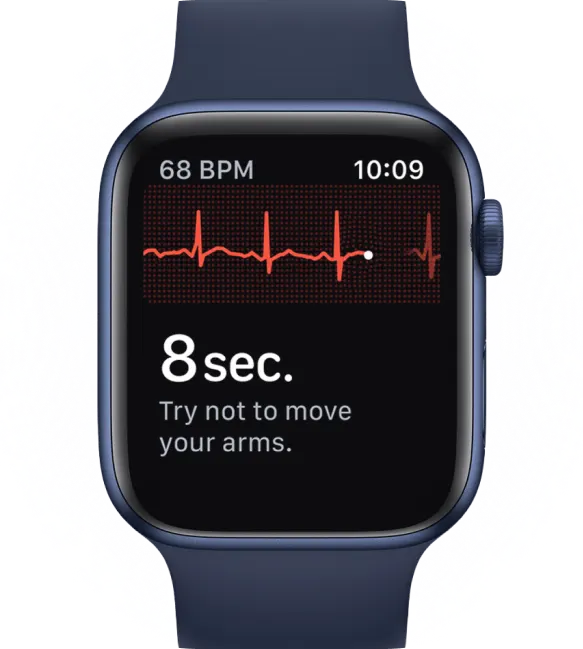
The most powerful and affordable tool for monitoring your heart might already be on your wrist or in your pocket. Wearable devices like the Apple Watch, Fitbit, Samsung Galaxy Watch, and portable ECGs like KardiaMobile have put amazing technology right at our fingertips.
These devices can record a single-lead ECG anytime you feel a symptom. This is a game-changer. Instead of just hoping your symptoms appear during a 24-hour test, you can capture an ECG the exact moment you feel a flutter or a racing heartbeat.
But there's a catch: an ECG reading is just raw data. It needs a trained, expert eye to interpret it correctly. This is where a service like Qaly comes in.
Think of it like this: your watch is the camera that takes the picture, but Qaly is the professional photo lab that develops it, analyzes it, and tells you what's in the image.
Qaly connects the ECGs you take at home with certified cardiographic technicians who analyze them in minutes, not days or weeks. This gives you rapid reassurance and actionable insights at a fraction of the cost of a traditional Holter monitor test.
This approach offers a few incredible advantages:
- Instant Peace of Mind: Why wait weeks for results? When you feel a palpitation, you can take an ECG and get it analyzed by a human expert almost immediately.
- Cost-Effective: For a small monthly fee, you can get dozens of ECGs analyzed, which is far more affordable than a single, expensive diagnostic test.
- Empowerment: You're in control. You can monitor your heart on your own terms, track symptoms over time, and walk into your doctor's appointment armed with detailed reports.
This combination, your own device and an expert interpretation service, has created a whole new, much more accessible way to manage your heart health. It bridges the gap between consumer tech and clinical-grade analysis, giving you the clarity you need without the hefty price tag.
Practical Tips to Lower Your Holter Monitor Bill
Knowing what drives up the cost of a Holter monitor is half the battle. Now, let’s get to the good part: real-world strategies you can use to actually lower that final bill. Dealing with healthcare costs can feel overwhelming, but you have more control than you might think.
Think of this section as your personal toolkit. We'll walk through a few practical steps you can take before, during, and after your test to make your heart monitoring more affordable and put you back in the driver's seat.


Ask for the Cash-Pay Price
This might sound a little backward, but sometimes paying out-of-pocket, without using your insurance at all, is actually cheaper. This is known as the cash-pay or self-pay price.
But why would it be cheaper? When a clinic bills your insurance, they use a pre-negotiated, and often inflated, price list called the "chargemaster." They also sink a lot of time and money into the billing paperwork and follow-ups.
By offering a cash-pay discount, they get their money right away without the administrative headache. In fact, studies show these cash prices can be significantly lower, sometimes by 30% or more, than what they bill insurance companies.
Your Action Step: Before your test, call the billing department and simply ask, "I'm interested in the self-pay or cash price for a Holter monitor test. Could you tell me what that would be?" It's a straightforward question that could save you hundreds.
Choose an Independent Diagnostic Facility
Where you get your test done matters, a lot. While your mind might jump to the local hospital, that’s almost always the most expensive place to go. Independent Diagnostic Testing Facilities (IDTFs) are a fantastic alternative.
These are smaller, standalone clinics that specialize in specific tests like ECGs, ultrasounds, and Holter monitoring. They don’t have the huge overhead costs of a big hospital, so their prices are typically much lower for the exact same quality of test.
- How to Find One: Ask your doctor if they can refer you to an in-network IDTF. You can also do a quick online search for "independent diagnostic facility near me" or "outpatient cardiology testing center."
- Verify Quality: Make sure the facility is accredited by a recognized organization. This confirms they meet high standards for accuracy and patient care.
Making this one simple switch can dramatically cut the cost of your Holter monitor without sacrificing the quality of your results. You’re just choosing a more efficient and affordable setting for the same service.
Negotiate Your Bill After the Fact
Even after the bill arrives in the mail, you still have options. Don't just look at that first number and assume it's set in stone. Medical bills are often negotiable, especially if you can show a financial hardship or are willing to pay a portion of it right away.
Here’s a simple game plan for negotiating:
- Review the Bill Carefully: First, scan the bill for any errors or duplicate charges. It happens. Make sure the CPT codes listed match the services you actually received.
- Call the Billing Department: Be polite and just explain your situation. Ask if they offer any discounts for paying promptly or if they can set up a no-interest payment plan to make it more manageable.
- Offer a Settlement: If you're paying out-of-pocket, you can offer to pay a specific, lower amount immediately to settle the bill. Many providers would rather get some payment now than chase a larger amount over time.
Look for Financial Assistance Programs
Most non-profit hospitals and many large clinics have financial assistance or "charity care" programs. These are set up specifically to help patients who have trouble affording their medical bills.
Eligibility is usually based on your income and family size, and you might be surprised to find you qualify, even if you have insurance, particularly a high-deductible plan. Don’t be afraid to ask. Just inquire with the hospital’s patient advocacy or financial services department about their programs and how to apply. It’s a resource that’s there to be used.
Common Questions About Holter Monitor Costs
Even with a full breakdown of the numbers, you're probably still left with a few nagging questions. That's completely normal. Navigating medical billing can feel like trying to solve a puzzle in the dark, and it’s smart to get as much clarity as possible.
Let's clear the air and tackle some of the most common questions people have about the cost of a Holter monitor. Our hope is to quiet that financial anxiety so you can focus on what really matters: your heart health.
Is a Holter Monitor Test Worth the Cost?
This is the big question, isn't it? In nearly every situation, the answer is a firm yes. While no one gets excited about a medical bill, a Holter monitor provides absolutely invaluable information that can either diagnose or rule out serious heart conditions.
Think of it as an investment in your health and your peace of mind. A Holter test can finally put a name to those mysterious palpitations, dizzy spells, or unexplained fainting episodes. The data it provides gives your doctor a clear path forward, whether that involves treatment for a condition like AFib, PVCs, or another arrhythmia. The cost, while a very real factor, is often small when weighed against the risk and uncertainty of an undiagnosed heart issue.
Can I Just Use My Apple Watch Instead of a Holter Monitor?
It's a fantastic question, especially since so many of us already have powerful ECG technology right on our wrists. While your Apple Watch (or Samsung, or Fitbit) is an amazing tool for spot-checking your heart rhythm when you feel a symptom, it serves a different purpose than a medical-grade Holter monitor.
A Holter monitor is a diagnostic device prescribed by a doctor for continuous recording over a set time, usually 24 to 48 hours. Its job is to capture everything, including rhythm changes you might not even feel. Your watch, on the other hand, only records an ECG when you manually start one.
However, this is where the lines are starting to blur in a really exciting way. While a watch can't replace a Holter for an initial diagnosis, pairing it with an interpretation service like Qaly creates a powerful and affordable bridge. You can get expert, human analysis of your watch ECGs almost instantly, giving you a way to monitor your heart between doctor visits without the high cost of Holter monitor tests each time.
While a personal wearable is great for "on-demand" checks, a Holter monitor is for "always-on" recording. They are two different but complementary tools in your heart health toolkit.
What Should I Do If My Insurance Denies Coverage?
Getting a denial letter from your insurance company is incredibly frustrating, but don't get discouraged. This is often just the first step, not the final word. You have every right to appeal their decision, and many initial denials get overturned with a little persistence.
Here’s a simple game plan:
- Find Out Why: First, call your insurance company and ask for the specific reason for the denial. Was it a simple coding error? Did they say it wasn't a "medical necessity"? Knowing the "why" is your first move.
- Team Up with Your Doctor: Next, let your doctor's office know what happened. They are your most important partner here. They'll need to provide additional records and a letter explaining why the test is medically necessary for your diagnosis.
- File a Formal Appeal: Once you and your doctor have all the paperwork together, submit a formal appeal. Follow your insurance company's process exactly. The key here is not giving up.
Are There Any Hidden Fees I Should Know About?
This is a common fear, and it stems from a general lack of transparency in healthcare billing. While there shouldn't be "hidden" fees, you might see costs pop up that you didn't expect. The most common surprise is getting two separate bills: one from the facility for the technical component (the device, setup, and recording) and another from the cardiologist for the professional component (the analysis and report).
To avoid any surprises, just be proactive. When you schedule the test, ask the billing office for a detailed breakdown of all expected charges. Asking a simple question like, "Will I receive separate bills for the device and the doctor's reading?" can help you get a full picture of the total cost of Holter monitor services. If you want an even deeper dive into how these reports are created, check out our guide on what's inside a Holter cardiac monitor analysis.

Qaly provides expert analysis of your wearable ECGs, reviewed by certified human professionals, helping you understand palpitations and abnormal rhythms without waiting.



.png)
.png)