





Key Takeaways

User Profile
Hello Heart Hero. If you're worried about your heart, you may have heard your doctor mention a "heart attack blood test." It sounds scary, but it's really just a simple blood draw that gives doctors a window into what's happening with your heart muscle.
This test looks for specific proteins, called cardiac biomarkers, that your heart releases when it's under serious stress or has been damaged. It’s one of the most important tools doctors use to figure out if a heart attack has actually happened.
Your Journey to Understanding Heart Health
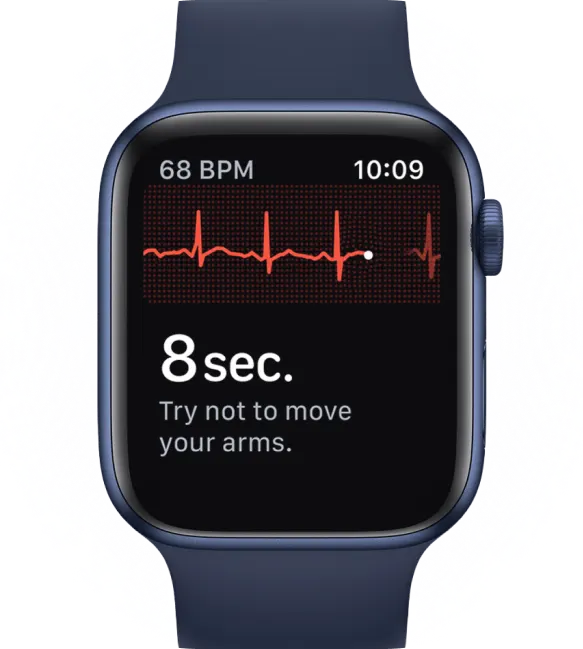
If you’re here, chances are you’re trying to make sense of your heart health. Maybe you felt a strange flutter in your chest, or your watch picked up an ECG that looked off, and now you’re trying to navigate a medical system that can feel overwhelming. We understand, and you're not alone in feeling this way.
This guide is here to walk you through what a heart attack blood test really measures. We’ll break down the medical jargon into plain, understandable language, giving you a safe space to learn without the anxiety.
Giving You the Knowledge to Feel in Control
Our main goal is to arm you with information. When you understand what’s happening, you can have more confident chats with your doctor and feel less like a passenger on your own health journey. Let's start with the basics of why these blood tests are so important.
They’re even more powerful when you combine them with the data you can gather yourself.
Think of it this way: your wearable device gives you daily clues, but a clinical blood test provides definitive answers. Together, they create a complete picture of your heart's story.
These days, you can monitor many parts of your heart health right from your living room. If you want to learn more about getting started, you might find our guide on how to check heart health at home helpful. Being proactive provides you with valuable data to bring to your doctor.
Turning from Patient to Partner
It’s completely valid to feel skeptical about the healthcare system. It’s easy to feel like just another number when you’re trying to get clear answers.
But by understanding the "why" behind procedures like a heart attack blood test, you can change your role. You are no longer just a passive patient; you become an active partner in your own care.
As you learn more, digging into broader topics like Understanding Cardiology can also help you know when it’s time to see a specialist. Knowledge is power, and that power is your best tool for staying healthy.
What Are Cardiac Biomarkers

So, what exactly are cardiac biomarkers? Think of them as tiny messengers flowing through your bloodstream, carrying an honest story about your heart’s health. They’re a way for your body to send up a flare when something’s wrong.
When your heart muscle is under stress or becomes injured, like during a heart attack, it releases specific proteins into your blood. A heart attack test blood sample is drawn to measure the levels of these proteins, giving doctors solid evidence of what's happening inside your chest.
This blood test is vital because symptoms alone can be misleading. Chest pain or shortness of breath might point to a dozen different causes, and not all of them are heart related. But because certain biomarkers are highly specific to heart muscle, they help doctors cut through the noise and see what’s really going on.
Tying Your At-Home ECG Data to Clinical Tests
For those of us using wearable ECGs, understanding these markers adds a powerful layer of insight. An unusual rhythm you spot on your watch, combined with elevated biomarker levels, gives your doctor a much clearer and more complete picture. This powerful combination helps them move from suspicion to a confident diagnosis.
And these blood tests don't just confirm damage; they can also help flag future risk. One groundbreaking study from Mass General Brigham tracked 27,939 healthy women over 30 years. It revealed that those with high levels of hsCRP (a marker for inflammation) had a 70% higher risk of major heart events. Even more telling, women with three elevated risk markers were 2.6 times more likely to have a heart attack or stroke.
This is exactly why combining the data from your watch with what a blood test reveals is so important.
An ECG from your watch might show signs of reduced blood flow, a condition known as ischemia. When you pair that ECG data with a blood test, your doctor gets a complete, two part story of your heart's current health.
Understanding the link between your ECG irregularities and blood test results can be empowering. If you'd like to dive deeper, you can explore our guide on what ischemia of the heart means. This knowledge helps you have more productive conversations with your doctor, turning uncertainty into action.
The Key Markers in a Heart Attack Blood Test
Let's meet the main players a doctor looks for in a heart attack test blood sample. When your heart muscle gets damaged, it releases specific proteins into your bloodstream. Finding these proteins is like finding clues that tell a story about what happened to your heart.
The most important of these clues is Troponin. Think of it as the lead detective in the investigation.
Troponin is a protein found almost exclusively in your heart muscle. When heart cells are injured or die, they burst open and leak troponin into the bloodstream. Finding elevated levels is a very strong signal that a heart attack has occurred.
The creation of "high sensitivity" troponin tests truly changed the game. These modern tests can pick up even tiny, trace amounts of this protein, giving doctors a critical early warning sign, sometimes hours before older tests could.
Because of its accuracy, troponin has become the gold standard for diagnosing a heart attack. If you want to dive deeper into the numbers, check out our guide on how doctors interpret troponin levels.
The Supporting Cast of Markers
While troponin is the star of the show, other markers play important supporting roles. One of these is Creatine Kinase-MB (CK-MB).
CK-MB is an enzyme also found in heart muscle tissue. For decades, before the highly specific troponin test became common, CK-MB was the main indicator doctors relied on to help diagnose a heart attack.
It's not as specific as troponin (small amounts exist elsewhere in the body), but watching its levels rise and fall can still give doctors valuable information about the timing and size of the heart muscle damage.
Finally, there's Myoglobin. This protein is the first responder on the scene.
Myoglobin is found in all muscle tissue, not just your heart. This means a high level doesn't automatically point to a heart attack; you could just be sore from a tough workout.
But its real value is speed. Myoglobin is often the very first marker to appear in the blood after any muscle injury. Its presence acts as an early, though very general, alarm bell that tells doctors something is wrong, pushing them to look closer.
This timeline shows when you can typically expect each marker to show up in the blood after a heart event.

As you can see, Myoglobin rises first but isn't very specific. CK-MB provides a clearer signal a few hours later, and Troponin delivers the most definitive and lasting evidence.
Why Timing Matters for Blood Test Results
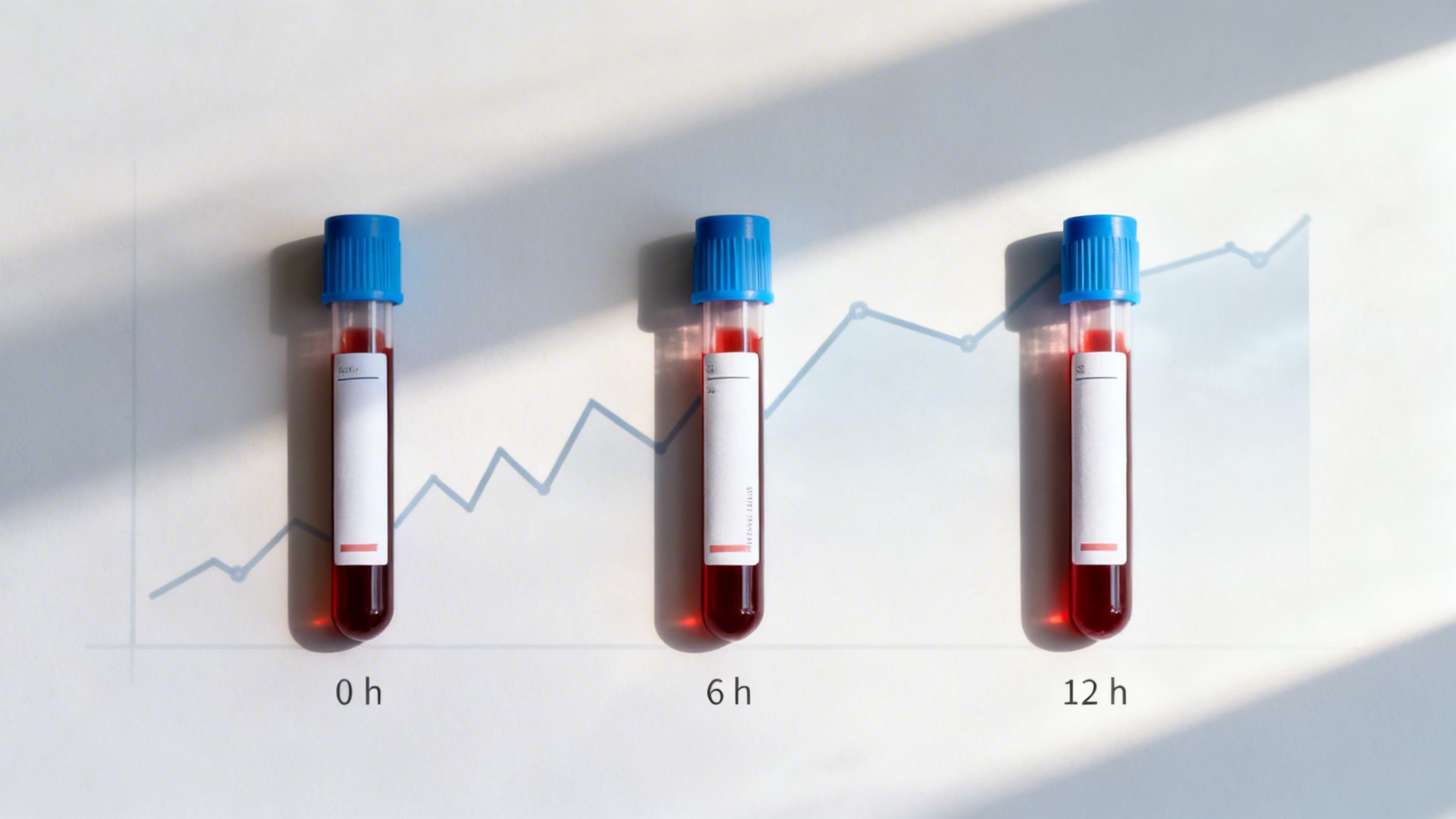
Have you ever been in a hospital, worried about your heart, and wondered why the medical team keeps coming back to draw more blood? It can feel confusing and certainly adds to the stress of the moment. The reason, however, is simple but very important: timing.
When it comes to a heart attack test blood, a single result is just a snapshot in time. Your heart’s biomarkers don’t just show up instantly; their levels change dramatically over the hours following a heart event. What doctors are really looking for is a trend, not just a single number.
The Rise and Fall of Cardiac Markers
Imagine these biomarkers are runners in a race. Each one starts at a different time and runs at a different pace.
A key marker is Myoglobin. This one is the sprinter. It's often the very first marker to appear in the blood after muscle injury, but it also leaves the race pretty quickly. Since it’s not specific to just the heart, think of it as an early, general alert.
Another is Troponin. This is the marathon runner. Troponin levels start to rise a few hours after a heart attack begins, but they stick around for days, giving us the most reliable evidence.
This dynamic is exactly why doctors order a series of blood tests, usually over a period of 6 to 12 hours. They are carefully watching to see if the troponin level is rising, peaking, or starting to fall.
This pattern gives a much clearer picture of what happened to your heart and when. Understanding this process can help ease your mind during that stressful waiting period, as it’s a necessary part of getting an accurate diagnosis.
Watching for the Trend
A single blood draw right when symptoms start might come back looking normal, even if a heart attack is underway. The troponin simply has not had enough time to leak from damaged heart cells into the bloodstream in detectable amounts.
This is why a second or even third test is so essential. It helps answer the most important question: are the levels going up? A rising trend is a strong signal that heart muscle damage is actively happening. This careful approach is key to preventing both a misdiagnosis and any unnecessary alarm.
A 2023 systematic review revealed a sobering statistic: the global prevalence of heart attacks is 3.8% for people under 60 but climbs to 9.5% for those over 60. As this highlights, heart attacks are a risk across all adult age groups, making accurate testing vital. You can discover more about these findings and the importance of early detection through blood tests like high-sensitivity troponin assays, which can spot issues even before major symptoms appear.
Using Blood Tests for Long-Term Heart Management
So, you're learning about heart attack blood tests. It's easy to think of them as just an emergency room tool, but that's only half the story. These tests are also incredibly useful for managing your heart health over the long haul, especially if you're taking a proactive approach to your wellness.
For someone recovering from a heart attack, for example, your doctor will likely keep an eye on your troponin levels over time. It helps them see if the heart muscle is healing the way it should. Think of it as a progress report for your heart’s recovery.
The real power, though, comes from looking beyond just the emergency markers. A few other key blood tests can help paint a much more detailed picture of your chronic risk factors.


Building Your Personal Heart Health Dashboard
Certain blood tests can give you a heads up about hidden issues long before they turn into emergencies. By tracking these markers, you can shift from a reactive mindset, just waiting for something to go wrong, to a proactive one.
Here are a few key long term markers to talk about with your doctor:
- hs-CRP (high-sensitivity C-reactive protein): This test measures the general level of inflammation in your body. We know that chronic, low grade inflammation is a major risk factor for heart disease.
- Cholesterol Panel: This is the classic test that looks at your LDL ("bad"), HDL ("good"), and total cholesterol. Getting these numbers in a healthy range is a cornerstone of preventing heart disease.
- Lipoprotein(a) or Lp(a): This is a special type of cholesterol particle. High levels, which are often genetic, can seriously increase your risk of heart attack and stroke.
When you start combining the data from these blood tests with the ECG readings you take at home, like your PR, QRS, and QTc intervals, you create a kind of personal health dashboard. Our guide on NT-proBNP normal levels can add another important layer to this picture. This combined view gives you the power to see the real impact of your lifestyle changes and have much more productive conversations with your doctor.
The need for this proactive approach is stark. In 2019, nearly 7 million people in G20+ countries died from ischemic heart disease, the main cause of heart attacks, leading to 113 million Years of Life Lost. Catching irregularities early with your watch and confirming them with a sensitive heart attack blood test can help you avoid becoming another statistic. You can read more about these crucial global health findings to grasp the full scale of the issue.
This complete picture, from your watch and your bloodwork, allows you to track how well medications are working and truly partner with your cardiologist in your own care.
Beyond the immediate cardiac markers, other blood tests are also vital. For instance, checking your long term blood sugar levels is crucial for managing conditions like diabetes, which has a huge impact on heart health. You can even use an A1C test at home to stay on top of it.
Your Questions About Heart Blood Tests Answered
We get it. When it comes to your heart, you have questions, and maybe a little bit of healthy skepticism. You're looking for straight answers, not a bunch of confusing medical speak, and that’s completely understandable. This is the part of our guide where we tackle your most common concerns about heart attack blood tests, with the clarity you deserve.
The healthcare world can feel like a maze sometimes, leaving you to figure things out on your own. Our goal is to arm you with the knowledge you need to feel more in control, turning that uncertainty into real confidence.
Can This Blood Test Be Wrong?
This is a great question, and one we hear all the time. It’s only natural to question the accuracy of a test that carries so much weight. The short answer is that the high-sensitivity troponin test is incredibly good at what it does: detecting damage to the heart muscle.
But no single test ever tells the whole story. It's possible for other conditions to cause a slight bump in troponin levels, what some might call a "false positive." For instance, a serious infection, chronic kidney disease, or even something as intense as running a marathon can cause a small amount of troponin to leak into the bloodstream.
This is exactly why a good doctor will never make a diagnosis based on a single test result. Context is everything.
Your medical team is trained to look at the complete picture to make sure they get it right. They’ll analyze your specific symptoms and when they started, your ECG readings, and the trend of your heart attack blood test results over several hours.
Think of it this way: a single, slightly elevated number is one piece of data. But a number that's actively and quickly climbing over a few hours tells a much more urgent story. It's the combination of all these clues that guides their decisions.
How Long Do the Results Take?
In an emergency, every minute feels like an hour, and waiting for test results can be agonizing. The good news is that most modern hospital labs can turn around a troponin test very quickly.
You can typically expect to see the first result within 30 to 60 minutes after your blood is drawn. This gives your doctors a crucial first snapshot of what’s happening in your body at that moment.
However, as we just covered, the trend is what really matters. For this reason, your doctor will almost always draw another blood sample a few hours later to compare the results. This second test is vital for seeing if those biomarker levels are on the rise, which is a classic sign of an ongoing heart event. That waiting period can feel endless, but know that it’s a careful and necessary step to ensure they make the most accurate diagnosis possible.
Can I Still Have a Heart Problem with a Normal Blood Test?
Yes, absolutely. This is a critical point for anyone being proactive about their heart health. The heart attack test blood is designed to do one specific job: look for evidence that heart muscle cells have been damaged or have died.
It's entirely possible to have a significant blockage in one of your heart's arteries, a condition called coronary artery disease, that has not yet caused any permanent muscle damage. This is often the cause of what's known as stable angina, where you might feel chest pain or pressure during stress or physical exertion.
In a situation like this, your blood tests could come back perfectly normal. Why? Because no heart cells have actually died and released those biomarkers into your blood. The underlying problem, the blockage, is still there and still poses a risk.
This is precisely where tools like at-home ECG monitoring become so valuable. If you're having symptoms, being able to share any irregular rhythms or changes from your ECG with your doctor gives them crucial clues. It can point them toward an underlying issue even when a blood test is normal, opening the door for earlier investigation and treatment before a heart attack happens.

Get expert, human-led analysis of your wearable ECGs in minutes, track changes over time, and have more informed conversations with your doctor.



.png)
.png)