




Key Takeaways

User Profile
A strange heartbeat can change the whole tone of your day. Maybe you felt a flutter while folding laundry, a hard thump while walking the dog, or a burst of racing beats right before bed. You searched, found a sea of watches, straps, ECG gadgets, and medical terms, and now you're trying to sort out what helps.
That's where many people in the USA are right now. They want useful information, not vague reassurance. They want tools that let them keep an eye on things at home, especially when getting fast answers from the healthcare system feels difficult, expensive, or impersonal. If that's you, you're not overreacting. You're trying to understand your body.
Hello Heart Hero Your Journey Starts Here
Hello Heart Hero.
You notice something odd. Not dramatic enough to call an ambulance, but not easy to ignore either. Your watch buzzes. Your chest feels off for a few seconds. Then everything settles down, and you're left with the same question a lot of people have: what just happened?
That moment sends many people toward heart rate monitors usa searches. Not because they want gadgets for the sake of gadgets, but because they want a little more clarity and a little less helplessness. That instinct makes sense. In North America, wearable self-monitoring has become mainstream. In fact, North America held a 38.42% revenue share of the global heart rate monitors market in 2025, supported by strong adoption among people who prefer self-monitoring over traditional healthcare visits, according to Data Bridge Market Research's market analysis.
For some people, that first step is a smartwatch. For others, it's reading about a chest strap, or looking into continuous monitoring for heart rhythm tracking because their symptoms come and go. The common thread is simple: you want evidence, not guesswork.
You don't need to become a cardiology expert overnight. You just need to understand what your device can tell you, and what it can't.
A good monitor can help you notice patterns. It can show whether your heart rate was steady, suddenly fast, or irregular when you felt symptoms. It can help you walk into a medical appointment with something more useful than "I felt weird last Tuesday."
That's real progress. Not perfect certainty, but a stronger starting point.
How Heart Monitors Actually See Your Heartbeat
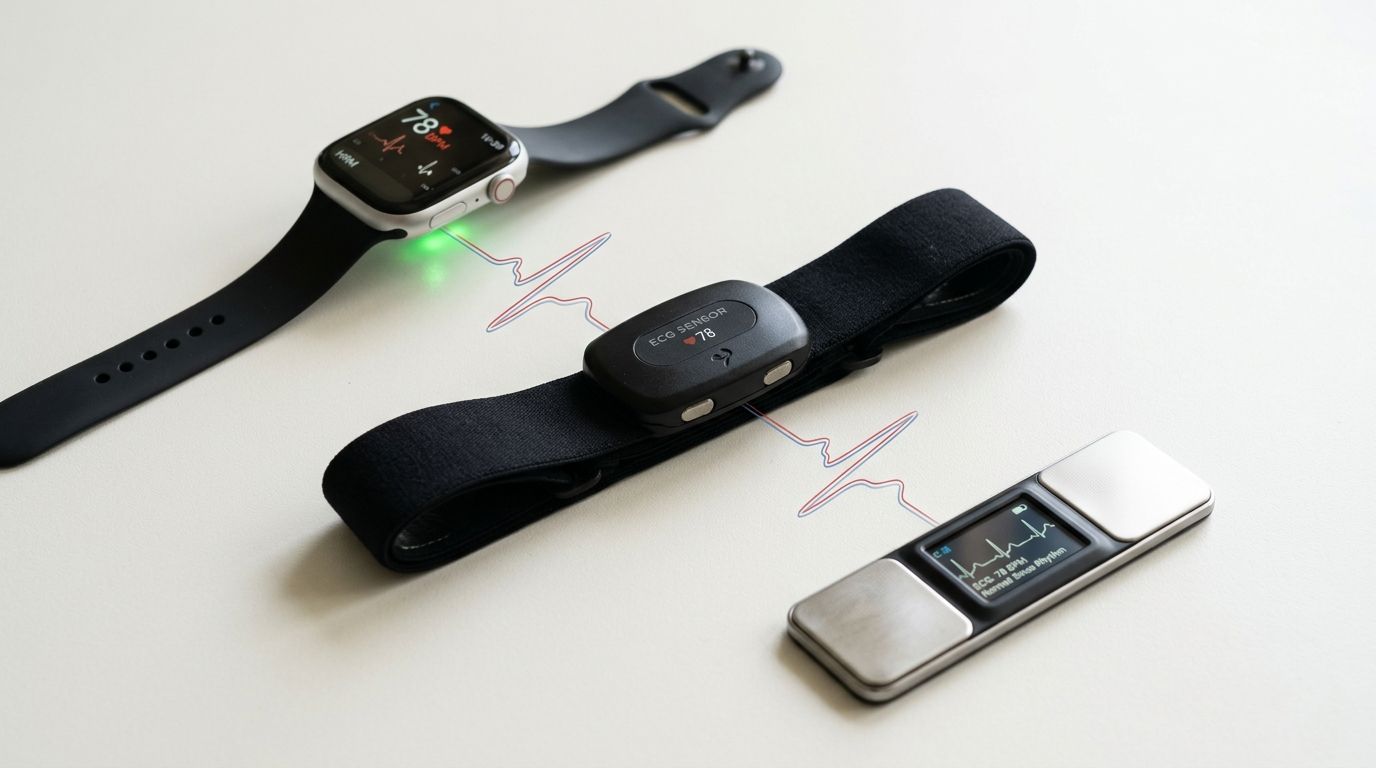
A heart monitor doesn't "look" at your heart the way an ultrasound does. It picks up signals your body creates every time your heart beats. There are two main ways consumer devices do that: ECG and PPG.
One listens to electricity. The other watches blood flow.
ECG listens to the heart's electrical signal
Your heart beats because tiny electrical impulses move through it in an organized pattern. Electrocardiography, or ECG, detects that electrical activity directly. That's why chest straps and spot-check ECG devices are often the tools people trust when they want precise timing.
A simple way to think about it is this: ECG is like listening directly to a phone call. You're hearing the signal itself, not trying to guess what was said based on movement in the room.
If you've ever wondered why athletes still wear chest straps instead of relying only on a watch, this is a big reason. If you want a deeper plain-language breakdown of how electrical signals become heart rate readings, this explanation of how heart rate is measured from ECG is useful.

PPG watches blood flow with light
Most smartwatches and fitness bands use photoplethysmography, or PPG. That's the technology behind the green light on the back of the device. The sensor shines light into your skin and measures changes in reflected light as blood pulses through your vessels.
This method is more like watching a lamp flicker behind a curtain. You aren't hearing the electrical signal. You're seeing the effect of the heartbeat after blood moves.
That can work very well when you're still or moving steadily. It becomes trickier when your arm is bouncing, your skin contact changes, or your blood flow patterns shift quickly.
Why movement changes the picture
The biggest source of confusion for many buyers is this: a watch can be accurate and still miss the mark in certain moments. Both things can be true.
Motion artifact is the main reason. The device is trying to separate your true pulse signal from noise created by movement. Garmin describes a specific problem called cadence lock, where the sensor starts confusing your running rhythm with your heart rate in its explanation of cadence lock in optical monitors.
That doesn't mean wrist devices are useless. It means they estimate under tougher conditions, while ECG devices detect a more direct signal.
Practical rule: If you're sitting, walking, or doing steady activity, a wrist monitor may be plenty helpful. If you're sprinting, doing intervals, or trying to capture a rhythm event precisely, direct electrical measurement matters more.
This difference sits at the center of almost every question about heart rate monitors usa shoppers ask.
The Main Types of Heart Rate Monitors You Can Buy
Shoppers usually run into three broad categories. They may all claim to track heart activity, but the experience of using them is very different.
Chest straps for performance and precision
Chest straps sit around your torso with the sensor positioned near your heart. They're the classic choice for runners, cyclists, rowers, and anyone who wants dependable live heart rate during exercise.

They aren't glamorous, and they aren't typically worn all day. But during a workout, they shine. You strap it on, connect it to an app, bike computer, treadmill, or sports watch, and it feeds you fast heart rate data with less of the wobble you can see from wrist sensors.
Common names people recognize include the Polar H10, Polar H7, Garmin HRM-Pro Plus, and similar training-focused sensors. Athletes often pair them with sport-specific apps. If you follow team training, race prep, or want to understand soccer performance data, this kind of hardware fits naturally into that world because precision during movement matters.
What it feels like to use one: slightly more effort up front, much more confidence during hard exercise.
Wrist-based monitors for all-day convenience
Wrist-based devices include Apple Watch, Fitbit, Samsung Galaxy Watch, Garmin fitness watches, and many fitness bands. They use optical sensors and are built for everyday life.
These devices appeal to people who don't want a single-purpose tool. A watch can track heart rate trends, workouts, steps, sleep, and notifications. You put it on in the morning and mostly forget about it.
That convenience is the main reason this category dominates everyday consumer use. For many people, the right question isn't "What is the most accurate device in every condition?" It's "What will I wear consistently?"
A wrist-based device often wins that contest.
Wrist monitors are often the easiest starting point
For someone with occasional symptoms, a smartwatch can lower the barrier to paying attention. You don't need a workout plan or chest strap routine. You just wear it and start noticing patterns.
That said, if your concern is rhythm capture rather than general wellness, not every watch does the same things. Some devices emphasize fitness trends. Others also offer a spot-check ECG feature.
This short walkthrough helps show how popular monitor types differ in daily use.
Portable ECG devices for symptom moments
Portable ECG devices are different from both straps and watches. These are usually small handheld or pocket-sized devices that you use when you feel something unusual. Rather than wearing them continuously, you take a deliberate recording.
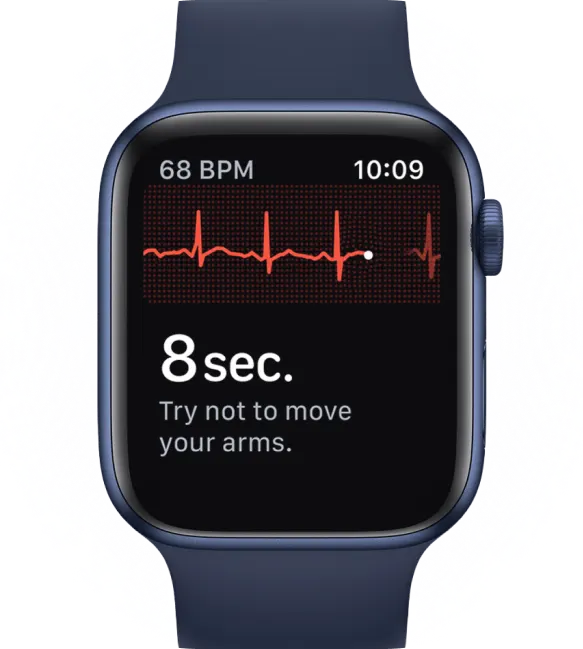
Kardia is the example many people know best. You place your fingers on the sensors, stay still, and record a short ECG strip. That creates a clearer electrical snapshot than a general wellness heart rate screen.
People who get occasional palpitations often like this category because it gives them an action to take in the moment. If you want a better feel for this category, this guide to a portable electrocardiogram monitor shows where these devices fit.
A simple way to choose among the three:
- Choose a chest strap if your priority is workout precision.
- Choose a wrist monitor if you want convenience and broad lifestyle tracking.
- Choose a portable ECG device if your symptoms are intermittent and you want a focused rhythm recording during those episodes.
Some people end up using more than one. That's not overkill if each device solves a different problem.
Accuracy What You Really Need to Know
The honest answer to "Is my monitor accurate?" is frustrating at first, but useful once you hear it clearly: accurate enough for what?
A device that's fine for resting trends may not be the best tool for sprints. A device that helps with exercise pacing may not be the right one for evaluating a suspicious rhythm event.
What the best direct comparison shows
A controlled study compared chest-strap ECG monitoring with wrist-based PPG devices against a medical-grade ECG. The Polar H7 chest strap reached a correlation coefficient of 98, while wrist-worn devices like the Fitbit Iconic and Garmin Vivosmart HR scored 89. Accuracy also worsened at higher running speeds, according to the PubMed study on heart rate monitor agreement.
That sounds technical, but the plain takeaway is simple. A chest strap tracked closer to the medical reference, especially when exercise got harder.
The reason isn't that wrist devices are poorly designed. It's that they face a harder task. They estimate from blood flow while your arm is moving, sweating, and changing position.
When a watch is good enough
For daily life, many modern watches do a solid job. At rest and during moderate activity, wrist-based monitors can be reassuringly usable. A clinical review reported that devices such as the Apple Watch III showed moderate to high accuracy with ECG reference values at r_c of 96, while all devices in that analysis had r_c of at least 85 at rest in the PMC review of wrist-worn heart rate monitor accuracy.
So if your goal is to watch general trends, keep an eye on workout effort during steady sessions, or notice whether your heart rate is broadly normal for what you're doing, your watch may be enough.
A watch doesn't have to be perfect to be useful. It has to be reliable enough for the question you're asking.
When you should ask more from the device
There are situations where "close enough" stops feeling close enough.
Consider these examples:
Hard intervals or sprint work
Your heart rate changes quickly. Lag matters more. Motion noise matters more.Symptom capture
If you feel a sudden pounding or skipped beats, a trend line may not tell you whether the rhythm was normal, fast, or irregular.Anxiety around readings
If small discrepancies trigger more worry, a more direct measurement method may give you calmer, cleaner data.
A lot of Apple Watch users specifically wonder if their ECG feature is dependable. This breakdown of how accurate the ECG is on Apple Watch helps clarify what the device can do well and where limits remain.
The most useful way to think about accuracy
Don't ask whether wrist devices are "bad" or chest straps are "best" in every situation. Ask which one matches your main use case.
If you want to train in tight heart rate zones, use a chest strap. If you want an easy daily companion that tracks trends and nudges you to pay attention, a wrist device makes sense. If you're trying to understand irregular symptoms, heart rate alone may not be the full story.
That's the part many people miss. A highly accurate heart rate number is not the same thing as a diagnosis.
Choosing the Right Monitor for Your Personal Needs
The best device isn't the fanciest one. It's the one that answers your main question without making your life harder than it needs to be.
The heart rate monitors usa market is crowded because people want different things from these tools. That demand is huge. The United States heart rate monitor watch market was valued at US$2.4 billion in 2025 and is projected to grow at a CAGR of 6.7% through 2035, according to Fact.MR's heart rate monitor watch market report. More options can be helpful, but they can also make your decision feel noisier.

If your goal is athletic precision
Buy for signal quality, not for lifestyle extras.
A chest strap usually makes the strongest case here. If you're training by zones, racing, or trying to compare hard sessions over time, you want the cleanest possible live data during exertion. A smartwatch can still be part of your setup, but many serious exercisers pair their watch with an external chest strap rather than relying on the wrist sensor alone.
This choice is less about being old-school and more about reducing doubt.
If your goal is broad wellness and habit tracking
A smartwatch or fitness band is often the most practical answer. It tracks more than one thing, and that matters because your heart rate doesn't exist in isolation. Sleep, steps, stress, exercise, and recovery patterns all shape how your heart data looks day to day.
This category works well for people who want to build awareness, not just react to emergencies. You wear it consistently, and consistency gives context.
A strong match for daily use looks like this
- You want low friction so you'll consistently wear it.
- You value trend data more than second-by-second training precision.
- You like having one device for multiple health and lifestyle signals.
If your goal is catching occasional palpitations
A portable ECG device deserves serious consideration.
This is especially true if your symptoms are brief and unpredictable. A watch can help if it offers ECG recording, but a dedicated portable ECG tool gives you a very focused action when symptoms hit. You sit down, record, save the strip, and keep a clear record of what happened.
What matters most: choose the device you can use calmly when symptoms happen. The best monitor on paper isn't helpful if you freeze, fumble, or stop using it.
If your goal is ongoing rhythm awareness
Some people don't fit neatly into one category. They may have known AFib, medication changes, post-procedure monitoring, or recurring palpitations that need more than one angle.
In that case, a combined approach often makes the most sense:
- Use a wrist device for general daily awareness.
- Use an ECG-capable device when symptoms happen.
- Keep notes about time, activity, symptoms, and anything that might explain the reading.
That setup isn't excessive. It's organized.
The strongest buying decision comes from being honest about your primary need. If your real concern is "I want to know what my heart does when I feel that sudden flutter," don't get distracted by watch face styles or step challenges. Buy for the problem you're trying to solve.


From Data to Diagnosis Getting Expert Help
Many people often hit a wall at this point.
They buy the device. They collect a reading. They get an alert, a graph, or a strange ECG strip on their phone. Then they stare at it and wonder whether it means something serious, something benign, or nothing at all.
The hidden gap after the recording
A monitor gives you data. It doesn't automatically give you understanding.
That's a major gap in real life, especially for people who are already anxious. One overlooked problem is that many users don't know what to do with the recordings they capture. A report on this gap noted that 30% of wearable ECG users discard recordings due to anxiety or lack of interpretation, highlighting the need for certified review in the discussion of the gap-to-care in wearable ECG use.
That number tells a human story. People are getting signals from their devices, but they aren't always getting help turning those signals into useful next steps.
Why automated labels can fall short
An app might say "inconclusive." A watch might say "irregular rhythm." A heart rate graph might show a sudden spike. Those outputs can be valuable prompts, but they aren't the same as clinical interpretation.
The modern health tech promise often leaves people feeling let down. The hardware is impressive. The analysis may still leave them alone with a frightening question mark.
Some readers are skeptical of the healthcare system because they've already had dismissive experiences. They don't want to hear, "It's probably stress," if the data suggests something worth looking at. At the same time, they don't want to panic over every odd-looking line.
A consumer device can capture a moment. A trained human reviewer can help explain whether that moment looks routine, suspicious, or worth urgent medical follow-up.
What to do with a suspicious reading
If your device flags something unusual, try to stay practical.
- Save the recording instead of relying on memory.
- Write down symptoms like fluttering, dizziness, chest discomfort, or shortness of breath.
- Note the context such as exercise, caffeine, poor sleep, or rest.
- Bring organized evidence to your clinician rather than a verbal summary alone.
That step from "I have a screenshot" to "I have a readable record with context" is often what makes the next conversation productive.
A monitor can start the process. It usually can't finish it by itself.
Your Next Steps Sharing Your Heart Data With Confidence
The first week with a new monitor matters. Good habits early on can make your readings more useful and your stress lower.
Start with clean setup and clean recordings
Fit matters more than people think. A loose watch can produce messy optical readings. A dry or poorly positioned chest strap can act up during exercise. If you're using a spot-check ECG device, stillness matters.
For cleaner recordings:
- Sit and rest first for a minute if you're taking an ECG because of symptoms.
- Keep your arms supported on a table or armrest so muscle tension doesn't add noise.
- Breathe normally instead of trying to force a perfect result.
- Repeat only if needed because endless retakes can feed anxiety.
Keep a simple symptom log
You don't need a spreadsheet obsession. A short note in your phone works.
Include:
- Time and date of the event
- What you felt such as skipped beats, racing, pounding, or fluttering
- What you were doing when it happened
- What your device showed if anything
This turns vague memories into a pattern you can review later.
Bring order to your next medical conversation
A better appointment often starts before you walk in. If you can share a handful of organized recordings with matching notes, your clinician has something concrete to review.
That changes the tone of the visit. You're not just saying, "Something feels off sometimes." You're saying, "Here are the episodes, here is what I felt, and here is the recorded data."
That's a stronger position. It's calmer, clearer, and more likely to move the conversation forward.
If you've been feeling dismissed, that's especially important. Good data won't solve every barrier in healthcare, but it can help you advocate for yourself with more confidence and less second-guessing.
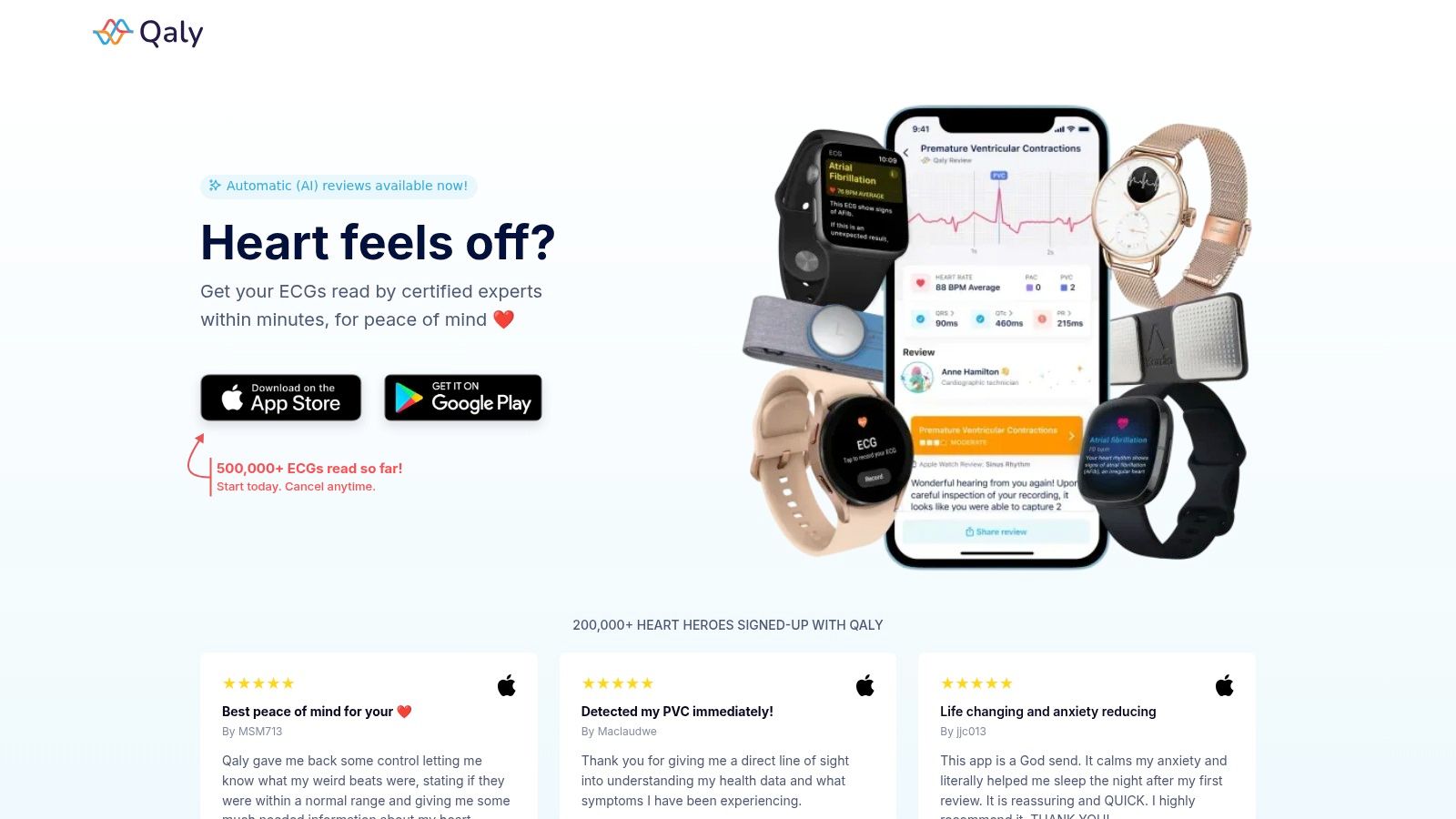
If you've captured ECGs on a wearable or home device and want help understanding what they mean, Qaly offers human-reviewed ECG interpretation so you can turn confusing recordings into clearer next steps. It's a practical option for people who want more than an automated label and less uncertainty before speaking with a healthcare provider.

Captured an ECG? Certified experts can review it within minutes for added clarity.



.png)
.png)