


Key Takeaways

User Profile
Hello Heart Hero.
You feel a flutter in your chest. It lasts a few seconds, disappears, then leaves you staring at your wrist, wondering if your watch caught anything. You might open an app, take an ECG, search a symptom, and then run into a wall of confusing articles about networks, compliance, and cybersecurity. That's frustrating when all you want to know is what your heart is doing.
A lot of people searching what is continuous monitoring aren't asking about computers at all. They're trying to understand palpitations, skipped beats, irregular rhythms, and whether a wearable can help them feel safer. That confusion is real, and it's common. Even broad online definitions often focus on IT and security, while many readers primarily want a health-focused explanation for wearable ECG tracking and arrhythmia concerns, as noted in Trend Micro's overview of continuous monitoring.
If that's why you're here, you're in the right place. This guide is about your heart, not server logs. It's about what continuous monitoring means when you use an Apple Watch, Kardia, Fitbit, Samsung watch, or another device to keep an eye on symptoms.
Your Guide to Understanding Continuous Heart Monitoring
You notice a thump, a flutter, or a pause that makes you stop what you are doing. A few minutes later, everything feels normal again. That gap between what you felt and what a device captured is where a lot of the confusion begins.
Part of the confusion comes from the phrase itself. Online, “continuous monitoring” often refers to IT systems watching networks and software over time. In heart health, it means something much more personal. It refers to tracking your heart rhythm across daily life so brief, unpredictable symptoms have a better chance of being recorded and understood.
For your heart, continuous monitoring usually means following patterns over hours, days, or longer instead of treating one reading as the whole answer. That can involve a wearable that collects background heart data, a patch monitor prescribed by a clinician, or symptom-based ECG recordings you take during specific moments. If you want a broader foundation first, this guide to cardiac monitoring basics explains the core idea in plain language.
A simple way to understand it is this. Continuous monitoring works like keeping a journal of your heart's behavior. One normal reading can be accurate and still leave your main question unanswered, especially if the strange sensation happened earlier and then passed.
That matters with palpitations because many rhythm changes are brief. They may show up while you are climbing stairs, settling into bed, feeling stressed, or having coffee, then disappear before a clinic ECG begins. A normal in-office result can bring some relief, but it can also leave you thinking, “I know I felt something.”
Continuous heart monitoring helps fill in that missing context. It does not mean every beat is interpreted perfectly in real time, and it does not turn a watch into a cardiologist. What it does provide is a longer record of what was happening before, during, and after symptoms, which often leads to clearer conversations with your care team and a steadier sense of control.
Spot Checks Versus a Continuous Story of Your Heart
A single ECG can be accurate and still leave you without an answer. If your palpitations come and go, a reading taken after the feeling passes may show a normal rhythm, even though something unsettling happened earlier.
That gap is where a lot of confusion starts.
Some readers search for "continuous monitoring" and find cybersecurity definitions about systems being watched all the time. In heart care, the idea is much more personal. It means building a timeline of your heart's activity so brief, hard-to-catch symptoms have a better chance of being seen in context.

Why spot checks can feel incomplete
A spot check captures one slice of time. That can be enough if an abnormal rhythm is happening during the recording. It often falls short when symptoms are brief or unpredictable.
For example, you might feel a sudden flutter while walking up the stairs, sit down, open your watch app, and record an ECG a few minutes later. The tracing may look calm by then. That result still matters. It just may not match the moment you were trying to catch.
This is why a normal reading can feel reassuring and frustrating at the same time.
Spot checks are more likely to miss the pattern when symptoms are:
- Brief: The rhythm change starts and ends before you can record it.
- Inconsistent: It does not show up at the same time or under the same conditions.
- Linked to real life triggers: Caffeine, stress, dehydration, poor sleep, alcohol, or exercise may play a role.
What continuous monitoring adds
Longer monitoring gives your symptoms more chances to line up with actual recorded data. Instead of a single isolated reading, you get a sequence. That sequence can help show whether episodes repeat, whether they cluster around certain activities, and whether they happen with symptoms, without symptoms, or both.
A simple comparison helps here. A spot check works like glancing at the clock once. Continuous monitoring works more like checking the whole day's timeline. You are less focused on one beat in one moment and more focused on the pattern your heart follows over time.
That change in perspective can lead to more useful questions:
- Do the flutters happen once in a while or over and over?
- Do they show up during stress, after coffee, or when lying down to sleep?
- Do symptoms match a rhythm change, or does the rhythm stay normal during the sensation?
- Has the pattern become more frequent or more intense over weeks or months?
Practical rule: The goal is not perfect data every second. The goal is to catch enough of the right moments that you and your clinician can make sense of what is happening.
Some people do well with symptom-based ECG recordings from a wearable. Others need a patch monitor or a Holter monitor because the episodes are too elusive or too short. If you are comparing medical options, this guide to Holter monitor costs and use cases explains why a longer recording window is sometimes the better fit.
The same basic idea shows up in other health devices too. A tool such as the Venus smart scale for fertility becomes more useful when it tracks trends over time instead of relying on one isolated measurement. Heart monitoring follows that same principle, but with much higher stakes for peace of mind and clinical decision-making.
The Different Technologies That Watch Over Your Heart
There isn't one device that fits every situation. The right tool depends on what you're feeling, how often it happens, and whether you need screening, symptom capture, or formal diagnosis.

Wearables for daily tracking
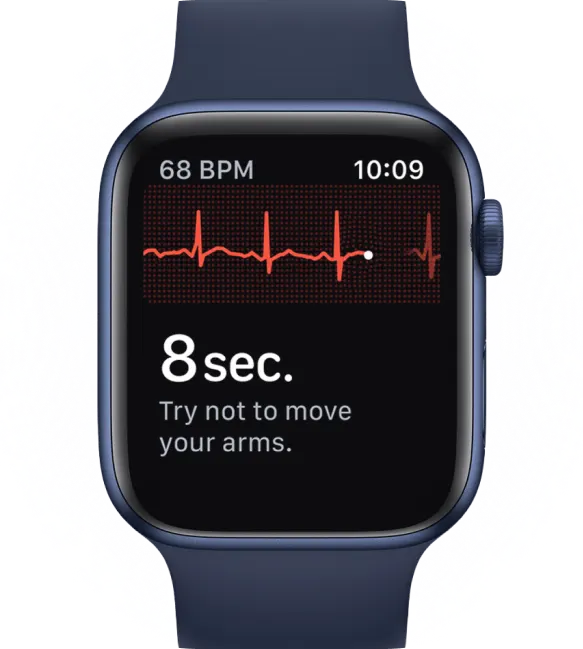
Consumer devices like Apple Watch, Fitbit, Samsung Galaxy Watch, KardiaMobile, and similar tools are often the first step because they're already in your life. They can help you notice trends, check your rhythm when symptoms happen, and sometimes flag an irregular pulse pattern in the background.
That's useful, but it's important to keep expectations realistic. The 2023 Apple Heart and Movement Study reported that irregular pulse notifications from smartwatch photoplethysmography were associated with atrial fibrillation detection, but only among a minority of notified users. That's why consumer monitoring works best as a screening and triage tool rather than a diagnosis, as described in Apple's study update.
What wearables are good at:
- Capturing symptoms fast: If you feel a flutter, you can often record right away.
- Showing trends: Resting heart rate, rhythm notifications, and repeated ECGs can reveal patterns.
- Making health tracking feel more normal: You don't need a clinic visit every time you're worried.
What they can't do well on their own:
- Diagnose every rhythm issue
- Guarantee a symptom will be captured
- Separate artifact from true abnormality without interpretation
Patch monitors and Holter monitors
If your symptoms are more concerning or harder to catch, a clinician may recommend a Holter monitor or an adhesive patch monitor. These tools are medical devices designed to record ECG data over a set period during regular life.
They're often used when a doctor wants denser rhythm information than a watch can provide. A patch can be especially helpful when episodes are infrequent but not rare enough to justify something more invasive. If you want to understand that option better, this guide to a heart patch monitor gives a practical overview.
Long-term and remote monitoring
Some people need longer follow-up because of a known heart condition, medication change, or symptoms that remain unexplained. That's where event recorders, implantable loop recorders, or remote patient monitoring may come in.
You may have seen similar “always watching” ideas in other areas of health too. For example, people use tools like the Venus smart scale for fertility to track body signals over time rather than rely on a single check. Heart monitoring works on a similar principle. Repeated data points can be more informative than one isolated snapshot, but only if they're interpreted in context.
The Real Benefits and Honest Limitations of Monitoring
Continuous monitoring sounds comforting because it suggests certainty. In practice, it offers something a little different and often more useful. Earlier awareness.
In many fields, continuous monitoring is used to detect and address threats or performance issues before they affect people. In healthcare, that same principle applies to identifying potential heart rhythm issues before they can cause harm, shifting care from reactive to more proactive, as described by Bitsight's discussion of continuous monitoring.

What monitoring genuinely helps with
The biggest benefit is often simple. It helps you catch your heart in the act.
If your symptoms are sporadic, that matters a lot. Instead of trying to remember what happened days later, you can collect actual rhythm data near the event. That can make doctor visits more productive and less dismissive.
Monitoring can also help with:
- Pattern recognition: You may notice symptoms cluster after certain triggers.
- Medication follow-up: If something changes after starting or adjusting a treatment, you have more to look at.
- Peace of mind: Repeated normal recordings during mild symptoms can sometimes reduce uncertainty, even if they don't answer every question.


Where people get frustrated
More data doesn't always mean more clarity. Sometimes it means more screenshots, more notifications, and more worry.
A watch may flag something caused by motion, poor skin contact, or signal noise. You might take several ECGs during symptoms and still not catch the event. Or you may get a normal reading while feeling very abnormal, which can be emotionally hard to reconcile.
A notification is a prompt to look closer, not a verdict.
Alert fatigue can arise. If your device repeatedly tells you something may be off, but the information stays vague, you can end up checking constantly and trusting the device less. That cycle can increase anxiety instead of reducing it.
The limit most people don't expect
The hardest part isn't usually getting data. It's knowing what to do with it.
A heart rhythm recording needs context. What were you feeling? Were you moving? Is this new for you? Does the strip show a real rhythm issue or artifact? Without interpretation, raw information can become noise.
That doesn't mean wearables aren't useful. It means they work best when you treat them as part of a bigger process, not as a final answer.
How to Make Your Wearable ECG Data Actionable
You feel your heart flutter during a quiet evening, open your watch, take a recording, and then stare at the screen wondering what you are supposed to do with it. That moment is where many people get stuck.
In cybersecurity, “continuous monitoring” often means systems checking for risks in the background. For a person with palpitations, it means something much more human. It means collecting enough real-life heart information that you and your clinician can make a better decision. A single ECG strip is like one photo. Actionable data is more like a labeled photo album with dates, symptoms, and patterns.
Build a small routine you can actually keep
You do not need to record constantly. You need a routine that is calm, simple, and repeatable.
A practical approach is to use your wearable ECG in a few specific situations:
- During symptoms: Fluttering, pounding, skipped beats, or sudden racing
- After a change: A new medication, a dose adjustment, or a major shift in sleep, hydration, or exercise
- During recovery: If you are watching your heart after an illness or a cardiac event
- When comparing similar episodes: The same feeling at different times can reveal whether the rhythm pattern looks similar
With each recording, add a short note. Write down what you felt, what you were doing, and whether the sensation stopped or kept going. Those details often make the difference between a useful strip and a confusing one.
Turn recordings into a simple decision cycle
A wearable helps most when you use it the same way each time. That gives you a process instead of a pile of screenshots.
A simple cycle looks like this:
- Name the problem
Be specific. “My heart flips after climbing stairs” is more useful than “I feel weird sometimes.” - Capture the moment
Use your Apple Watch, Kardia, Fitbit, Samsung watch, or another device when symptoms happen, or when you are checking a pattern your clinician asked you to follow. - Review what you recorded
Look at the rhythm strip with basic questions in mind. Was the tracing clear? Was your heart rate fast, slow, or irregular? If you want a beginner-friendly starting point, read this guide on how to read an ECG strip step by step. - Organize what matters
Save the clearest recordings and group them with your notes. A doctor can do far more with three well-labeled episodes than with a camera roll full of unlabeled images. - Use the result to decide the next step
The next step may be reassurance, a doctor visit, medication review, more formal monitoring, or continued observation.
Know when you need interpretation, not just more data
This is often the hard part.
Many people assume the challenge is catching an episode. Sometimes the harder job is understanding whether the tracing shows a real rhythm issue, normal variation, or artifact from movement or poor contact. More recordings do not always answer that on their own.
If your wearable gives you strips but not clarity, one option is Qaly, which reviews wearable and at-home ECG recordings with certified cardiographic technicians and returns interval measurements like PR, QRS, and QTc along with a narrative report you can share with your doctor.
When to escalate: If symptoms are severe, prolonged, or come with chest pain, fainting, or significant shortness of breath, seek urgent medical care rather than relying on a wearable review.
Actionable data changes what happens next. It helps you ask clearer questions, spot patterns earlier, and bring your clinician something more solid than a memory of “my heart felt off.”
Your Path Forward to Heart Health Peace of Mind
You feel the flutter. You check your watch. Ten minutes later, the feeling passes, and you are left with the same question many people have. Did anything important just happen, or was it a harmless blip?
That uncertainty is exhausting. It also explains why the phrase "continuous monitoring" can feel confusing. In cybersecurity, it means systems are watched for ongoing risk. In heart care, it means something much more personal. You are building a clearer record of what your heart is doing over time, so symptoms are not reduced to a vague memory during a short office visit.
The goal is not to watch your heart all day in a tense, fearful way. The goal is to notice patterns with enough consistency that you and your clinician can make better decisions.
A simple way to look at it:
- A wearable captures episodes you might otherwise miss
- Monitoring over time shows whether those episodes follow a pattern
- Interpretation turns recordings into something useful for medical decisions
That last part matters more than many people expect.
A watch or handheld ECG can collect information, but information alone does not always bring relief. A recording may show a clear rhythm change. It may also show normal variation, extra beats, or motion artifact that only looks alarming. That is why peace of mind usually comes from two things working together. Better capture, and better interpretation.
If you have felt dismissed before, your hesitation makes sense. Many people with palpitations know the frustration of hearing that nothing was found because the episode was over before anyone could see it. Continuous heart monitoring does not promise perfect certainty, but it does give you a better chance to document what happened, when it happened, and what you were feeling at the time.
That can change the conversation in a meaningful way.
Instead of saying, "My heart felt strange last week," you may be able to say, "Here is the recording, here is when it happened, and here were my symptoms." That is a calmer, stronger starting point for care.
You do not need complete answers in one day. You need enough clarity to decide the next right step, whether that is watchful waiting, a doctor visit, formal monitoring, or urgent care if symptoms are severe.
If your heart symptoms have left you feeling powerless, this is the part to hold onto. You can gather better evidence. You can ask sharper questions. You can play a more confident role in your own care.

Confused by your wearable ECG? Qaly offers human-reviewed interpretations to help you understand your recordings.



.png)
.png)