


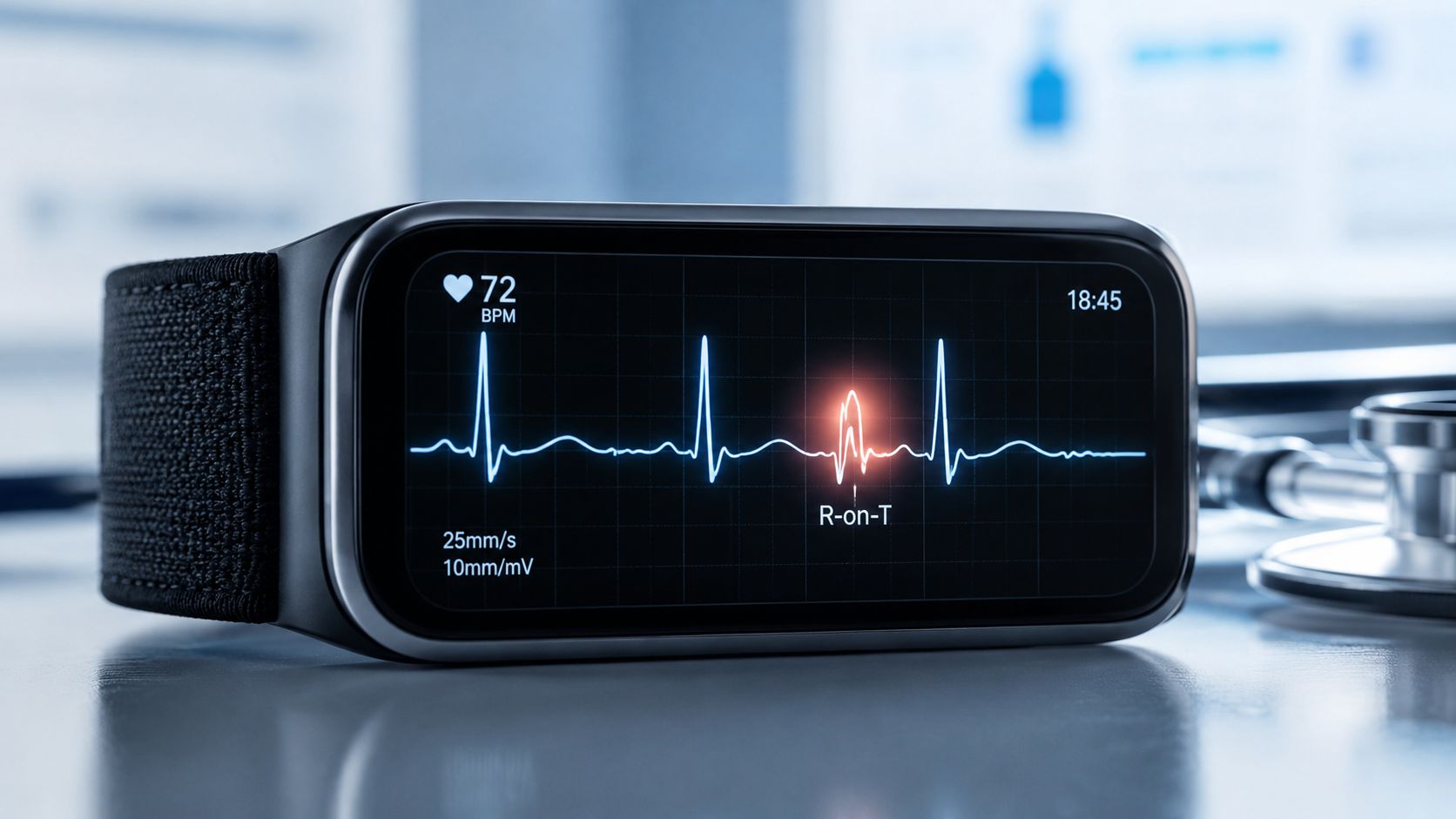


Key Takeaways

User Profile
Hello Heart Hero.
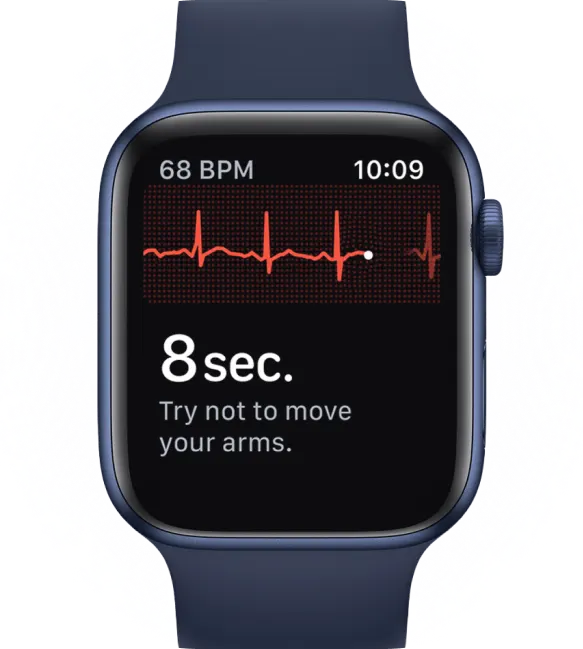
You check your Apple Watch or Kardia strip because your chest felt odd for a second. Maybe it was a flip, a thump, or that brief sinking feeling that makes you stop what you're doing. Then you see a beat that looks like it landed on top of the wave before it, and the internet starts shouting one scary phrase at you: R on T.
That moment can send your mind in two directions at once. One part of you wants a clear answer. The other part is already imagining the worst. If you're skeptical of rushed medical explanations or tired of getting vague reassurance without real detail, that makes sense. You want to know what your device may be showing, what matters, and what probably doesn't.
A lot of people who track their heart at home are trying to build a fuller picture of health, not just react to a single symptom. If you're also exploring GLP-1 therapy for heart health, it helps to see your wearable data as one part of that bigger picture rather than a verdict by itself.
Welcome to Your Heart Health Journey
A watch ECG can feel personal in a way a clinic test doesn't. It's on your wrist, in your home, during ordinary life. So when it flags something odd, it doesn't feel abstract. It feels immediate.
A reader once described it like this: “I felt one hard beat while sitting on the couch, opened the tracing, and then stared at it for an hour.” That reaction is common. You're not overreacting. You're responding to your body and to a device that's designed to get your attention.
Why this finding feels so unsettling
The phrase R on T ECG sounds dramatic because it refers to timing inside the heart's electrical cycle. Without specific education on what those letters mean, the pattern gets framed as mysterious and dangerous before it gets explained.
Here's the reassuring part. A strange-looking tracing on a wearable doesn't always mean a dangerous rhythm is happening. Sometimes it's a real extra beat. Sometimes it's a misleading display. Sometimes it's a moment that matters mainly because it deserves calm review, not panic.
You don't need to become a cardiologist to understand the basics of your own tracing.
What you actually need right now
You need three things:
- A simple explanation: What R on T means in plain English.
- A reality check: When it's a true warning sign and when it may be lower risk.
- A practical next step: What to save, what to watch for, and when to get help.
If you've felt dismissed before, that frustration is real. But there's also a middle ground between “ignore it” and “assume disaster.” That middle ground is understanding.
What Is the R on T Phenomenon on an ECG
Think of each heartbeat as a short story written in electricity.
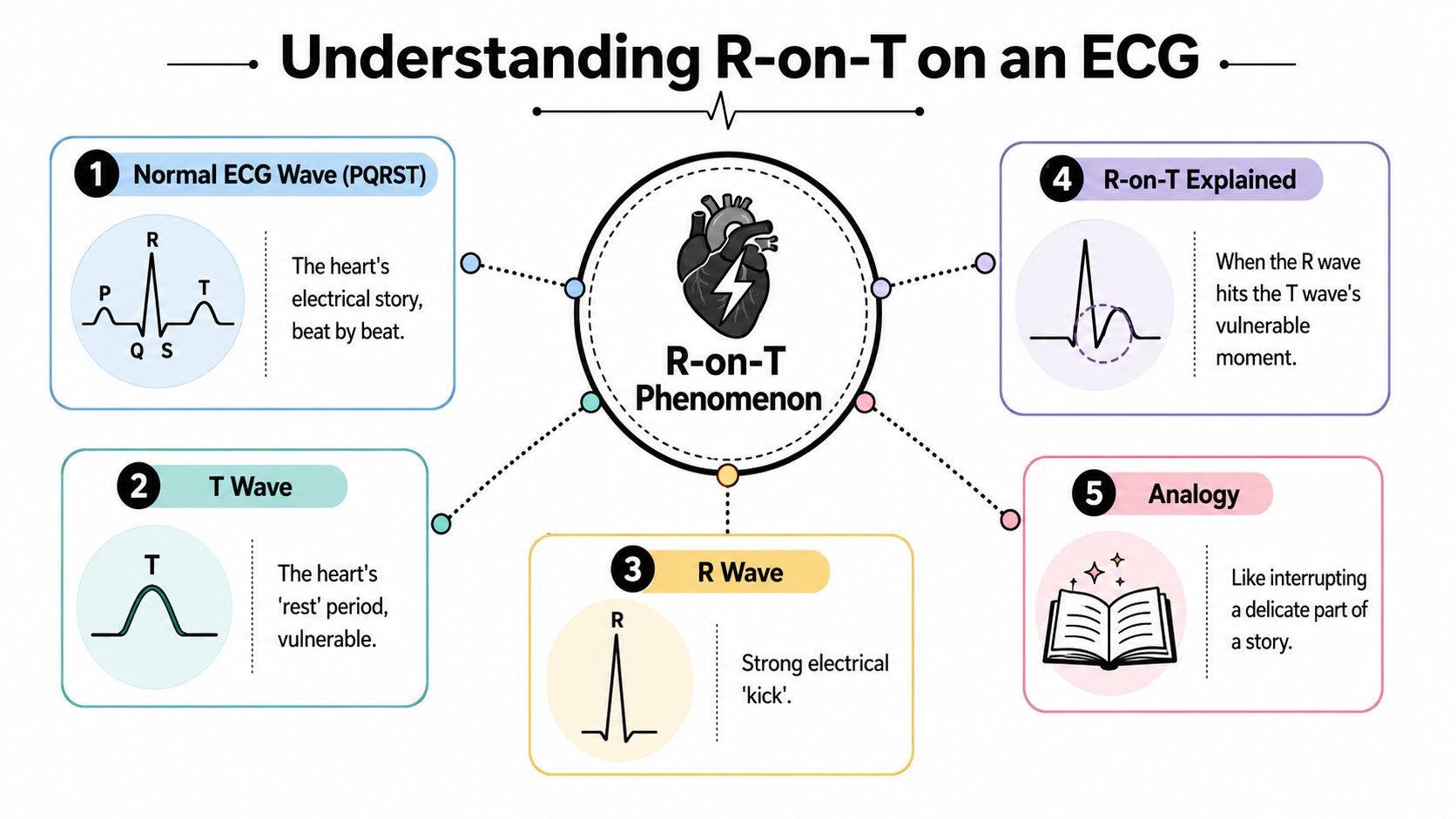
The wave labels on an ECG, P, QRS, and T, are the chapters. The R wave is the sharp upward spike inside the QRS complex. It represents ventricular depolarization, meaning the main pumping chambers are getting the electrical signal to contract. A normal R wave duration falls between 0.04 and 0.12 seconds, and if it exceeds 0.06 seconds, it may suggest a conduction delay or bundle branch block, as explained in this overview of the R wave and ECG timing.
The T wave comes later. That's the reset chapter. It reflects the heart's repolarization, when the ventricles are recovering electrically and getting ready for the next beat.
The simple definition
An R on T phenomenon happens when a premature ventricular contraction, often called a PVC, arrives during the T wave of the beat before it. In plain language, an early beat crashes into the heart's reset period.
That timing matters. The event is described in this clinical explanation of the vulnerable window: the R-on-T phenomenon occurs when a PVC arises during the relative repolarization phase of the preceding T wave, and PVCs that happen within 300 ms of the previous QRS complex are in a vulnerable window with a higher chance of triggering more serious arrhythmias.
Why timing matters more than the shape alone
A lot of people think the scary part is just “a weird spike on the T wave.” But experts care about when that spike happens, not only how it looks.
Use this analogy. If the heart's electrical system is like a room resetting after the lights flicker, the T wave is the period when the switches are settling back into place. A PVC during that moment can interrupt the reset. That's why the pattern gets attention.
If you want a deeper plain-language explanation of why the heart has vulnerable and protected phases, this guide on the cardiac refractory period is helpful.
What readers often confuse
People commonly mix up three separate things:
- A PVC exists
- That PVC appears to land on a T wave
- That means danger is happening right now
Those are not the same statement.
A PVC is an extra beat from the ventricles. An R-on-T pattern is a timing relationship. Serious rhythm risk depends on context, including symptoms, the condition of the heart, and whether the tracing is even displaying the event correctly.
Practical rule: Don't treat the phrase “R on T” as a diagnosis by itself. Treat it as a pattern that needs interpretation.
How to Identify R on T on Your Wearable ECG
Single-lead wearable ECGs can show useful clues, but they also create confusion because you're seeing a simplified version of your heart's electrical activity. That means the skill isn't just spotting something unusual. It's spotting it carefully.
What it may look like on a watch tracing
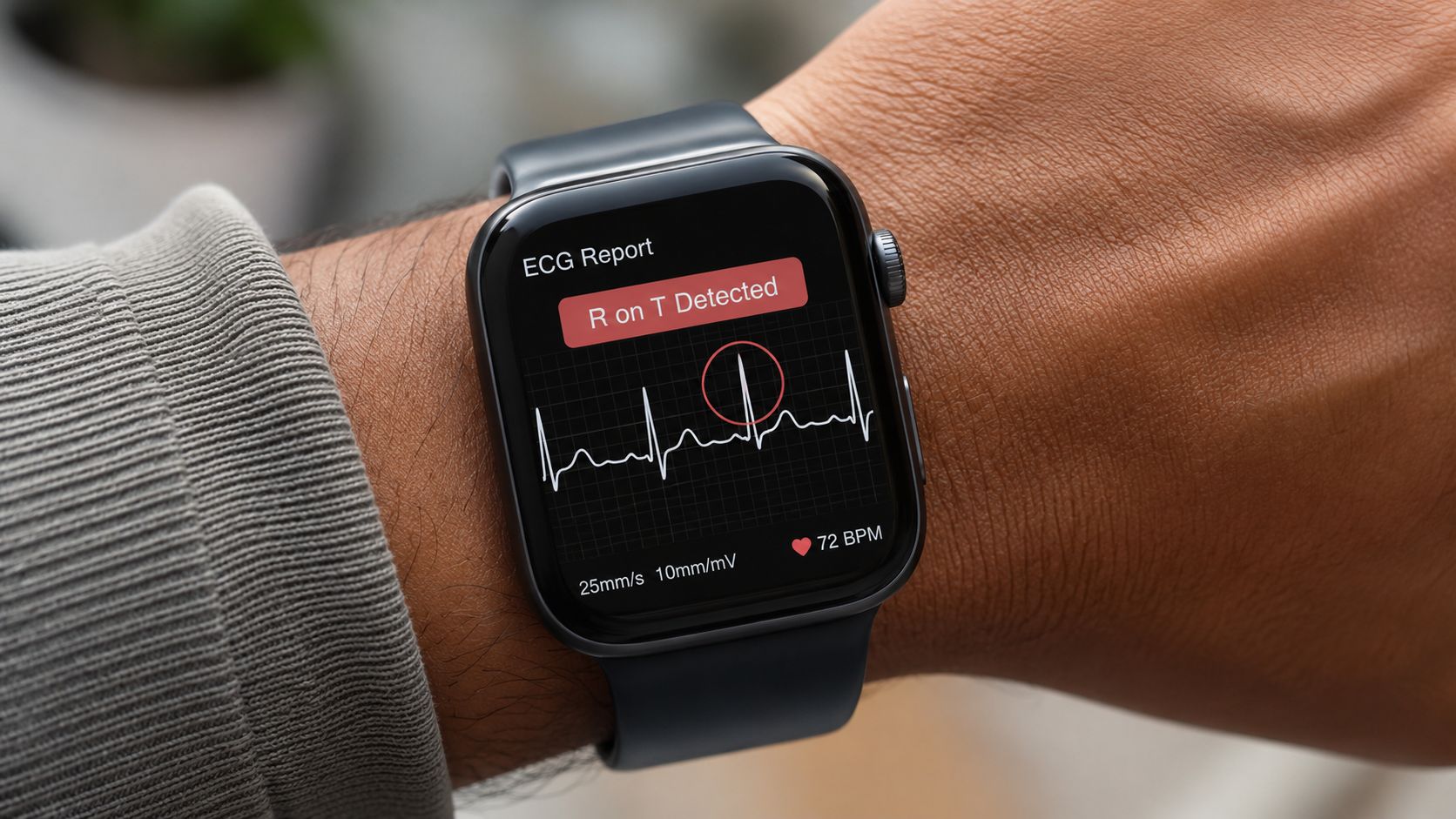
On a wearable strip, a possible R on T pattern often looks like this:
- A normal beat appears first: You see a usual spike followed by a rounded T wave.
- An early beat arrives too soon: Instead of waiting for the next regular beat, another sharp deflection appears while the T wave is still present.
- The rhythm breaks its pattern: The spacing suddenly changes, which often catches your eye before anything else does.
If you've already learned about PVCs, that helps. A wearable may show the premature beat as wider, earlier, or just “out of place.” If you need a practical refresher, this overview of premature ventricular contractions or PVCs explains the basic look and feel of those beats.
Clues that support a real event
A tracing is more convincing when several features line up:
- You felt a palpitation at the same time: Symptoms and tracing match.
- The early beat is clearly premature: It comes before the next expected beat, not just after signal distortion.
- The T wave is still visible when the extra beat arrives: The overlap is what raises the question.
Still, one strip rarely tells the whole story. Wearables are useful, but they aren't perfect cameras of heart electricity.
The big issue most articles skip
A false alarm can happen because the device makes the tracing look worse than it is.
Wearable ECGs can sometimes create a false R-on-T pattern due to undersensing of a QRS wave, as described in this discussion of wearable undersensing and false critical alerts. That means the device misses a heartbeat, so the next detected beat appears dangerously close to the previous T wave on the display. The result can look dramatic even when the actual rhythm was not a true R-on-T event.
How to be skeptical in a smart way
If you're using an Apple Watch, Fitbit, Samsung watch, or Kardia device, keep these questions in mind before assuming the strip proves a dangerous rhythm:
- Was the tracing noisy? Motion, poor skin contact, or a shifting finger can distort wave shapes.
- Did the baseline wander? A drifting line can make timing look different than it really was.
- Did the watch seem to skip a beat visually? That may be the device missing a QRS complex rather than your heart doing something new.
A wearable can record a real rhythm, a distorted rhythm, or a real rhythm displayed in a misleading way.
A good home review routine
When you suspect R on T on a wearable ECG, use this quick process:
- Save the strip immediately.
- Note what you felt, even if it was just “one hard beat” or “brief flutter.”
- Check for repeat recordings rather than relying on one alarming strip.
- Compare when you're still and relaxed with when you were moving or tense.
- Look for patterns over time, not just one isolated image.
That approach gives you something more useful than fear. It gives you context.
The Real Dangers of R on T and When to Worry
Most online explanations treat R on T as if it automatically points to catastrophe. That's the part that deserves a reality check.
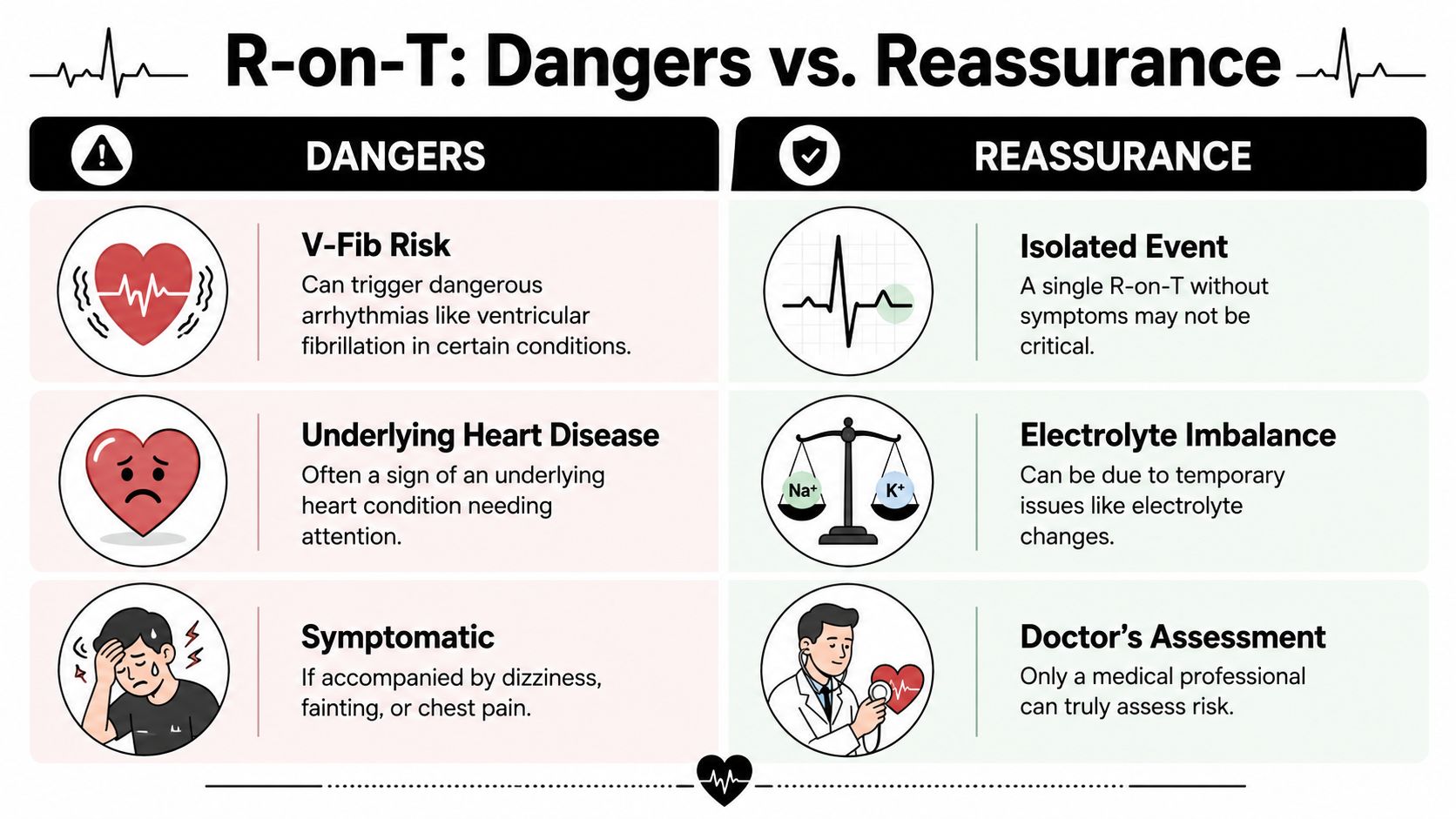
Yes, the pattern can be important. In some settings, especially when the heart is already under strain, a PVC landing during that vulnerable reset period can help trigger dangerous ventricular rhythms. That's why clinicians pay attention to it.
But the jump from “can matter” to “must be deadly” is where a lot of anxiety gets fed.
The fear is understandable, but incomplete
Clinical reviews offer a more balanced picture. This review of R-on-T and actual risk notes that the R-on-T phenomenon is not a critical determinant of primary ventricular fibrillation in many cases, and for many individuals, especially in non-ischemic contexts, it represents “at worst only a small risk in terms of sudden death.”
That doesn't mean “ignore it.” It means the pattern has to be interpreted in context.
Higher-risk situations
An R on T finding deserves faster attention when it happens with symptoms or with reasons to suspect the heart is under acute stress.
- Chest pain or pressure: A concerning symptom changes the meaning of the tracing.
- Fainting, near-fainting, or severe dizziness: These symptoms make rhythm evaluation more urgent.
- Known heart disease: Prior heart damage or structural disease can raise concern.
- Repeated alarming events: A recurring pattern is different from one isolated strip.
If your watch tracing appears abnormal and you also feel unwell, your symptoms matter more than the gadget.
Lower-risk situations
Many wearable users fall into a less dramatic category:
- One isolated strip
- No chest pain
- No fainting
- Back to normal afterward
- Possible signal artifact or device error
That combination often points toward “get it reviewed” rather than “assume emergency.”
If you've ever felt like health content only gives two options, panic or dismiss it, this is the middle path. Respect the finding without surrendering to it.
A practical threshold for action
A useful way to think about it is this:
If the tracing is scary but you feel fine, save it and get it reviewed. If the tracing is scary and you feel sick, seek urgent care.
For readers who worry specifically about dangerous fast ventricular rhythms, this plain-language article on whether a watch ECG can detect ventricular tachycardia can help you understand what your device may and may not reliably capture.


Common Causes and Triggers of R on T Events
The phrase “R on T” describes timing, but the beat causing that timing issue is usually a PVC. So the useful question becomes: why are PVCs showing up, and why might one happen early enough to overlap the heart's reset phase?
The answer isn't always dramatic. In many people, PVCs are common palpitations that become more noticeable during stress, poor sleep, stimulant use, illness, or body chemistry shifts.
The most common underlying driver
A PVC is an early beat that starts in the ventricles instead of following the usual path from the upper chambers. If that early beat happens at an unlucky moment, it can create an R on T pattern.
That's why people often notice the sensation before they know the ECG term. They feel a skipped beat, a pause, or a hard thump. Then the tracing gives the event a name.
Triggers worth looking at
You don't need to assume a severe disease process every time you see a PVC-related pattern. Start with what can change from day to day.
- Stress and adrenaline: Tension, poor sleep, and emotional strain can make extra beats more noticeable.
- Caffeine or stimulants: Coffee, pre-workout products, energy drinks, nicotine, and some cold medicines can increase palpitations in sensitive people.
- Medication effects: Some prescription or over-the-counter medications can change rhythm behavior or make palpitations easier to feel.
- Electrolyte shifts: Potassium and magnesium changes can affect electrical stability.
- Illness or dehydration: Fever, stomach bugs, and fluid loss can make the heart more irritable.
When to think beyond lifestyle triggers
Sometimes the pattern deserves a broader medical look, especially if the episodes are new, more frequent, or tied to symptoms like fainting or chest discomfort. In those cases, a clinician may want to review medications, family history, recent illness, and any known heart conditions.
The tracing matters. The story around the tracing matters just as much.
A better conversation to have with a clinician
Instead of only saying, “My watch showed R on T,” bring details that make the event understandable:
- What you felt
- What you were doing
- Whether it has happened before
- Recent changes in caffeine, sleep, stress, illness, or medication
- Whether you saved more than one strip
That shifts the discussion from a frightening term to a useful clinical picture.
Immediate Steps and Long Term Monitoring Strategies
Seeing a possible R on T ECG on your watch can trigger a flood of adrenaline. The first job is to stop the spiral and decide based on your body, not just the screen.
If you have chest pain, severe shortness of breath, fainting, or feel like you may pass out, seek urgent medical help. In that moment, symptoms outrank self-interpretation.
What to do in the moment
If you feel okay, take a calmer approach.
- Sit down and breathe normally. Anxiety can make every sensation louder.
- Save the tracing. Don't rely on memory later.
- Record what happened around it. Time, symptoms, activity, and anything you consumed that day can help.
- Repeat a tracing when you're still. A cleaner strip can separate signal issues from rhythm issues.
This process sounds simple, but it protects you from two common mistakes. The first is ignoring something important. The second is escalating a possibly misleading reading into a panic.
How to build a useful record
Long-term monitoring is often more informative than one dramatic screenshot.
- Track episodes in plain language: “One hard beat after coffee” is useful.
- Note patterns: Morning, exercise recovery, stress, poor sleep, dehydration.
- Save only meaningful tracings: Keep the clear ones. Too much clutter makes review harder.
- Bring trends, not just fear: Clinicians can do more with repeated examples than with one alarming moment.
If your doctor has suggested ambulatory monitoring or you want a more flexible way to compare home rhythm data over time, learning about a Holter monitor alternative can help you think through your options.
A calmer long-term mindset
The goal isn't to stare at your watch all day. It's to create a system that lowers uncertainty.
That may mean checking only when you have symptoms, limiting doom-scrolling after an alert, and deciding in advance what counts as urgent. A plan reduces fear because you're not improvising while stressed.
Keep this in mind: your wearable is best used as a notebook, not a judge.
When follow-up makes sense even without an emergency
Schedule a review if:
- The episodes are increasing
- The tracings keep looking abnormal
- You're changing medications
- You've had prior heart issues
- You can't tell whether the device is showing a true event
That's not overreacting. That's disciplined monitoring.
Understanding Your Heart Health with Qaly
You get an alert from your watch, open the tracing, and see a beat that looks wrong at exactly the wrong moment. That can send your mind straight to the worst-case scenario. In real life, though, a strange-looking strip can mean several different things, including a true extra beat, harmless noise, or a device timing error.
A wearable gives you a snapshot. A trained review helps turn that snapshot into something you can use.
That matters with possible R on T patterns because the question is not only "does this look scary?" The primary question is whether the timing is genuinely dangerous, whether the tracing is clear enough to trust, and whether the pattern fits your symptoms and history.
Why interval details matter
Human readers do more than spot an early beat. They check the small timing clues inside the waveform, because those clues help separate a real electrical event from a misleading picture on the screen.
One example is R-peak time, the interval from the start of the QRS complex to the peak of the R wave. A review in the Journal of Clinical Medicine notes that an R-peak time exceeding 50 ms in leads V5 or V6 can suggest delayed ventricular activation, as discussed in this review of ventricular activation and R-peak time thresholds.
For someone using a watch or handheld ECG, that kind of detail is useful because it gives your clinician something concrete to review instead of a general description like "my rhythm looked off."
What a human review can clarify
A careful review can answer the questions that usually drive the most anxiety:
- Is this a PVC, or just artifact?
- Does the beat fall on the T wave, or does the display only make it look that way?
- Could the device have skipped part of the signal and made the strip appear more dramatic?
- Are there interval findings that deserve follow-up over time?
A good explanation changes the experience. You are no longer staring at a screenshot and guessing. You have a clearer read on whether the tracing suggests a real problem, a low-risk extra beat, or a watch recording issue.
A practical option for wearable users
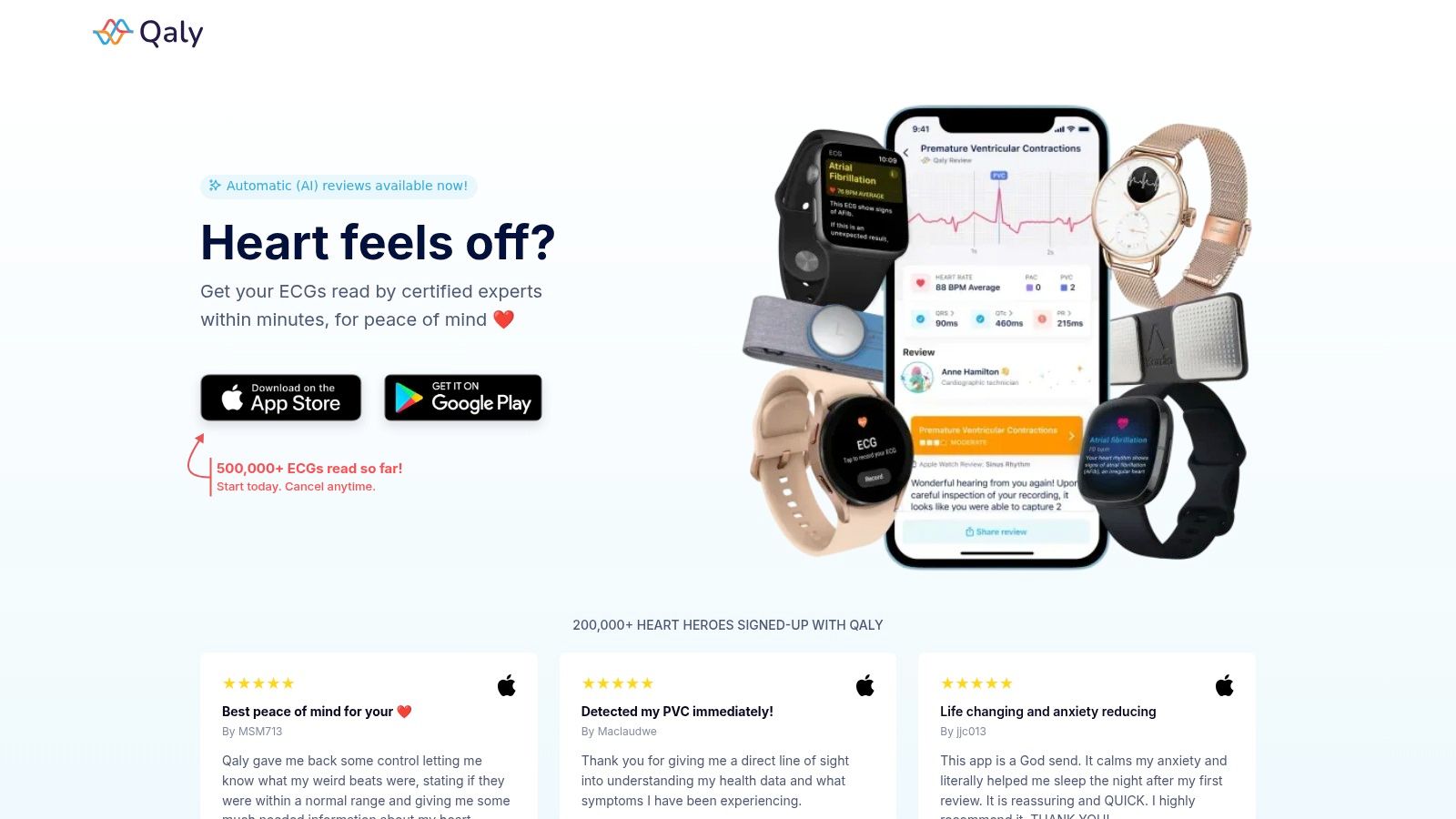
Qaly reviews wearable ECG recordings with certified cardiographic technicians who analyze rhythm strips, assess intervals, and help sort true findings from misleading watch output.
That balanced interpretation is helpful if you feel caught between two extremes: dismissing everything and panicking over every alert. Sometimes the tracing needs urgent medical attention. Sometimes it needs a calmer second look. Knowing which one you are dealing with is what helps.
If your watch has shown a possible R on T ECG and you want a trained human to review the strip, Qaly's ECG interpretation service can help you get a clearer answer from your Apple Watch, Kardia, Fitbit, Samsung, or other wearable recording.
Frequently Asked Questions About R on T
Is a single R on T event always an emergency
No. A single possible R on T pattern on a wearable isn't automatically an emergency. The urgency depends on context, especially symptoms and whether the tracing is likely real or distorted. If you feel faint, have chest pain, or are very unwell, get urgent care.
Can stress or anxiety cause R on T
Stress and anxiety can make palpitations more frequent or more noticeable because they raise adrenaline and body awareness. That doesn't mean anxiety is “faking” the tracing. It means stress can contribute to extra beats and can also make you check your device more often.
Can my smartwatch be wrong
Yes. A wearable can miss beats, distort timing, or create a misleading display. That's one reason a scary-looking strip should be saved and reviewed rather than treated as final proof of a dangerous rhythm.
How should I explain this to my doctor
Keep it simple. Say what you felt, when it happened, what the device showed, and whether it has happened again. Bring the saved tracing. Avoid trying to sound dramatic or trying to downplay it. Clear facts are enough.
Should I keep checking my ECG over and over
Usually not. Repeating recordings nonstop can increase anxiety without improving clarity. It's better to save a good tracing, note your symptoms, and use a plan for when to recheck.
One clean strip with a clear symptom note is often more useful than many panicked recordings.
What's the main takeaway
Respect the finding, but don't let the term itself scare you into worst-case thinking. R on T can matter. It can also be lower risk than people assume, or even a wearable display problem. Calm interpretation is what turns that difference into peace of mind.

Unsure about a possible R on T? Certified experts review your ECG within minutes.



.png)
.png)