


Key Takeaways

User Profile
Hello Heart Hero. You've just glanced at a watch, seen a QTc number, and felt that little jolt of worry because you're not sure whether it means “fine,” “borderline,” or “something to chase down.” That reaction makes sense. ECG numbers look clinical and cold, but what you need first is a calm translation, not more confusion.
A normal QTc for women is easier to understand once you know what the number is measuring and why your sex, age, and reading conditions matter. The good news is that a single number rarely tells the whole story, especially on a wearable. With the right context, you can read your result more clearly and decide what deserves attention.
A Guide to Understanding Your Heart's Rhythm
You're probably looking at your ECG screen and wondering why a simple heart reading can feel so vague. That's common. A QTc number can look reassuring one day and unsettling the next, even when you feel the same.
Think of your heart like a camera flash. It fires, then needs a brief recharge before it can fire again. The QT interval is that recharge time, and the QTc is the same idea adjusted for heart rate, so the number is easier to compare across different heart rates.
Practical rule: a QTc number should never be read in isolation. The number, your symptoms, your sex, and the way the ECG was recorded all matter.
If you're trying to make sense of your own wearable data, you're not being overly cautious. You're being smart. A good reading can help you decide whether you need context, or whether you should dig deeper with a clinician or a trusted ECG review service.
What the QTc Interval Actually Measures
The QT interval is part of the heart's electrical cycle. It starts when the ventricles, the heart's lower chambers, begin to activate, and it ends when they finish resetting for the next beat. A cleaner way to think about it is this, your heart gets a signal, contracts, then rewinds so it can respond again.
Why the number gets “corrected”
Heart rate changes the raw QT interval. If your heart is beating faster, the unadjusted QT can look shorter, even when the underlying recovery time is normal. That's why the number is corrected, or adjusted, to create the QTc.
For adult women, the most widely used clinical cutoff for a normal QTc is less than 460 ms, while 460 to 479 ms is often treated as borderline and 480 ms or higher as prolonged. The 2023 Canadian Cardiovascular Society update says that after puberty, QTc greater than or equal to 460 ms in women should be considered borderline prolonged, that the 99th percentile for women is 480 ms, and that QTc greater than or equal to 500 ms is linked to higher ventricular arrhythmia risk, which is why the top end deserves careful attention rather than casual dismissal (Canadian Cardiovascular Society update00520-2/fulltext)).

If you want to understand how the number is derived on a wearable ECG, this QT interval calculation guide gives a practical look at the process.
A simple way to read the ranges
- Under 460 ms, this is commonly treated as normal for adult women.
- 460 to 479 ms, this is often described as borderline.
- 480 ms or above, this is generally considered prolonged.
Those bands are useful because they keep you from overreacting to a single reading that sits near the edge. They also help you notice when a number consistently drifts upward, which matters more than one isolated snapshot.
Why Normal QTc Is Different for Women
A QTc reading does not sit in a vacuum. In women, the expected range is a little different from men, so the same number can mean something different depending on who is wearing the watch or lying on the ECG table. In a large ambulatory ECG study, the mean QTc in women was 439.0 ms compared with 428.5 ms in men, and the female 2.5th to 97.5th percentile range was 411 to 471 ms (ambulatory ECG study). That is why a male reference point can make a woman's tracing look more concerning than it really is.
Hormones help explain the pattern
After puberty, sex hormones influence the heart's electrical system. Estrogen is one of the biological factors that helps explain why QTc values differ between women and men once hormone patterns mature. That does not mean a slightly longer QTc is automatically a problem. It means the reference range should reflect female physiology rather than a generic average.
Age matters too. The same study found that QTc increased with age, with a positive correlation between age and QTc (r = 0.263, p < 0.001). So a number that looks high to one person may still fit the expected spread for another person, depending on age and context.
If you are also sorting out hormone changes, it helps to look at the full picture instead of focusing on one ECG strip. A practical companion resource is women's hormone balance support, especially if you are trying to connect symptoms, cycle changes, or menopause-related shifts with how you feel day to day. For a focused read on symptoms linked to low estrogen, this low estrogen symptom guide can also help.
A QTc in a woman is not “good” or “bad” on its own. It needs to be read against the normal female range, age, symptoms, and the exact device used. That is also why wearable ECG tools can be useful, they give you a quick way to spot a pattern and bring clearer information to a doctor or to a review service like Qaly before the question turns into guesswork.
Common Causes of an Abnormal QTc Reading
When a QTc looks off, the first question is usually, “What changed?” That's a sensible question, because QTc shifts often have a reason. Some causes are temporary, some are medical, and many are worth discussing because they're manageable.
Medications can matter
A lot of everyday medicines can affect heart rhythm. This doesn't mean they're dangerous for everyone, and it doesn't mean you should stop anything on your own. It does mean a medication review is a smart next step, especially if the timing lines up with a new prescription or dose change.
Body chemistry can matter too
Electrolytes, especially minerals such as potassium and magnesium, help the heart's electrical system reset properly. If those levels are off, QTc can change with them. This is one reason a wearable reading sometimes makes more sense once you look at the broader health picture, not just the ECG strip.
Some people have a built-in predisposition
A longer QTc can also be part of an inherited rhythm condition. That possibility sounds scary, but it's exactly why family history and repeated readings matter. A single wearable result doesn't diagnose a syndrome, and a normal day doesn't erase a pattern either.

A useful place to check drug-related causes is this QT-prolonging drugs overview, because it helps you think about medication timing before you panic about the number.
If your QTc looks abnormal, the goal is not to label yourself. The goal is to ask, “What changed, and what can be checked?”


Getting an Accurate QTc Reading from Your Watch
Wearables are useful, but they're only as good as the recording conditions. If you've ever taken a reading while moving, talking, or feeling tense, you already know the number can jump around. That's why the setup matters.
Make the measurement cleaner
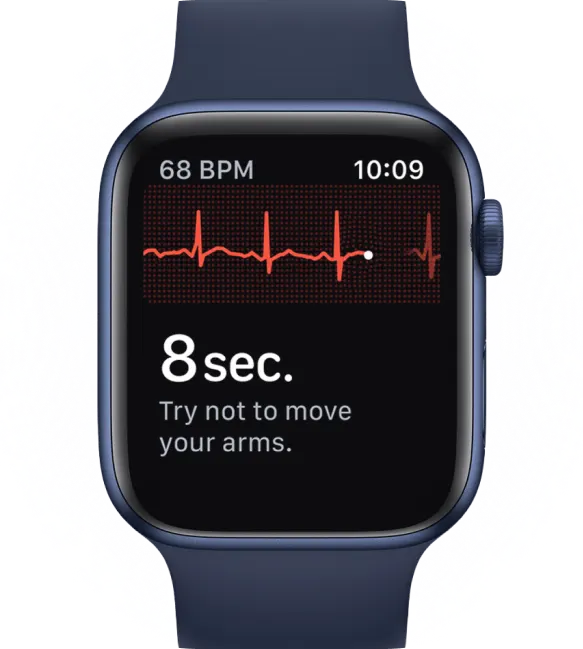
Sit still before you start. Rest your arm on a flat surface. Give yourself a few quiet minutes so your body isn't reacting to motion, stress, or rushing around. Those simple steps can make the tracing easier to trust.
Know that calculation methods can differ
Some devices use different correction formulas, and not all formulas behave the same way at every heart rate. That's one reason two QTc readings from different tools can look a little different even when they're both trying to estimate the same thing. If a number seems odd, the method behind it matters as much as the number itself.
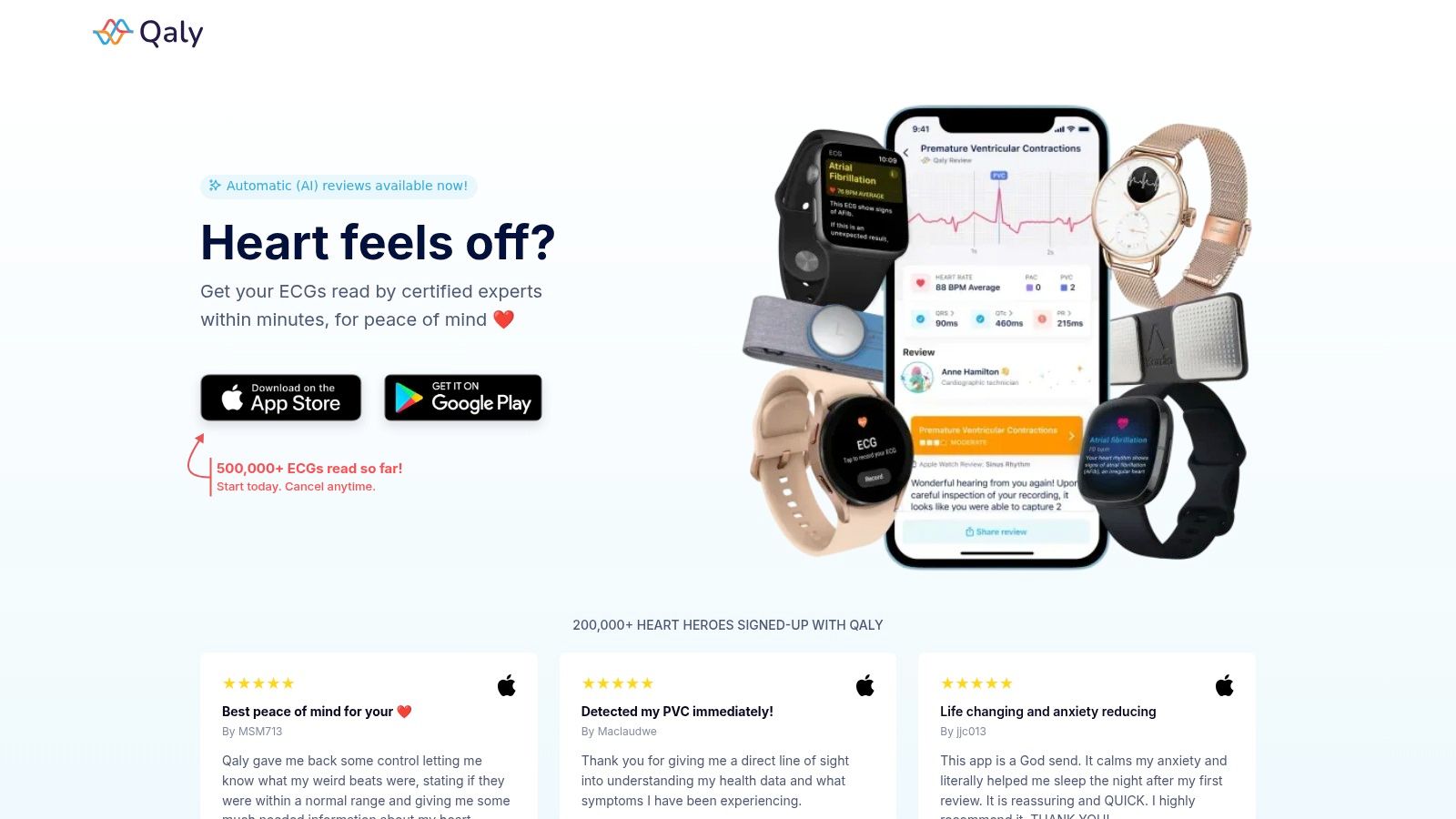
If you want an additional layer of review, tools that interpret wearable ECGs can help you compare the rhythm strip, the interval, and the trend over time. One option is Qaly, which reviews wearable ECGs and reports interval measurements from supported devices, including QTc, so you can see whether a reading is consistent or just noisy. If you want a broader perspective on when a QTc reading deserves attention, this short or long QTc guide is a practical companion.
Best habit: take the reading the same way each time. Same posture, same kind of rest, same device if possible. Consistency makes trends much easier to trust.
When to Discuss Your QTc with a Doctor
A single number that looks unusual doesn't always mean urgent trouble, especially if you feel fine. What matters more is whether the finding repeats, whether your symptoms match it, and whether there's a personal or family history that changes the picture. Wearable data is most useful when it helps you spot patterns.
Pay attention to trend, not just one snapshot
If your QTc keeps landing in the borderline or prolonged range across multiple readings, that's worth discussing. Repetition matters because wearables can pick up both true variation and recording noise. If the same pattern keeps showing up under calm, well-collected conditions, it deserves a real conversation.
Symptoms change the level of concern
Fainting, near-fainting, severe palpitations, or chest symptoms alongside an unusual QTc should get prompt medical attention. Those are not the moments to sit on data and wait for a perfect interpretation. The symptoms matter more than the app label.
Family history should lower your threshold
If someone in your family has had rhythm problems, unexplained fainting, or sudden cardiac events, mention that early. It gives context that a single wearable ECG can't provide on its own. If you've been trying to bridge the gap between self-monitoring and a clearer clinical read, an ECG review service such as Qaly can help you track interval trends and prepare cleaner records for a doctor visit.
Bring the pattern, not just the panic. A tidy summary of readings, symptoms, and timing gives a clinician much more to work with than a screenshot alone.

Frequently Asked Questions About QTc Intervals
Can my QTc value change during the day?
Yes, it can vary from reading to reading. Heart rate, stress, movement, hydration, and how the tracing was taken can all affect the result. That's why one wearable ECG is useful, but a pattern across several readings is much more informative.
Is a short QTc a problem?
Sometimes, yes, but it depends on the full picture. A short QTc is not something to brush off automatically, especially if it appears repeatedly or comes with symptoms. The same rule applies here as with a longer QTc, the context matters more than the raw number alone.
Does exercise affect QTc?
Exercise changes heart rate, and heart rate is part of why QTc gets corrected in the first place. A reading taken right after activity may not be comparable to one taken at rest. For the cleanest wearable result, capture it when you're calm and still.
What about caffeine?
Caffeine can make some people feel more aware of their heartbeat, and that can change how they experience a reading. It doesn't automatically make a QTc abnormal, but it can make the whole process feel less settled. If you're trying to compare readings, keep the conditions as similar as you can.
Should I trust my watch if the number looks a little off?
Trust it as a signal, not as a diagnosis. A wearable can help you notice a possible pattern, but it can't replace careful interpretation. If the number keeps bothering you, compare several calm readings and get expert eyes on the strip before drawing conclusions.
If your watch keeps showing QTc numbers that leave you unsure, start by collecting a few calm readings under the same conditions, then compare the trend rather than the single highest value. If you want help interpreting those wearable ECGs in plain language, upload them to a review service like Qaly and bring the summary to your next appointment, so you can walk in with clearer questions and less guesswork.

Unsure about your QTc? Certified experts review your ECG within minutes.



.png)
.png)