


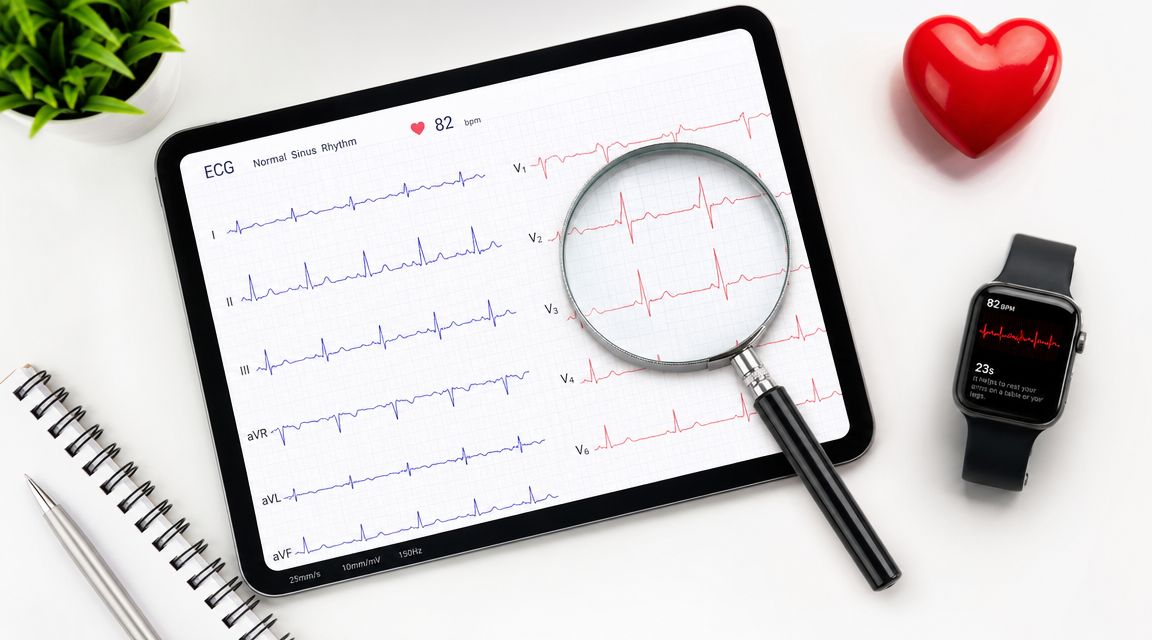


Key Takeaways

User Profile
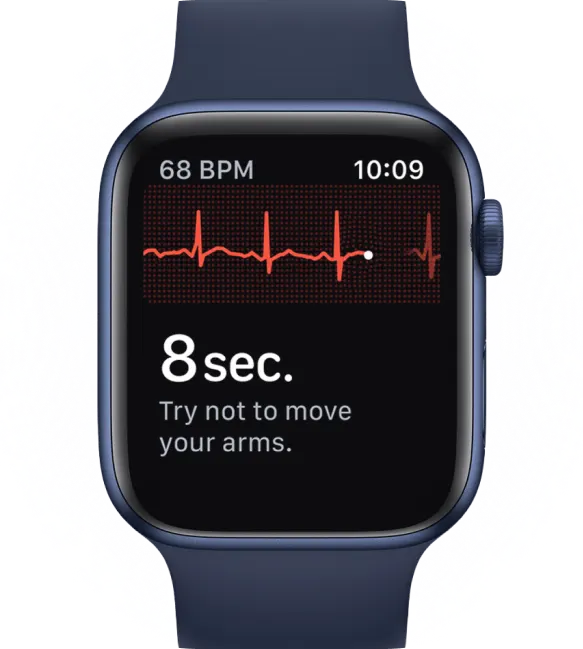
Hello Heart Hero. You might be here because your Apple Watch buzzed during dinner, your Fitbit showed something odd after a walk, or your Kardia reading looked different from usual and now you can't stop checking it. Maybe a clinician told you it's probably nothing, but you still feel uneasy. Maybe you were told to watch and wait, and that phrase somehow made you feel less calm, not more.
That reaction makes sense. Heart-related information hits differently. Even a short alert or an unclear ECG strip can turn an ordinary day into a spiral of questions. Is this dangerous? Did the device get it wrong? Am I overreacting? Should I ask someone else to look?
A second opinion isn't a sign that you're being difficult. It's often a sign that you're being careful. If you're dealing with symptoms, conflicting advice, or confusing wearable data, getting another qualified expert to review what you already have can bring clarity when your brain is stuck in uncertainty. If you're also preparing for a specialist visit, it can help to review questions to ask a cardiologist so you feel less rushed and more in control.
Introduction You Are Your Heart's Best Advocate
A lot of people assume they need to either trust the first answer completely or start over from scratch. Neither is true. There is a middle path, and that's where second opinion services can help.
For heart concerns, that middle path matters even more now because people are collecting health data at home. Your watch, phone, or handheld ECG device can capture a moment your clinic never sees. That can be useful, but it can also leave you holding a screenshot that raises more questions than it answers.
Why wearable heart data can feel so unsettling
Wearable ECGs are personal. They happen in real time, often during moments when you already feel off. If you notice palpitations at midnight and record a tracing on your couch, you're not just looking at a graph. You're trying to decide whether to relax, call someone, or head in for care.
That uncertainty is exhausting.
A second opinion can be less about challenging your doctor and more about giving yourself enough information to make the next decision calmly.
What being your own advocate actually looks like
Being an advocate doesn't mean diagnosing yourself. It means keeping records, asking follow-up questions, and recognizing when you need another set of trained eyes on the same information. For some people, that means reviewing a treatment recommendation. For others, it means having someone interpret a weird run of wearable ECGs that don't match how they were told things looked in clinic.
If you've ever thought, "I just want someone to explain what this means in plain English," you're already describing the value of a second opinion.
Understanding What Second Opinion Services Really Are
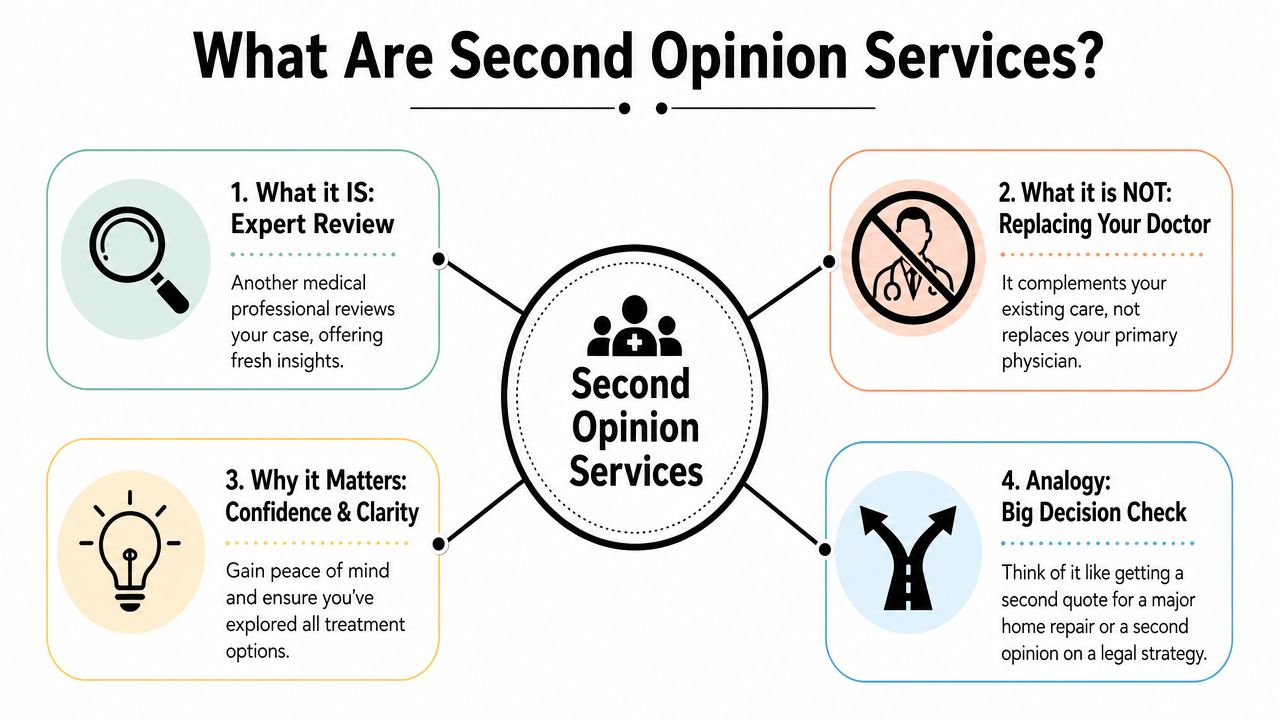
A good way to think about second opinion services is this. If a mechanic tells you your car needs a major repair, you might get another expert to inspect the same car before spending money or taking a big risk. You are not buying a new car. You are not pretending the first mechanic is incompetent. You are making sure the decision is sound.
That is how many medical second opinions work too.
Review, not restart
Most second opinion services do not mean repeating every test from the beginning. Often, another clinician reviews the information you already have. That could include ECG strips, wearable app exports, visit notes, lab results, imaging, or a prior specialist's recommendations.
This distinction matters for heart concerns from wearables. If your goal is to understand an Apple Watch ECG, a Kardia strip, or a pattern of palpitations, the most useful second opinion may come from careful review of those recordings and trends, not from duplicating your entire workup.
Some digital health tools also fit into a broader monitoring strategy. If you're curious how home data fits into ongoing care, this overview of the benefits of remote patient monitoring gives helpful context.
Why this has become mainstream
Second opinion services aren't some fringe workaround. The global medical second opinion market was valued at USD 5.76 billion in 2024 and is projected to reach USD 25.98 billion by 2033, with a projected CAGR of 18.22% from 2025 to 2033, according to medical second opinion market analysis. The same analysis says North America led the market in 2024, while Asia Pacific is expected to grow fastest over the forecast period.
Those numbers tell you something simple. A lot of patients and health systems now see second opinions as a normal part of care.
What second opinion services are not
It's easy to confuse second opinion services with a quick telehealth visit. They aren't always the same thing.
A same-day telehealth consult might focus on your current symptoms in a live conversation. A second opinion often centers on expert review of existing records. That difference is important because the quality of the answer depends on what gets reviewed, not just on how fast you can get on a video call.
When You Should Consider a Second Opinion for Your Heart
Some moments make the need obvious. Others are quieter. You don't need to wait until things feel dramatic to ask for another opinion.
For heart concerns, especially ones tied to wearable ECGs, a second opinion can help when the question isn't only "Am I sick?" but also "What does this result actually mean for me?"
Clear situations where another review makes sense
Consider getting a second opinion if any of these sound familiar:
- You received a new diagnosis. If someone told you that you may have atrial fibrillation or another rhythm issue, it's reasonable to want an independent review before you reorganize your life around that label.
- A procedure or surgery was recommended. Big decisions deserve confidence.
- Your symptoms don't match the reassurance you got. If you're still having palpitations, dizziness, or episodes that wake you up, you don't have to ignore your own experience.
- Your wearable keeps giving odd or inconclusive readings. A one-off tracing might be noise. A pattern deserves attention.
- You feel dismissed. That doesn't automatically mean the first clinician was wrong. It does mean you may need a clearer explanation from someone else.
- You take medication that affects rhythm or intervals. If a device trend changed after a medication change, another review can help connect the dots.
If your palpitations are frequent, prolonged, or come with concerning symptoms, this guide on heart palpitations and when to see a doctor can help you think through urgency.
Why this can change more than peace of mind
Second opinions aren't only about reassurance. They can change care in meaningful ways. A 2021 systematic review found that discrepancies between first and second opinions had a potential major impact on patient outcomes in up to 58% of cases, and one national program reported that the second opinion changed the initial diagnosis in 14.8% of cases in this systematic review on second opinions.
That's a strong reason not to dismiss your uncertainty as overthinking.
Practical rule: If the decision could affect medication, a procedure, long-term monitoring, or your sense of safety, another expert review is reasonable.
Wearables create a new kind of gray area
Traditional advice about second opinions often assumes a clinic-based diagnosis. Wearables are different. You might have a brief rhythm strip from your living room, a symptom log in your phone, and no clear answer about whether the data points to something urgent, harmless, or worth tracking over time.
That gray area is exactly where many people get stuck. They don't necessarily need a whole new medical journey. They need a trained person to look at what was already captured and explain whether the data supports concern, follow-up, or simple reassurance.
Finding the Right Help Types of Second Opinion Providers
Not every second opinion service solves the same problem. The best choice depends on what you're holding in your hand right now. Is it a complicated diagnosis with years of records? A recommendation for a heart procedure? Or a series of Apple Watch or Fitbit ECGs that you want interpreted clearly?
Traditional specialty centers
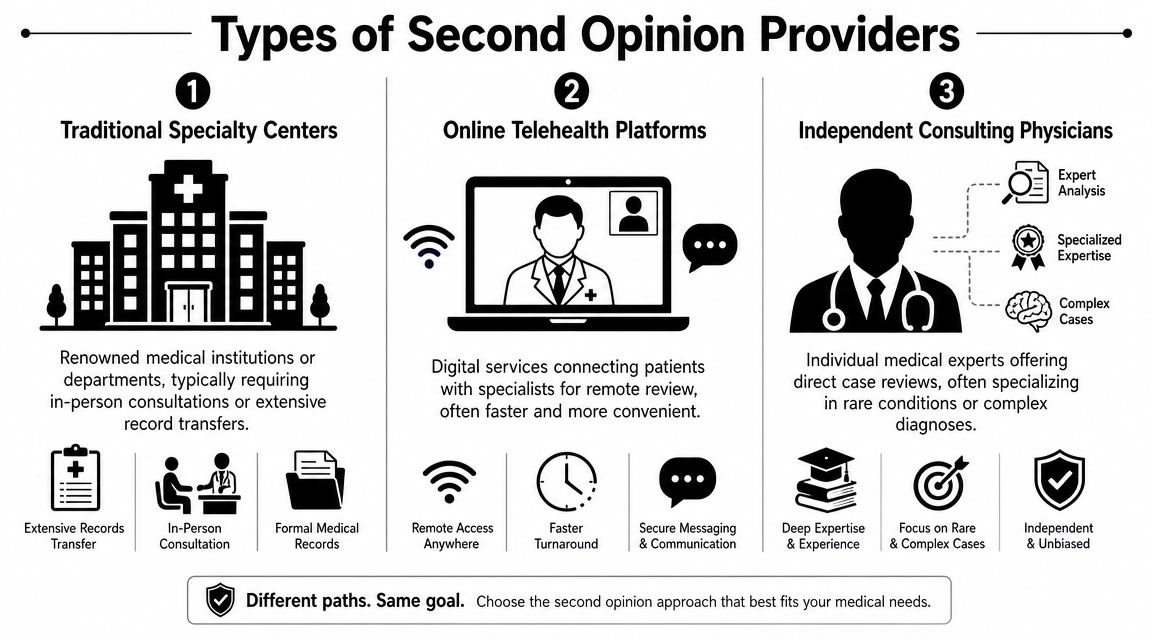
Large academic hospitals and well-known specialty centers can be a strong fit when your case is complex. If you have multiple diagnoses, prior imaging, medication questions, or competing recommendations, their depth can help.
The tradeoff is that these reviews can feel more formal and may involve more logistics. You may need to gather a large record set, transfer files, and wait for a detailed review.
Broad virtual second opinion programs
Some health systems and virtual platforms offer structured remote second opinions across many specialties. This model can be especially useful when you want expert review without travel.
At large systems, this isn't just a convenience feature. Cleveland Clinic reported that its virtual second-opinion program led to a diagnosis or treatment plan change in 67% of cases, according to reporting on its virtual second-opinion service. That supports the idea that expert rereview of existing records can materially change what happens next.
Narrower review services for specific data
Sometimes you don't need a full institution to weigh in. You need someone who understands a specific type of information. For wearable users, that might mean focused review of ECG strips, rhythm patterns, symptom timing, and trend changes over time.
This can be the best fit when your main question is narrow but important, such as:
- Was this recording likely benign or concerning
- Do these repeated episodes look similar or different
- Should this trend be brought to a clinician quickly
- Does this look worth escalating even if a prior visit felt inconclusive
The more specific your question is, the more helpful it can be to choose a service designed for that exact kind of review.
How to match the provider to your need
If you're deciding quickly, think in terms of depth, speed, and focus.
- Choose a specialty center when the whole case needs high-level review.
- Choose a broad virtual program when you want formal remote review of records from a major system.
- Choose a focused data-review option when your main concern is wearable ECG interpretation and trend clarity.
Different tools solve different problems. You don't need the biggest option. You need the right one.
Your Practical Steps for Obtaining Your Second Opinion
The process feels easier once you stop thinking of it as one big task. It's really a series of small actions. For heart concerns, especially with wearable data, the quality of your second opinion often depends on how well you gather and organize what you already have.
Step one, collect the right records
Start with the basics. Save your ECG PDFs, screenshots, symptom notes, medication list, and any prior cardiology reports. If you use a device like Kardia, you may also want a clean export of your readings. This guide on how to export your ECGs from Kardia can help if you're unsure where to begin.
If you need records from a clinic or hospital, it helps to understand what forms and authorizations are usually involved. This plain-language resource on understanding medical record forms is useful when you're requesting notes, test results, or imaging reports.
Step two, organize for a reviewer, not just for yourself
A specialist reviewing your case doesn't know your story yet. Make it easy to follow.
Try this simple package:
- A short timeline with dates of symptoms, alerts, medication changes, and doctor visits.
- Your best examples of unusual ECGs or episodes, not every single screenshot you've ever saved.
- A question list such as "Does this look like a rhythm issue?" or "Do these episodes need urgent follow-up?"
A reviewer can give a better answer when your records show both the data and the context around the data.
Step three, submit files securely
Virtual second opinion platforms often need to handle more than a few phone images. Some are built for large uploads of PDFs, DICOM images, surgical notes, and other records, which is why having digital files ready can make the process much smoother, as described in this overview of virtual second opinion platform requirements.
That may sound technical, but the takeaway is simple. Clean digital records save time.


Step four, read the report with a pen in hand
When your report comes back, don't just skim the conclusion. Look for:
- What was reviewed
- What the reviewer thinks is most likely
- Whether urgent care, routine follow-up, or more testing is suggested
- Any uncertainty that still remains
Write down what you still don't understand. A second opinion is most useful when it helps you decide your next move with more confidence.
How to Choose a Trustworthy Second Opinion Service
Skepticism is healthy here. If you're uploading private health data and relying on someone else's interpretation, you should be picky. A good service doesn't just promise speed. It should make you feel that the review will be competent, understandable, and safe.
What to check before you upload anything
Use a short filter:
- Credentials matter. Who is reviewing the data, and what kind of expertise do they have with rhythm interpretation or cardiac records?
- Turnaround should be clear. Vague timelines add stress.
- Reports should be readable. If the explanation is too technical to act on, the service isn't doing enough.
- Privacy should be explained plainly. You shouldn't have to guess how your files are handled.
- Pricing should be transparent. Confusing fee structures create mistrust fast.
A trustworthy service should answer those questions before you commit.
For wearable users, clarity beats drama
Many anxious users want one thing above all else. A calm, specific explanation. Not hype. Not panic. Not generic wellness advice.
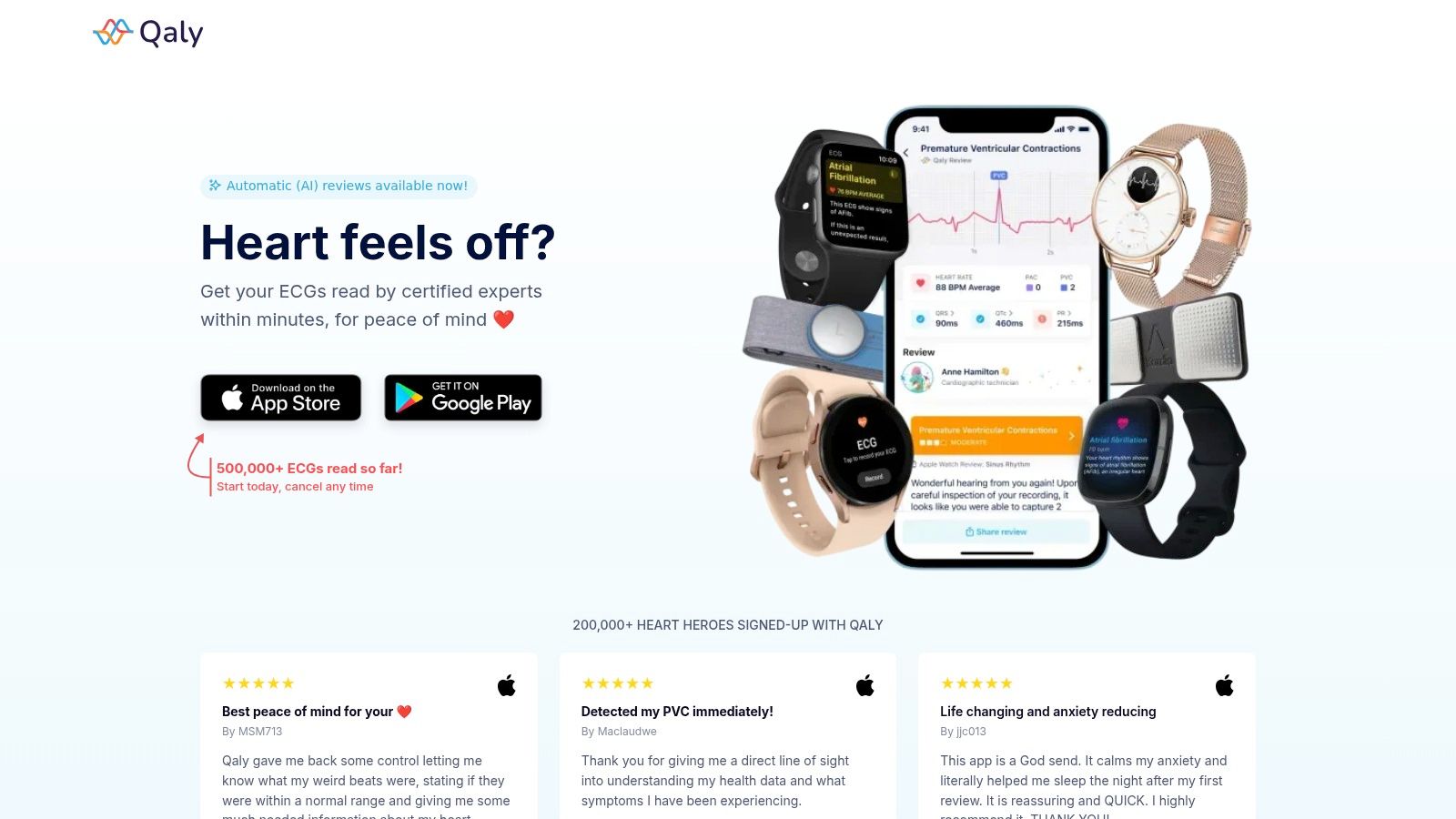
That is why specialized services focused on wearable ECG review can be appealing. They are built around the practical question many people have. "Can someone qualified look at this recording and tell me what it most likely shows?"
If you want to see what that kind of review experience can look like in practice, this short video offers a useful example.
A final trust check
Before choosing any service, ask yourself one simple question. After I receive this result, will I know what to do next?
If the answer is no, keep looking. The best second opinion services don't just review data. They reduce confusion.
Common Questions and Concerns About Second Opinions
Will my doctor be offended if I get a second opinion
A lot of people worry about this. That fear is real, and medical literature has noted that patients often fear harming the doctor-patient relationship. The same review also found that doctors are sometimes less likely to inform older or less educated patients about the option of a second opinion, as described in this review of barriers to seeking second opinions.
You are still allowed to ask. Wanting more clarity is not disrespectful.
What if the two opinions conflict
Conflicting opinions can feel worse at first, but they also reveal where the uncertainty is. Ask both sides to explain what evidence they relied on, what risks they are most worried about, and what next step they agree on. Sometimes the disagreement is smaller than it first appears.
If two experts disagree, don't focus only on who sounds more confident. Focus on who explains the reasoning more clearly.
Are second opinion services covered by insurance
Coverage varies. Some are part of health-system offerings, some are cash-pay, and some may be available through an employer or health plan. The important thing is to ask before you upload records so there are no surprises.
Do I need a full reevaluation for a wearable ECG concern
Not always. Sometimes you need urgent in-person care. Sometimes you need routine follow-up. And sometimes you need a qualified review of the tracing, your symptoms, and the pattern over time.
That middle ground is where many people find relief. Not because every alert is dangerous, but because not every alert should be ignored either.

Seeing palpitations or irregular rhythm in your ECG data? Qaly connects you with certified cardiographic technicians for a clear, human-reviewed answer.



.png)
.png)