




Key Takeaways

User Profile
Hello Heart Hero. If you’ve been feeling dizzy, more tired than usual, or just have a sense that something isn’t quite right with your heartbeat, you're in the right place to get some answers. A High-Degree AV Block is a condition where the electrical signals that tell your heart when to beat are getting significantly delayed or even completely dropped. This breakdown in communication can cause your heart to beat very slowly, and it's understandable to feel concerned.
A Guide to Understanding High-Degree AV Block
Getting a potential heart diagnosis is overwhelming, especially when it comes with a complicated-sounding name. We're here to break it down for you with clear, reassuring information. We know that navigating the healthcare system can sometimes leave you feeling unheard or skeptical, so our goal is to give you the knowledge you need to feel confident and take control of your health journey.
A good way to think about your heart’s electrical system is to picture a perfectly timed orchestra. In a healthy heart, the conductor, which are the upper chambers or atria, sends out a signal for every single beat. In response, the musicians, which are the lower chambers or ventricles, play their part in perfect time, pumping blood to the rest of your body.
When the Signal Gets Dropped
With a High-Degree AV Block, the conductor is still sending out signals just like it should, but many of those signals get lost on their way to the musicians. This means the ventricles don’t always get the message to beat, which results in a very slow and sometimes unreliable heart rhythm.
This is not just a minor lag; it's a major communication breakdown. For every two, three, or even four signals sent from the top of your heart, only one might actually make it through to the bottom. This is the core problem in a High-Degree AV Block.
This guide is here to help you:
- Understand Your Symptoms: We’ll connect feelings like dizziness and fatigue to what's actually happening inside your heart.
- Navigate Your Diagnosis: Learn what to expect from your doctors and how to be an active partner in your own care.
- Take Action: Find out how you can use tools you might already have, like a smartwatch, to gather clear information to share with your medical team.
While a diagnosis of High-Degree AV Block is serious, understanding what it means is the most powerful first step you can take. By turning confusing symptoms into clear data, you can walk into your doctor's office with confidence and work together to find the best path forward for your health.
What High-Degree AV Block Is Actually Happening in Your Heart
We know a diagnosis like High-Degree AV Block can be scary, so let’s walk through exactly what’s happening inside your chest. Understanding the mechanics of your heart is a powerful first step toward feeling more in control of your health.
Think of your heart’s electrical system like a busy intersection with a faulty traffic light. Normally, the light turns green for every car, allowing them to pass through smoothly. With a High-Degree AV Block, that traffic light might stay red for two or three cars in a row, only letting one get through.
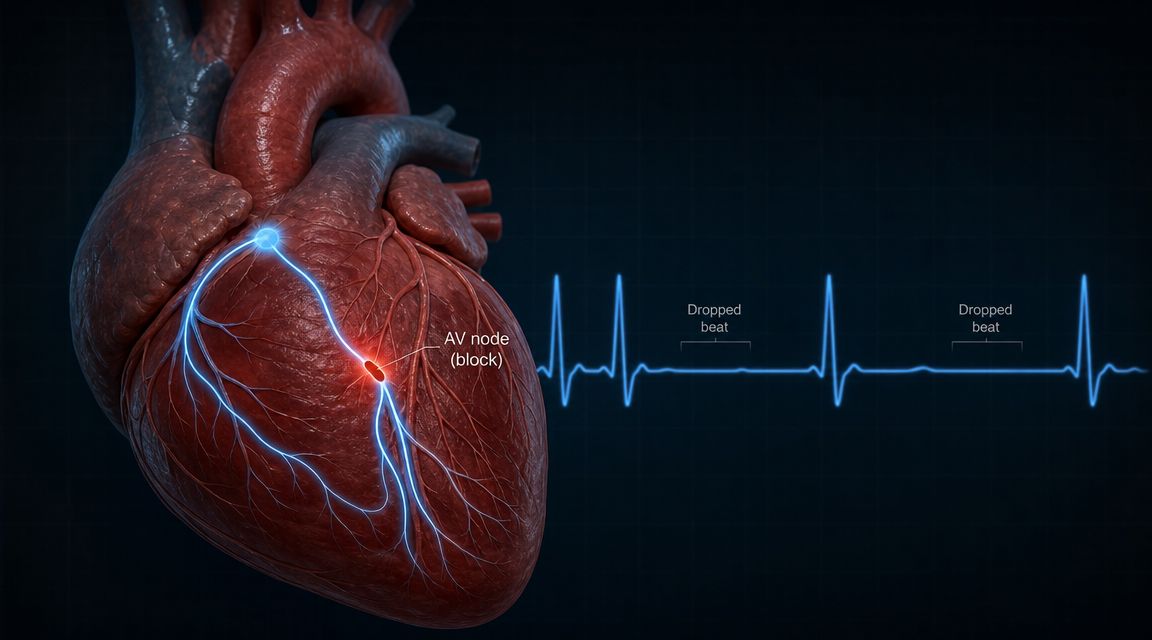
That's a simple but accurate picture of what's going on. Your heart's upper chambers (the atria) are sending out perfectly timed electrical signals, just like the cars arriving at the intersection. But the "gatekeeper" between your upper and lower chambers, called the AV node, is failing to pass most of these signals along.
An Intermittent Electrical Pattern
The defining feature of a High-Degree AV Block is this inconsistent, on-again, off-again pattern of conduction. For every few signals the atria send out, only one might actually make it to the ventricles (the lower chambers) to trigger a full heartbeat. This is what causes the dangerously slow heart rate you might be feeling.
A High-Degree AV Block is a serious communication breakdown. It's different from a less severe block where signals are just delayed, and it's also different from a complete heart block where no signals get through at all. It exists in a tricky middle ground where conduction is intermittent but severely impaired.
This infographic helps break down the journey of understanding and managing this condition.
The goal is to give you the knowledge you need to partner with your doctor and confidently manage your heart health.
Seeing the Block on an ECG
This electrical problem creates a very specific pattern on an ECG. A cardiologist might describe it as a second-degree AV block with a ratio of 3:1 or higher. This means that for every three atrial signals (P waves), only one successfully travels down to create a ventricular beat (QRS complex).

When the block is severe, say three out of four impulses are blocked, your heart rate can drop dramatically. It can sometimes go as low as 35 beats per minute. This is a critical distinction from other, less severe blocks, because High-Degree AV Block can sometimes progress to a complete heart block. You can see more examples of these ECG patterns in this in-depth guide from LITFL.com.
If you’re interested in the subtle electrical delays that can sometimes come before a block develops, you can also read about the causes of a prolonged PR interval in our related article. Recognizing these patterns is the first and most important step toward getting the right care.
Recognizing the Symptoms and Understanding the Causes
That strange, unsettling feeling that something is “off” with your heart is often what starts the journey to understanding your health. When it comes to a High-Degree AV Block, the symptoms aren’t just a whisper. They’re your body’s alarm bells, signaling it’s not getting the steady, oxygen-rich blood flow it depends on.
This happens because the electrical signals telling your heart when to beat are seriously disrupted, causing your heart rate to drop. Think of your heart as the main engine for your body. When it slows down too much, everything else starts to feel the strain.
How a High-Degree AV Block Can Feel
You might be experiencing one or more of these common signs. They’re a direct result of that slow, inefficient heartbeat, and it’s important not to brush them aside. Your feelings are valid, and they are important clues.
- Dizziness or Lightheadedness: This is a classic sign your brain isn’t getting enough blood, which can make you feel unsteady or like the room is spinning.
- Extreme Fatigue: This is not just feeling tired after a long day. It’s a deep, bone-weary exhaustion that sleep doesn’t fix, as your body struggles with poor circulation.
- Fainting or Near-Fainting (Syncope): If your heart rate dips low enough, blood flow to the brain can be so reduced that you briefly lose consciousness. This can be very frightening, and it's a serious sign.
- Shortness of Breath: Your heart and lungs are a team. When the heart can’t pump blood out effectively, it can feel like you just can’t get enough air.
- Chest Discomfort or Palpitations: You might notice a fluttering, pounding, or an uncomfortable pressure in your chest as your heart tries, and fails, to keep a consistent rhythm.
It’s all too easy to chalk these feelings up to getting older or just being stressed. But they are very real signals. If your heart's electrical system is a faulty traffic light, these symptoms are the gridlock it creates throughout your body.
Uncovering the Underlying Causes
A High-Degree AV Block rarely just appears on its own. It's usually a consequence of other health problems that have put a strain on your heart's electrical wiring over time. Here are some of the common culprits:
- Age-Related Changes: The heart's conduction system can experience natural wear and tear over time.
- Heart Conditions: Damage from a previous heart attack or underlying coronary artery disease can affect the electrical pathways.
- High Blood Pressure: This is a major factor. Research has shown that elevated blood pressure significantly increases the risk of developing an AV block. One study estimated that it could be behind as many as 47% of all cases.
- Other Factors: Sometimes medications, infections, or other systemic diseases can contribute.
You can learn more about how common health issues affect heart rhythm in this in-depth research on atrioventricular block. It’s a clear reminder that managing your overall health is one of the biggest steps you can take to protect your heart’s rhythm.
How Doctors Confirm a High-Degree AV Block
Learning that you might have something going on with your heart is scary, and the road to getting a clear diagnosis can feel confusing. We want to walk you through how doctors confirm a High-Degree AV Block so you can feel more prepared and in control of the process. It all begins with your story.
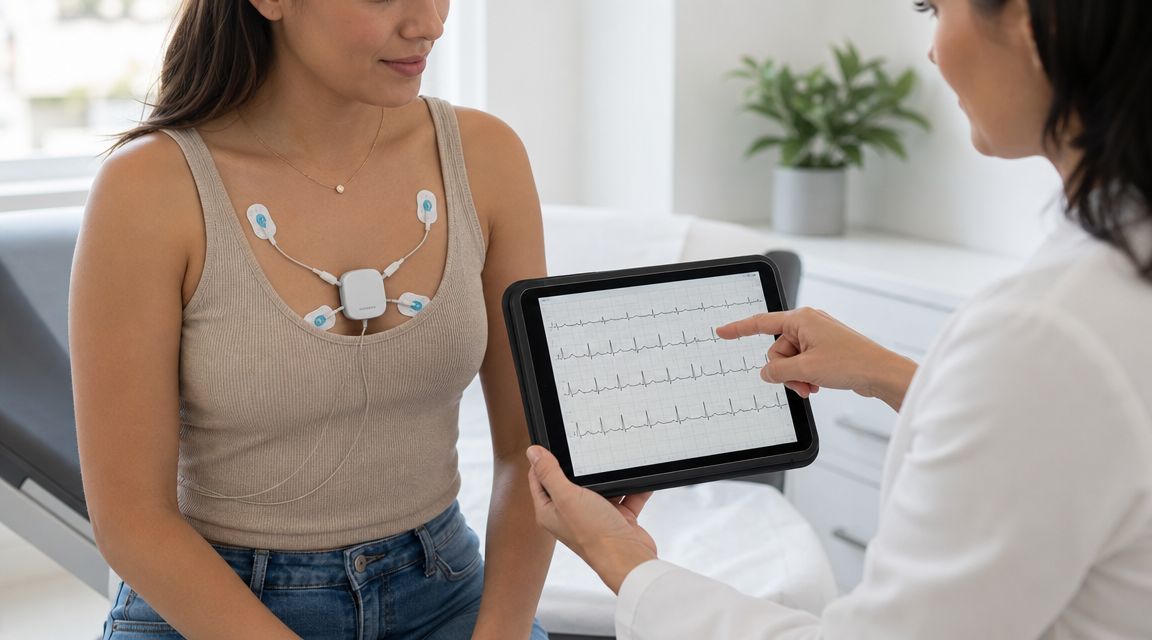
A doctor’s investigation always starts by listening carefully to the symptoms you're experiencing. Your personal account of any dizziness, fainting, or severe fatigue is the first and most important piece of the puzzle. From there, the main diagnostic tool is the electrocardiogram (ECG), a test that maps out your heart's electrical signals.
The challenge, however, is that a standard ECG in a doctor's office is just a brief snapshot in time. It typically lasts only 12 seconds. If your High-Degree AV Block is intermittent, meaning it comes and goes, an in-office ECG can easily miss it. This can lead to frustrating and inconclusive results, making you feel unheard.
Looking for an Intermittent Problem
Because these electrical blocks can be unpredictable, your doctor will likely want to monitor your heart over a longer period. This is where you can become an active partner in your diagnosis. Common ways to do this include:
- Holter Monitor: A portable device you wear for 24 to 48 hours, continuously recording your heart’s rhythm.
- Event Monitor: A device worn for weeks or months. You activate it to record your ECG whenever you feel symptoms.
These tools are incredibly useful, but they aren’t perfect. A Holter monitor might not catch a block that only happens once a week, and with an event monitor, you have to be able to press the button while you're feeling dizzy or unwell.
A High-Degree AV Block is considered a more advanced and concerning form of heart block. Historically, these advanced conduction disorders are known to be uncommon but disproportionately important because they can be intermittent, symptomatic, and potentially progressive.
Catching one of these episodes is the key to a firm diagnosis. Given how infrequent these events can be, capturing one on an ECG can provide the definitive proof a doctor needs. You can learn more about the prevalence of these conditions in this in-depth research on atrioventricular block.


The Power of Your Personal ECG
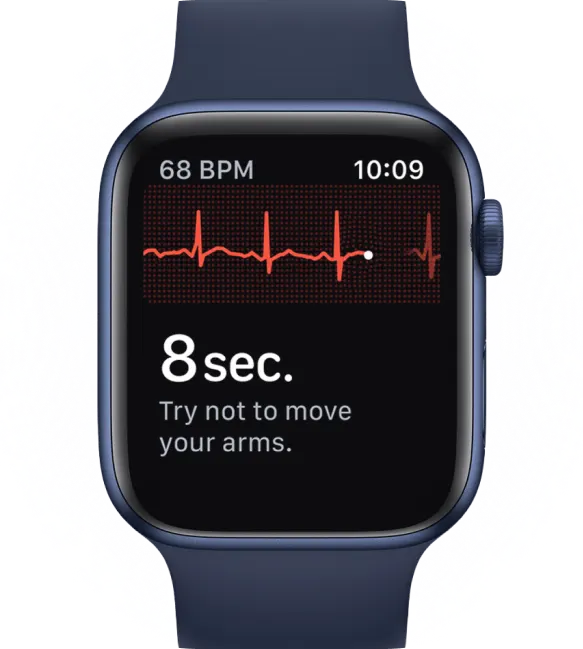
This is where a smartwatch or personal ECG device can be a game-changer. By taking an ECG with your watch the moment you feel a symptom, you capture the exact evidence your doctor needs to see what’s going on electrically with your heart. Instead of trying to describe a fleeting sensation later, you can show them a clear, data-driven recording.
Using a service like Qaly to have that ECG reviewed by a certified expert gives you an even stronger tool. It transforms your wearable from a gadget into a source of credible medical information, helping you and your doctor get to the bottom of your symptoms. You can even see what a related condition, complete heart block, appears on a watch ECG.

Understanding Your Treatment Options
Finding out you have a heart block can feel overwhelming, but getting a handle on your treatment options can make things feel much more manageable. Let's walk through the different paths your doctor might suggest, because the right approach is always tailored to you, your symptoms, the type of block you have, and its underlying cause.
Sometimes, the root cause is something that can be fixed. If a new medication is interfering with your heart's electrical signals, your doctor might simply adjust the dose or switch your prescription. In other cases, an untreated issue like a thyroid problem could be the culprit, and managing that condition can often resolve the heart block entirely.
The Role of a Pacemaker
For a more persistent and symptomatic High-Degree AV Block, the most common and effective treatment is a permanent pacemaker. It’s completely normal to feel a bit anxious about this, but it helps to think of a pacemaker not as a major surgery, but as a tiny, smart device that acts as a reliable safety net for your heart.
A pacemaker is a small device, usually placed just under the skin of your chest, with one or more thin, flexible wires that lead to your heart. It doesn't take over your heart's job. Instead, it quietly monitors your heart’s rhythm around the clock.
A pacemaker is like your heart's personal guardian. It works in the background, ready to step in only when needed. If it senses your heart rate has dropped to a dangerously slow level, it sends a tiny, painless electrical impulse to make sure a beat happens, keeping your heart's rhythm steady.
This simple action is what prevents symptoms like fainting, dizziness, and extreme fatigue that can come with a slow heartbeat. It’s a solution designed to give you back your peace of mind and allow you to live your life without worrying about a sudden drop in your heart rate. For millions of people, it's a life-changing fix that restores freedom and confidence.
For a deeper dive into what the procedure involves, you might find our guide on the heart pacemaker operation helpful. Understanding the process step-by-step can often make it feel much less intimidating. It's a very common and highly successful procedure that has brought relief and a better quality of life to countless people.
Taking Proactive Steps with Your Wearable ECG
This is the moment where you can shift from feeling worried and uncertain to taking charge of your health. Your wearable device, whether it's a smartwatch or a personal ECG monitor, can become one of your most powerful tools for getting clear answers about a potential High-Degree AV Block.
You are the only person who knows exactly what your symptoms feel like. The healthcare system, for all its strengths, can sometimes struggle to capture fleeting sensations like dizziness or a sudden pause in your chest. Here's your chance to bridge that gap with real data.
Turning Your Watch into a Health Advocate
Instead of just waiting for your next appointment, you can start building a clear picture of your health right now. Here is a simple, actionable plan to make your wearable device work for you:
- Capture the Moment: The instant you feel a symptom, whether it's that familiar lightheadedness, a strange flutter, or a heavy pause in your heartbeat, take an ECG with your watch or other device. This is the single most important step. Don't second-guess it; just record it.
- Get a Human Interpretation: An ECG strip can look like a confusing series of squiggles. To know what you're really looking at, get that recording interpreted by a human expert. A service like Qaly connects you with certified technicians who analyze your ECG and tell you in plain language what it shows.
- Share the Report with Your Doctor: With an expert-reviewed report in hand, your next doctor's visit changes completely. You are no longer just describing a symptom; you are presenting a piece of evidence.
Imagine walking into your appointment and saying, "I felt dizzy at 2:15 PM yesterday, and here is the ECG showing exactly what my heart was doing at that moment."
This approach transforms you from a passive patient into an active, informed partner in your own healthcare. You are using the tools you already own to get the answers you deserve and ensuring your concerns are backed by credible data.
This simple, three-step process is about empowerment. It’s about making sure that when you speak to a medical professional, your voice is supported by clear, undeniable information. Understanding the function of the heart's electrical gatekeeper, the AV node, can also provide context. You can learn more about the role of the AV node in our detailed article. This proactive approach gives you control and helps you and your doctor work together more effectively.
Frequently Asked Questions About High-Degree AV Block
A new diagnosis can feel overwhelming and bring up a lot of questions. We've put together some answers to the most common questions about High-Degree AV Block to give you some clarity and peace of mind.
Can High-Degree AV Block Go Away on Its Own?
This is a fantastic question, and the answer really depends on the cause.
Sometimes, a High-Degree AV Block is triggered by something that can be reversed. Think of a side effect from a new medication or an electrolyte imbalance in your body. If the underlying issue is fixed, the block can go away completely.
However, more often than not, the block is caused by gradual, age-related changes to the heart's electrical wiring. In these situations, the block usually doesn't resolve on its own and will require ongoing management to keep you safe.
Is It Safe to Exercise with This Condition?
It’s absolutely critical that you speak with your doctor before you start or continue any exercise program.
Because a High-Degree AV Block can cause your heart rate to drop to dangerously low levels, certain types of physical activity could be risky. Your doctor is the only one who can give you personalized advice based on the exact nature of your block and your overall health.
How Is High-Degree AV Block Different from a Heart Attack?
This is a really important distinction to understand. The simplest way to think about it is this:
A High-Degree AV Block is an "electrical" problem. The signals that tell your heart when to beat are getting delayed or completely blocked.
A heart attack, on the other hand, is a "plumbing" or circulation problem. This is when a blockage in an artery cuts off blood flow, starving the heart muscle of oxygen.
Your smartwatch is a powerful tool for capturing data, but that data needs context. It's excellent at recording the 'what' (an unusual rhythm) but not the 'why.' An expert human review is vital for turning that raw data into a meaningful insight you can act on.
Can My Smartwatch Really Detect a Serious Heart Block?
Yes, your watch can be an incredible partner in your health journey. It has the amazing ability to capture an ECG at the very moment you feel a symptom, which can be the exact piece of evidence your doctor needs to see.
But while your watch is great at flagging an abnormal rhythm, it can't tell you for sure if it's a High-Degree AV Block. That's where a human expert comes in. Having a trained professional interpret that ECG is the key to turning confusing data into a clear diagnosis.

Worried about your heart health? Turn your wearable ECG into confident action with expert analysis in minutes.



.png)
.png)