


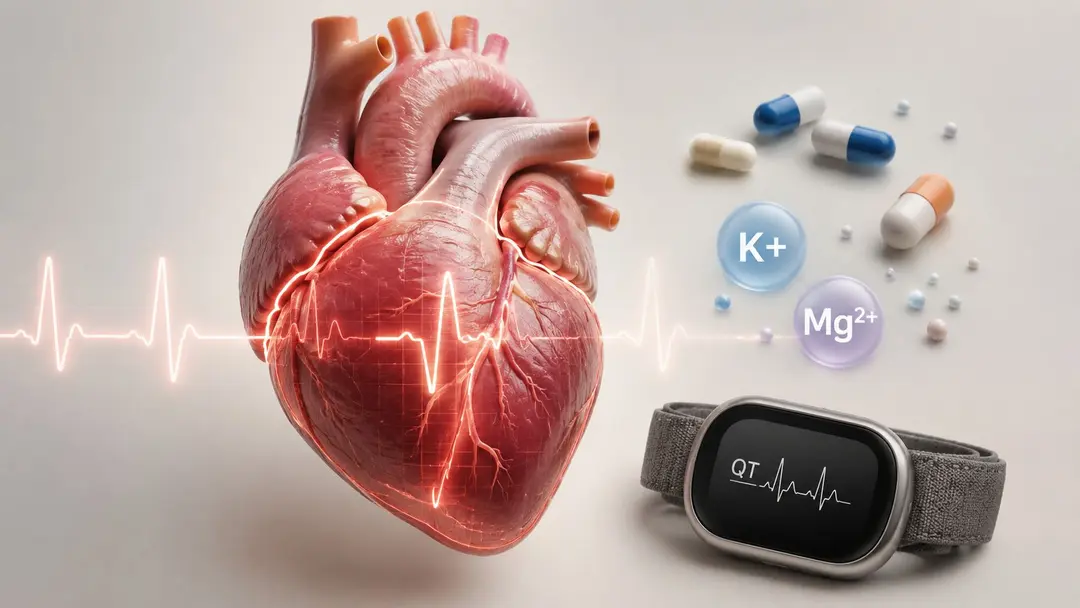


Hello Heart Hero. You might be looking at a watch ECG, seeing a QTc flag, and wondering whether you should ignore it, Google it, or call your doctor right now. That reaction is normal. A long QT reading can feel alarming because it sits at the intersection of ordinary things, like a new prescription or a stomach bug, and rarer heart rhythm problems that sound far scarier than the number on the screen.
The useful way to think about QT prolongation causes is not as one single villain, but as a stack. A person can have a bit of underlying susceptibility, then add a trigger like a medication, low potassium, or a slow heart rate, and suddenly the heart's electrical reset takes longer than it should. That's why a watch reading deserves attention, but not automatic panic.
Understanding QT Prolongation and Why It Matters
The QT interval is the heart's electrical reset time. After each beat, the heart has to recover before it can fire again, and the QT interval is the slice of the ECG that reflects that recovery. For a simple picture, consider it like a camera that needs a moment to recharge before the next shot.
When that reset takes longer than expected, the reading is called QT prolongation. That doesn't mean the heart is failing in that moment, and it doesn't mean every long QTc number is an emergency. It does mean the electrical system is running closer to a rhythm problem called torsades de pointes, which can turn dangerous if the timing lines up badly.
The reason clinicians take this seriously is that prolonged QT can be more than a number on a strip. Population and clinical data linked abnormal QT patterns with worse outcomes, and prolonged QT can trigger malignant arrhythmias, especially when other risk factors are present. Mayo Clinic notes that more than 100 medicines can cause prolonged QT intervals in otherwise healthy people, which is why a watch alert often points first to a trigger, not a lifelong heart condition. QT interval, mortality, and clinical significance
A practical way to read a watch ECG is this. A single high QTc is a signal to look for context, not a diagnosis by itself. If you just took a new medication, were dehydrated, or had low electrolytes, the number may reflect a temporary issue rather than a fixed disorder.
Practical rule: a QTc alert is a reason to slow down and review the context, not a reason to assume the worst.
The Two Major Categories of QT Prolongation Causes
QT prolongation comes from two big buckets, congenital and acquired. Congenital long QT syndrome means the electrical wiring was born with a vulnerability, often from ion-channel mutations. StatPearls notes that more than 15 mutations have been identified in congenital long QT syndrome. Long QT syndrome overview
Acquired QT prolongation develops later. That's the form clinicians run into most often, and it's usually tied to medications or electrolyte problems that interfere with the channels the heart uses to reset after each beat. In routine care, drug-related acquired QTc prolongation is the most common cause seen, which is why the first question is often, “What changed recently?”
A helpful analogy is a house with sensitive wiring. Some people are born with wiring that's already a little fragile, while others have sturdy wiring but plug in a device that pulls too much current. Most of the time, the issue is not one dramatic event. It's the combination of a susceptible system and a trigger.
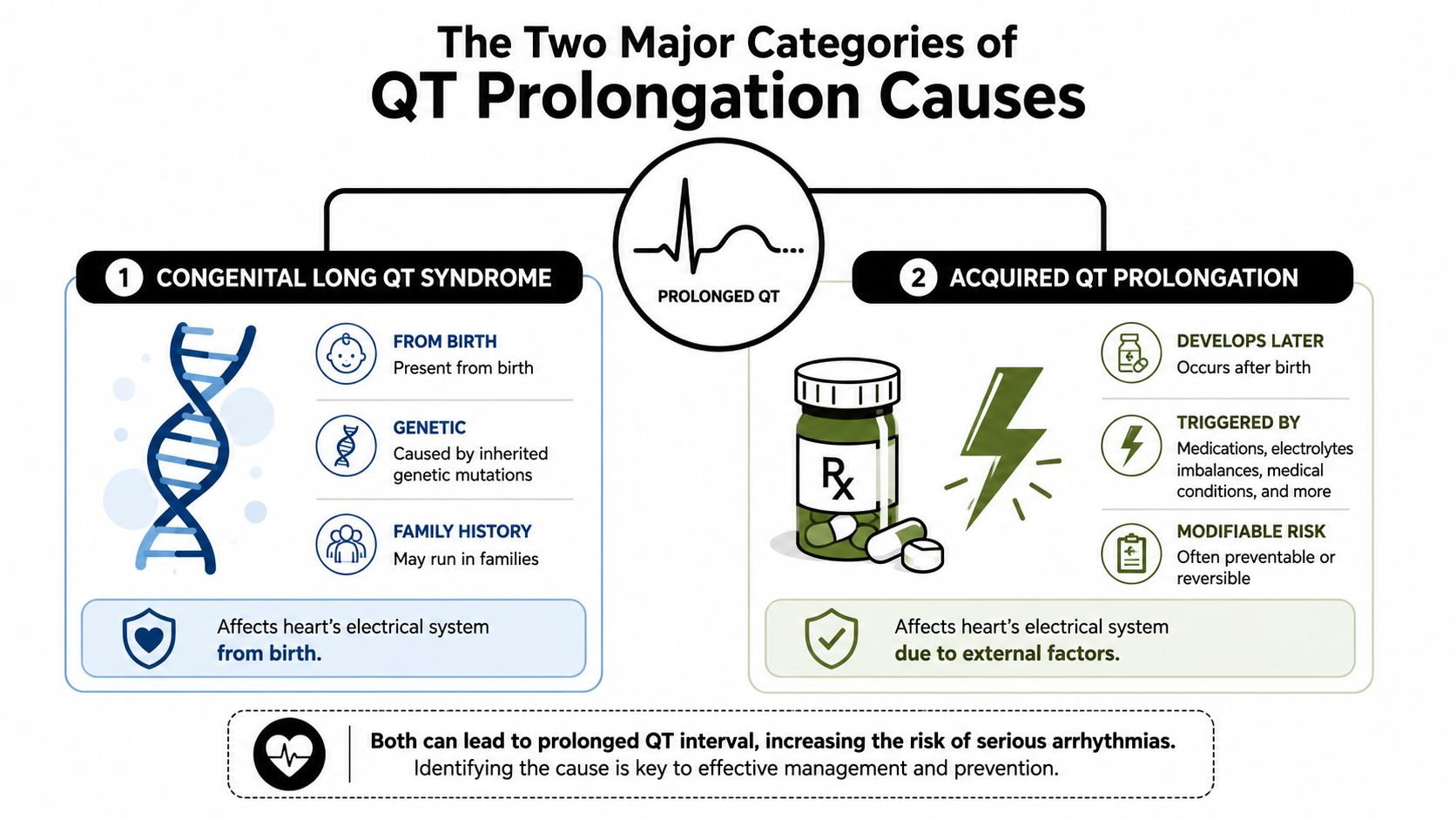
For a plain-language explainer on inherited disease, the guide on Understanding Long QT Syndrome is a good companion. The main takeaway here is simpler. Acquired causes are more common, but congenital susceptibility still matters because it lowers the margin for error when a trigger shows up.
Medications and Drug Interactions That Prolong QT
Medicine-related QT prolongation is the cause most often encountered in real life. Mayo Clinic notes that more than 100 medicines can prolong QT, including some antibiotics, antifungals, diuretics, anti-arrhythmics, mental health medicines, and upset-stomach medicines. StatPearls also identifies pharmacologic causes as the most common overall, with examples that include class III antiarrhythmics, macrolides, fluoroquinolones, citalopram, methadone, and ondansetron. Mayo Clinic on long QT syndrome causes StatPearls on acquired QT prolongation
How drugs cause the problem
Many QT-active drugs slow cardiac repolarization, often by blocking ion channels such as IKr. That stretches out the heart's recovery phase and can raise the risk of torsades de pointes, especially if the person is also low on potassium or magnesium. The same medicine can be tolerated by one person and become risky in another person with slower heart rate, heart failure, or a second QT-active drug on board.
That's why drug interaction checking matters so much. If you're starting a new antibiotic, antidepressant, anti-nausea medicine, or sleep-related medication, it's worth checking whether it stacks with what you already take. A practical place to look is drug interaction checking, especially if you're juggling more than one prescription or adding an over-the-counter product.
The real-world pattern patients miss
The biggest mistake is thinking only one obvious drug matters. In practice, risk often rises when people combine two QT-active medicines, get a rapid IV dose, or start a drug while already a little dehydrated or electrolyte depleted. That's one reason medication review is so important before assuming a watch ECG means a genetic syndrome.
If you want a medication-focused overview, the article on drugs that cause QT prolongation gives a useful class-by-class picture. The practical habit is straightforward. Before you start, stop, or double up on anything, check whether it touches the QT interval.
Clinical shorthand: one QT-prolonging drug can be enough, but two together, or one drug plus low potassium, often changes the risk picture fast.
Personal Risk Factors That Stack the Deck
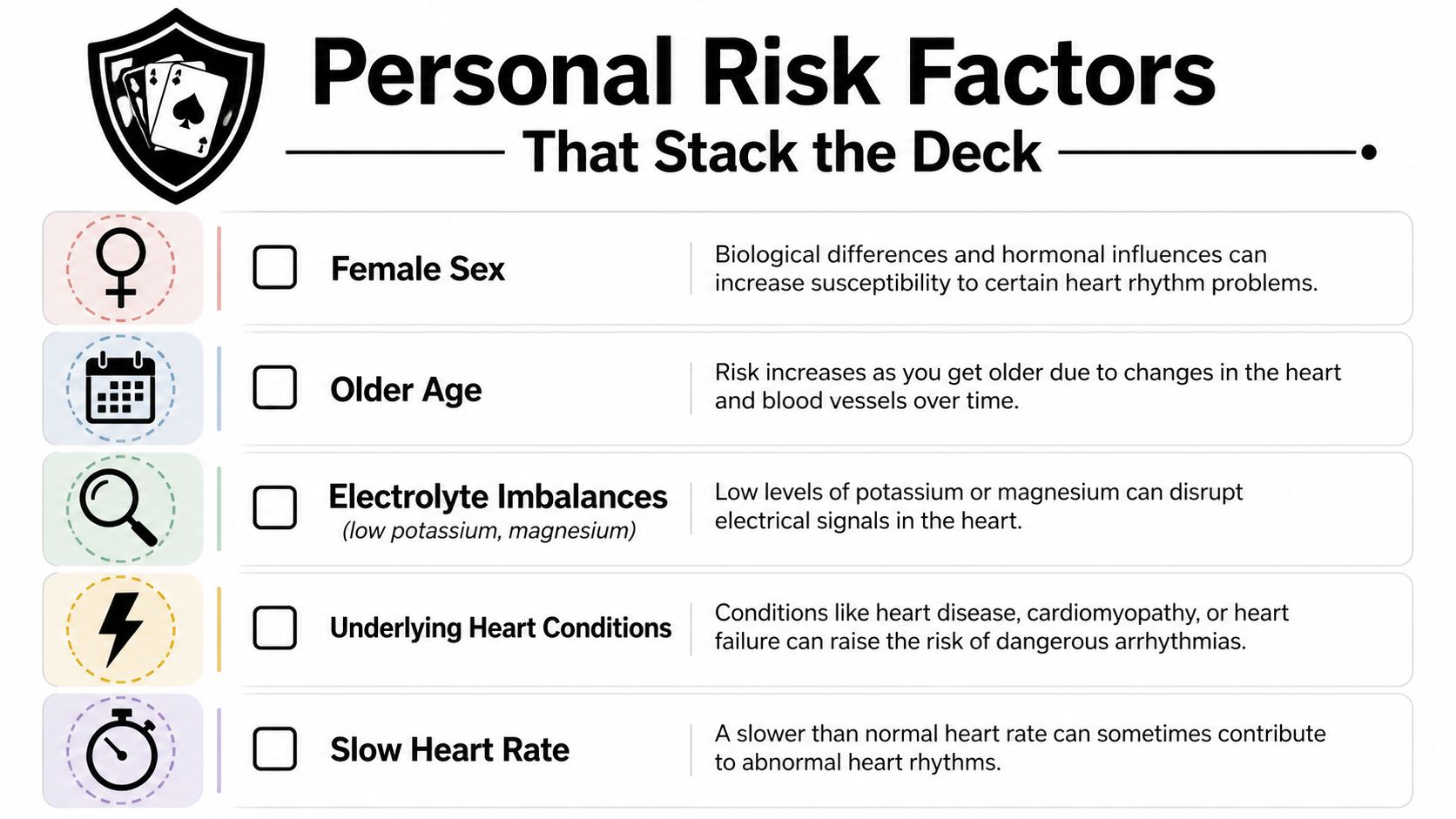
Two people can take the same medicine and have very different ECGs. That's because QT prolongation is usually a stacking problem, not a single-cause problem. The drug is one layer, but the person's baseline vulnerability matters just as much.
A systematic review found very strong evidence for hypokalemia, diuretic use, antiarrhythmic drugs, and CredibleMeds List 1 QT-prolonging drugs as predictors of QTc prolongation. Other established contributors include female sex, bradycardia, heart failure, myocardial ischemia, hypothyroidism, hypocalcemia, hypomagnesemia, and congenital ion-channel mutations. Systematic review of QTc risk factors
Where everyday life sneaks in
This part catches people off guard. Vomiting, diarrhea, dehydration, and diuretic use can lower potassium or magnesium, and that can nudge the QT interval longer even if the person feels only mildly off. A slow pulse, recent illness, or heart failure can make the same medication more risky than it looked on paper.
Wearable users often think in terms of a single reading, but the body works in layers. If you're already on the edge, a new trigger can push you over it. If you're not, the same trigger may do almost nothing.
What to remember
- Female sex and older age can lower repolarization reserve.
- Low potassium, magnesium, or calcium make the QT problem easier to trigger.
- Diuretics and illness-related fluid loss can create the electrolyte shift without warning.
- Heart disease and a slow heart rate reduce the buffer between a normal reading and a risky one.
The article on electrolyte imbalance and your ECG is a useful follow-up if you're trying to connect symptoms like vomiting or dehydration to a weird watch result.
Other Medical Causes Worth Knowing About
A prolonged QT reading does not always come from a medicine or an electrolyte shift. Sometimes the reason sits in the heart itself, or in the body's internal setting at that moment. Clinicians look at the full picture before deciding what a watch ECG is really saying.
Congenital long QT syndrome is the inherited form, and it often shows up as LQT1, LQT2, or LQT3. The trigger can vary by genotype, which is why one family member may faint during exercise while another notices symptoms with stress, sleep, or a medication. The wiring problem is present from birth, but the pattern of when it shows itself can differ.
Other medical causes include bradyarrhythmias, myocardial ischemia, hypothermia, thyroid disease, and structural heart disease. Older age can also matter because it reduces repolarization reserve, which leaves less buffer when another stressor appears. Long QT syndrome and acquired causes
Why the context changes the meaning
A wearable ECG only captures a slice of time. If the person is cold, bradycardic, recovering from illness, or dealing with an endocrine problem, the QTc may look longer for reasons that are not obvious from the number alone. That is why a machine flag should prompt review, not instant self-diagnosis.
If you are trying to understand how a QTc gets interpreted outside the hospital, the key question is whether the reading fits the rest of the story. Symptoms, recent illness, medications, and known heart disease all matter. A single high value without context can be misleading.
The same applies to electrolyte shifts, which often sit behind a watch alert even when the person feels only a little unwell. The article on electrolyte imbalance and your ECG is a useful follow-up if you are trying to connect vomiting, diarrhea, dehydration, or diuretic use to a strange watch result.
The number matters, but the story around the number matters more.
How QT Prolongation Shows Up on a Wearable ECG
A watch ECG can raise a QTc flag after a routine moment, like sitting still after a walk or checking a tracing because something feels off. The number can be helpful, but only if you read it as part of the whole picture. QT prolongation is usually a stacking problem, where a person's baseline susceptibility meets a trigger such as a medicine, illness, or electrolyte shift.
On an ECG, the QT interval runs from the start of the QRS complex to the end of the T wave. That is the period when the ventricles contract and then recover. On a watch ECG, this measurement is less forgiving because motion, noise, and a single lead can make the T wave harder to read than on a clinical ECG.
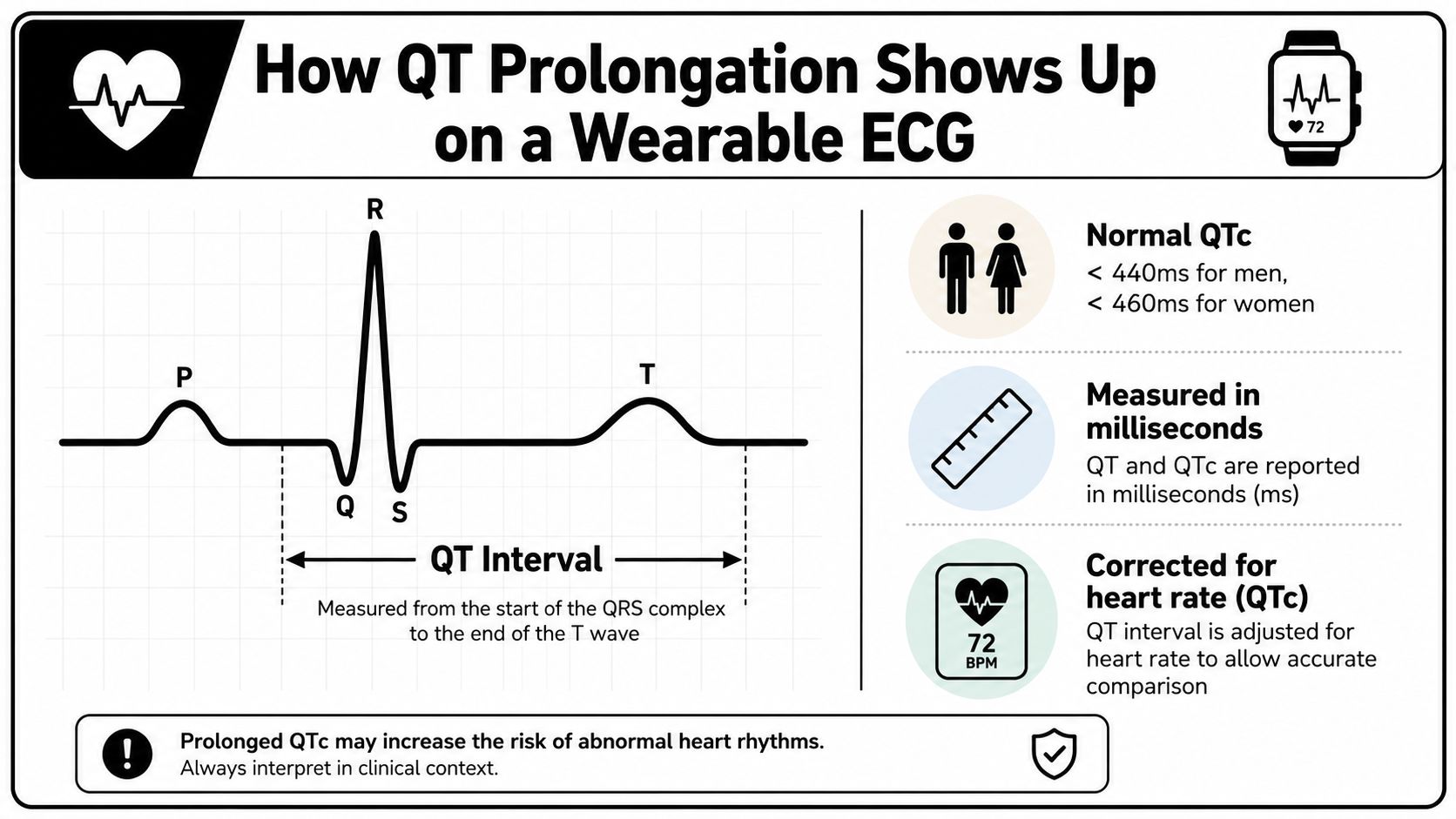
The common thresholds are practical, not magical. LITFL states that QTc is considered prolonged if it is greater than 440 ms in men or greater than 460 ms in women, and QTc above 500 ms is associated with increased torsades risk. LITFL QT interval guide
What a wearable alert can and can't tell you
A watch ECG flag means the algorithm saw something worth attention. It does not tell you why the QT looks long, and it does not tell you whether the reading is stable or just a noisy outlier. Repeating the tracing under similar conditions is often more useful than treating one isolated number as the whole answer.
If you are trying to figure out whether a QTc alert is a real concern or a borderline reading, this guide on how to interpret a long or short QTc gives helpful context. A human-reviewed service can also help trend QTc over time on devices like Apple Watch, Fitbit, Kardia, Samsung, Withings, and Holter monitors. Qaly is one option that provides human-reviewed interval readings from consumer ECGs, including QTc, alongside narrative reports. The value is in seeing whether the QTc stays high, moves around, or settles once a trigger is removed.
When a number deserves faster attention
A QTc near the prolonged range calls for review of medications, electrolytes, and symptoms. A QTc over 500 ms deserves more urgency, especially if there's fainting, near-fainting, chest discomfort, or a racing or irregular heartbeat. If you feel unwell, the safe move is to get checked rather than wait and hope the alert passes.
Get your ECG checked by certified experts within minutes on the Qaly app.


What to Do If Your QTc Is High
Start with the simplest step, don't panic. Repeat the reading if your device allows it, sit still, and note what was happening before the alert. If you just exercised, moved around, or had a poor-quality tracing, the number may not reflect your true rhythm.
Then look for the triggers you can control today. Think about new prescriptions, antibiotic use, anti-nausea medicines, recent vomiting, diarrhea, heavy sweating, dehydration, or a new diuretic. If you've stacked more than one QT-active medicine, stop and call the clinician who prescribed them before adding anything else on your own.
Red flags that need urgent care
- Fainting or near-fainting
- Sustained palpitations
- Chest pain
- Shortness of breath
- A known QTc above 500 ms with concerning symptoms
Those signs need prompt medical assessment because prolonged QT can tip into torsades de pointes, especially when a person is already vulnerable. If you've had an episode like that, don't wait for a routine appointment.
Follow-up usually includes a 12-lead ECG, an electrolyte panel, and a careful medication review. If the pattern suggests inherited long QT syndrome, a clinician may refer you to cardiology or electrophysiology, and sometimes to genetic testing when the story fits. Bring a list of every prescription, supplement, and over-the-counter product you take, including recent changes.
Preventing QT Prolongation Day to Day
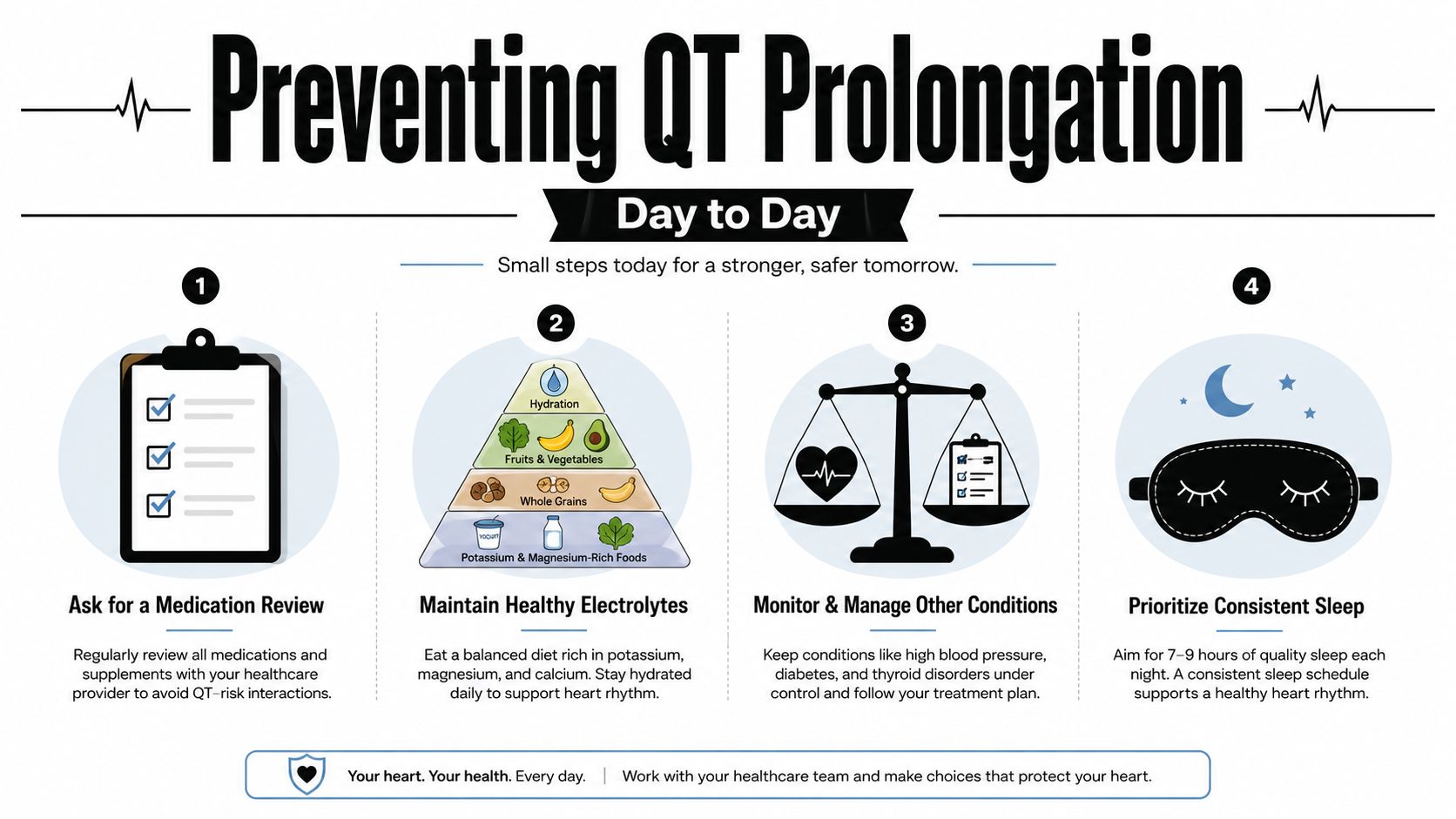
The cleanest prevention strategy is boring, and that's a good thing. Keep a running medication list, and ask for a review any time a new drug is added, especially antibiotics, anti-nausea medicines, psychiatric medicines, or anything that makes you dizzy or slow. A quick QT check before a prescription is much easier than untangling a risky stack later.
Habits that lower surprise risk
- Ask for a medication review. Bring every prescription, supplement, and over-the-counter product to the same clinician when possible.
- Maintain healthy electrolytes. Pay extra attention during vomiting, diarrhea, dehydration, or diuretic use.
- Monitor other conditions. Thyroid disease, heart disease, and slow heart rate can change how a QT-active drug behaves.
- Use wearable ECGs as trend tools. One odd reading matters less than a repeated pattern.
- Tell every clinician about prior QT issues. That includes urgent care, dental visits, and mental health care.
If you've already seen a prolonged QT reading, the goal isn't to live in fear of every ECG alert. The goal is to reduce surprises. Keep your medication list current, stay hydrated during illness, and ask for follow-up when a reading keeps showing the same pattern.
If a wearable ECG keeps flagging QTc or you've recently started a medication that might affect repolarization, bring the tracing and your medication list to your next appointment, or use a human-reviewed ECG service before the visit so you can have a clearer conversation with your clinician.
Unsure about a QTc alert? Certified experts review your ECG within minutes.


