


Key Takeaways

User Profile
Hello Heart Hero.
Your watch buzzes. You feel a flutter in your chest, then a strange calf cramp later that night. The next morning, you feel tired for no clear reason. None of these symptoms seems dramatic on its own, but together they can leave you wondering whether your body is trying to tell you something important.
That kind of uncertainty is exhausting. It gets even harder when the sensations are real, but the explanation is not obvious. Many people who use an Apple Watch, Kardia, Fitbit, or another wearable ECG device are trying to connect those dots on their own.
One possible piece of the puzzle is low potassium, also called hypokalemia. Potassium is not just a nutrition label term. It helps your nerves fire, your muscles contract, and your heart keep a steady electrical rhythm. When potassium drops too low, your body may speak in small clues first, then louder alarms later.
Your Guide to Understanding Low Potassium
A lot of people arrive at this topic after a few unsettling days. Maybe you noticed skipped beats on your watch, or maybe your body felt off. A little weaker. A little twitchier. A little harder to trust.
Low potassium can do that because potassium acts like part of your body's internal wiring. Your heart, muscles, and nerves all depend on charged minerals to send signals correctly. If you want a simple refresher on the fundamental role of electrolytes, that bigger picture helps make potassium much less mysterious.
Why potassium matters so much
Think of potassium as a rhythm keeper. It helps heart cells reset after each beat. It also helps muscle cells tighten and relax in an orderly way.
When potassium is low, those cells can become harder to control. The result may show up as cramps, weakness, flutters, or a strange sense that your heart is no longer beating as smoothly as usual.
For wearable users, this matters because symptoms and electrical changes can happen together. You may feel a skipped beat and then see a rhythm strip that looks different from your baseline. That does not automatically mean danger, but it does mean the pattern deserves attention.
Why people miss it
Low potassium often hides in plain sight. A muscle cramp can seem like dehydration. Fatigue can seem like stress. Palpitations can feel like anxiety. Constipation or bloating can seem unrelated.
That is why education matters. The more clearly you understand the pattern, the easier it becomes to advocate for yourself.
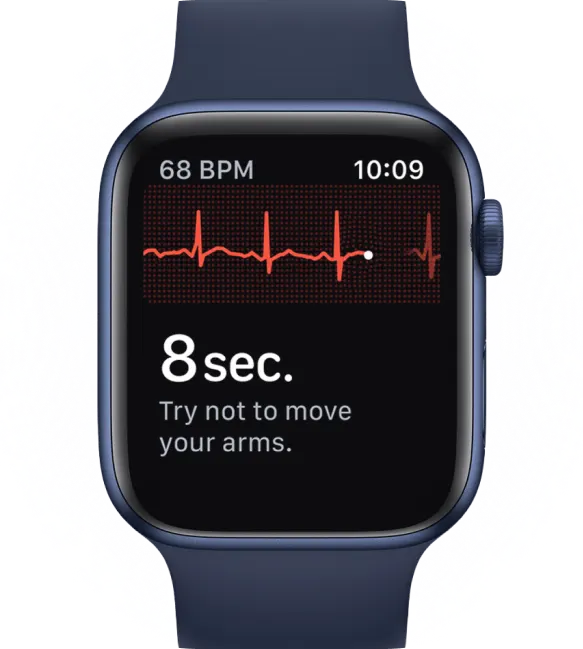
A wearable ECG cannot measure potassium directly, but it can help you notice when how you feel matches a change in your heart rhythm.
If you want a focused overview of the heart connection, this article on potassium levels and the heart is a useful companion. It can help you prepare better questions for a clinician rather than walking into an appointment feeling dismissed or vague.
Listening to Your Body's First Whispers
Low potassium does not always begin with a dramatic heart symptom. Often, the first signs show up in the muscles and nerves.
Cramps, spasms, and weakness
Your muscles run on electrical signals. Potassium helps those signals move properly from one cell to the next. When levels fall, muscle cells struggle to fire and recover normally.
That is why muscle cramps, weakness, and spasms are common symptoms of potassium low. According to Vinmec, low serum potassium below 3.5 mEq/L can lead to these symptoms, with symptoms often emerging below 3.0 to 3.5 mEq/L. The same source notes that paralysis can become a risk at levels below 2.5 mmol/L.
A simple analogy helps here. Think of your muscles like a phone that keeps trying to charge with a damaged cable. It still works, but the connection is unstable. Sometimes the signal gets through. Sometimes it sputters.
Fatigue that feels out of proportion
People often describe this as a drained, heavy feeling rather than ordinary sleepiness. Your arms may feel harder to lift. Walking upstairs may feel more annoying than usual. Even small tasks can feel strangely effortful.
That happens because potassium supports normal cell function across the body, not just in the heart. If your muscles are not firing efficiently, your whole system can feel sluggish.
Tingling, twitching, and odd body sensations
Some people notice little muscle twitches. Others describe tingling, shakiness, or a vague sense that their body is not responding normally.
These feelings can be easy to brush off. But when they appear alongside cramps or palpitations, they become more meaningful.
Gut symptoms people do not connect to potassium
The digestive tract is full of muscle. Those muscles also need proper electrical signaling to move food along. When potassium is low, that movement can slow down.
You might notice:
- Bloating: Your stomach feels fuller than expected.
- Constipation: Things seem to move more slowly.
- General abdominal discomfort: Not sharp pain, but a sense that digestion is off.
None of these symptoms proves low potassium on its own. But together they can form a pattern.
How to notice a pattern without spiraling
Instead of trying to self-diagnose from one symptom, look for clusters.
For example:
- Cramps plus fatigue: That may suggest muscle involvement.
- Weakness plus palpitations: That makes the heart connection more relevant.
- Digestive slowing plus muscle twitching: That may point to a broader electrolyte issue.
If several mild symptoms appear at the same time, write them down with the time of day, medications taken, exercise, sweating, vomiting, or diarrhea. Patterns are easier to spot on paper than in your head.
What readers often get confused about
People commonly assume low potassium should feel severe if it matters. Not always. Mild changes can produce subtle symptoms that are easy to dismiss.
Another confusion point is whether symptoms must happen all at once. They do not. You might first notice leg cramps after exercise, then fatigue the next day, then a flutter in your chest later in the week.
That is why the phrase symptoms of potassium low is more useful than a single symptom checklist. The body rarely sends just one clean signal. It tends to whisper in several places at once.
Decoding Your Heart's Alarms on Your Watch ECG
If the first whispers of low potassium happen in your muscles, the heart is often where people feel the most fear. A racing pulse, a hard thump, a skipped beat, or a weird flutter can be unsettling. Wearables have changed that experience because now you can sometimes capture what your heart was doing in the moment.

What low potassium can feel like in the chest
Low potassium commonly shows up as heart palpitations and arrhythmias. According to Cleveland Clinic, hypokalemia is defined as a serum potassium level below 3.5 mmol/L, and severe cases below 2.5 mmol/L can lead to life-threatening ventricular arrhythmias. The same source notes that low potassium disrupts the heart's electrical activity and can cause prolonged QT intervals detectable on ECGs. It also states that hypokalemia contributes to 20 to 40% of arrhythmia cases in hospitalized patients on diuretics.

Those are medical terms, but the lived experience is usually simpler. People say things like:
- My heart feels like it skipped.
- I feel a sudden flip-flop in my chest.
- The rhythm feels uneven for a few seconds.
- My watch says the tracing looks different than usual.
Why a wearable can be so helpful
A wearable ECG does not diagnose low potassium. It also cannot replace a blood test. What it can do is capture the electrical effect that low potassium may have on your heart.
That matters because symptoms are fleeting. You may feel a flutter for ten seconds and then feel normal by the time you consider getting help. A recorded strip can preserve that moment.
For people who feel ignored in rushed appointments, this is powerful. Instead of saying, "I felt weird," you can say, "At 7:42 p.m. I felt a skipped beat, and this is what my watch recorded."
The heart's recharge time
One of the most important ECG concepts here is the QT interval. A simple way to think about it is the heart's recharge time. Each beat is not just a squeeze. It is a squeeze followed by an electrical reset.
Low potassium can make that reset take longer. On an ECG, that can show up as a prolonged QT interval.
Why does that matter? Because a longer recharge can make the heart more vulnerable to unstable rhythms. You may never see that directly on your watch if the tracing is limited, but the idea helps explain why palpitations in the setting of possible electrolyte imbalance deserve respect.
Other ECG clues people hear about
Wearable users often read terms like T wave, U wave, PVC, and ST segment online. That can get overwhelming fast. The easiest way to think about it is this: low potassium can change how the heart recovers after each beat, and those recovery changes may alter the shape and timing of the ECG tracing.
Some wearables are better at rhythm detection than subtle shape analysis. A single-lead watch ECG is useful, but it is not the same as a full clinical ECG. Still, if you repeatedly notice palpitations and your device captures irregular beats, that pattern is worth sharing.
If you want a patient-friendly explanation of how minerals affect rhythm tracings, electrolyte imbalance and your ECG gives a clear overview.
Connecting what you feel to what you record
Wearable users gain real value when they pair body sensation with the tracing rather than treating them as separate events.
A useful log might include:
- What you felt: Flutter, pounding, pause, racing, dizziness.
- What you were doing: Resting, walking, after exercise, after vomiting, after taking a diuretic.
- What the device showed: Irregular rhythm notice, unusual pulse pattern, ECG strip saved.
- What else was happening in the body: Leg cramps, weakness, bloating, diarrhea, poor appetite.
That combination often tells a more complete story than any one piece alone.
What wearable users commonly get wrong
One common mistake is assuming every unusual beat means permanent heart disease. That is not true. Temporary issues like electrolyte shifts can irritate the heart's electrical system too.
Another mistake is the opposite. Some people assume that if the watch did not label the tracing as dangerous, nothing important is happening. Wearables are useful, but they are not perfect. A normal-looking readout does not always settle the question if symptoms keep returning.
A practical example
Suppose you are taking a water pill for blood pressure. Over the last few days, you have had more leg cramps than usual. Then your watch catches a short run of irregular beats when you feel pounding in your chest.
That does not prove low potassium. But it creates a reasonable chain of clues. Medication that can lower potassium. Non-heart symptoms that fit. Heart rhythm changes that match the sensation. That is exactly the kind of situation where a blood test and clinical follow-up make sense.
Your wearable is best used as a notebook for your heart. It captures timing, rhythm, and trends. The blood test answers the potassium question.
Investigating the Common Causes of Low Potassium
Once you know what the symptoms can feel like, the next question is obvious. Why would potassium drop in the first place?
Medications are a major reason
The most common culprit many people recognize is the diuretic, often called a water pill. These medicines help the body get rid of extra fluid, but they can also increase potassium loss.
This matters even more if you are already paying close attention to palpitations. According to Mayo Clinic, medications like diuretics can trigger arrhythmias such as premature ventricular contractions, or PVCs. The same source notes that in patients taking digoxin, arrhythmia risk rises more than tenfold when potassium levels fall below 3.0 mmol/L.
That is a strong reminder that low potassium is not just about diet. It is often about how the body loses potassium.
Fluid loss can drain potassium quickly
Vomiting and diarrhea can pull potassium down faster than many people realize. Heavy sweating may also contribute, especially if it happens during illness, intense heat, or hard exercise.
In these situations, the problem is not always that you failed to eat enough potassium. Sometimes you are losing it faster than you can replace it.
Some causes are quieter
Other people develop low potassium in ways that are less obvious:
- Low intake: Not common by itself, but possible if eating has been poor for a while.
- Laxative overuse: This can affect fluid and electrolyte balance.
- Certain health conditions: Especially conditions that change kidney handling of electrolytes.
- Low magnesium: This can complicate the picture and make symptoms harder to sort out.
A blame-free way to think about it
Many readers feel guilty when they learn about electrolyte problems. Try not to. Low potassium is often a side effect of managing another issue, such as blood pressure, swelling, or a stomach illness.
A better question than "What did I do wrong?" is "What conditions in my life make potassium loss more likely?"
A quick self-check
Ask yourself:
- Did I recently start or increase a diuretic?
- Have I had vomiting or diarrhea?
- Have I been sweating much more than usual?
- Am I taking heart medicines that make rhythm changes more important?
- Did the symptoms start after an illness, medication change, or period of poor intake?
Even if the answer is yes, you still need proper testing. But these clues can make your next conversation with a clinician much more precise.


When to Seek Help and How Testing Works
The biggest fear for many people is not the symptom itself. It is not knowing when the symptom crosses the line from watch-and-wait to get-help-now.
Red flags that should not be brushed off
Get urgent medical care if you have symptoms such as:
- Fainting or nearly fainting: This can signal a serious rhythm problem.
- A very erratic heartbeat with weakness or lightheadedness: Especially if it feels sustained rather than brief.
- Severe muscle weakness: Not just fatigue, but trouble standing, walking, or lifting.
- Breathing difficulty: Respiratory muscles can also be affected when potassium is very low.
If you have chest pain, severe shortness of breath, or feel like you may pass out, treat that as urgent.
When a prompt doctor visit makes sense
You do not need to wait for a crisis to ask for testing. A prompt medical visit is reasonable if you have recurring palpitations plus symptoms like cramps, weakness, digestive slowing, or recent fluid loss.
It is also reasonable if you take a diuretic or another medication that can affect potassium and your wearable ECG suddenly looks different from your usual baseline.
The blood test is the key step
This part is more straightforward than people expect. Potassium is diagnosed with a blood test. That is the main way clinicians confirm whether your level is low.
That matters because symptoms can overlap with anxiety, dehydration, magnesium issues, and other conditions. The blood test brings the conversation back to something measurable.
If you are trying to make sense of blood-based heart testing more broadly, this plain-language guide to troponin levels can also help you understand how lab results fit into cardiac evaluation.
What treatment usually looks like
Treatment depends on how low the potassium is and why it dropped.
Common approaches include:
- Diet changes: Increasing potassium-rich foods when appropriate.
- Oral supplements: Often used for milder cases or longer-term correction.
- Medication review: A clinician may adjust a diuretic or look for another cause of loss.
- IV potassium in the hospital: Reserved for more serious situations.
Do not start potassium supplements on your own just because symptoms sound familiar. Too much potassium can also be dangerous, especially if kidney function is impaired.
The smartest path is simple. Capture the symptoms, save the ECG if you can, list your medications, and ask for a potassium blood test.
What to bring to the appointment
A short, focused record helps a lot. Bring:
- Your symptom timeline
- Your medication list
- Any saved wearable ECG strips
- Notes about vomiting, diarrhea, sweating, or poor eating
- Questions you want answered clearly
That shifts the visit from vague concern to specific investigation.
Take Control with At-Home Heart Monitoring
People often think heart monitoring is only useful after a diagnosis. In reality, it can also help you notice patterns earlier and speak more confidently when something changes.
Your device is a trend tool
A smartwatch or handheld ECG works best when you use it as a trend tracker. One isolated tracing may not explain much. A series of tracings linked to symptoms can be much more informative.
That is especially true if you take medications that affect fluid balance or if your symptoms come and go. A stored rhythm strip during a flutter is more useful than trying to describe that flutter from memory three weeks later.
The goal is not self-diagnosis
People sometimes get tripped up here. At-home monitoring is not about replacing medical care. It is about improving the quality of the information you bring into medical care.
A wearable can help you answer practical questions:
- Was the rhythm regular or irregular when I felt that symptom?
- Does this happen after medication, exercise, or illness?
- Is this a one-time event or a pattern over days?
Those are valuable questions because they help clinicians sort out what needs urgent action and what needs planned follow-up.
Build a fuller picture of your health
Heart rhythm does not exist in isolation. Weight changes, hydration changes, and illness patterns can affect how you feel.
A key advantage for skeptical patients
If you have ever felt rushed, minimized, or told that your symptoms are probably nothing, wearable data can make you feel less powerless. It gives you a record. Not a perfect one, but a useful one.
That changes the conversation. Instead of trying to persuade someone that you felt something important, you can show timing, rhythm evidence, and associated symptoms.
For readers who are newer to home ECG devices, this guide to a portable electrocardiogram monitor explains how these tools fit into daily heart tracking.
A calm way to think about next steps
If you suspect symptoms of potassium low, do not panic. But do take the pattern seriously.
Notice what your body is doing. Save rhythm recordings when symptoms happen. Pay attention to medication changes, fluid loss, and muscle symptoms. Then use that information to ask for the right test rather than guessing.
That is how wearables are most empowering. They do not turn you into your own cardiologist. They help you become a more informed observer of your own body.

Get fast, human-reviewed ECG analysis from certified technicians—understand your palpitations and rhythms before seeing your doctor.



.png)
.png)